
Google details security measures for Chrome’s agentic features
An increasing number of browsers are experimenting with agentic features that will take actions on your behalf, such as booking tickets or shopping for different items. However, these agentic capabilities also come with security risks that could lead to loss of data or money.
Google detailed its approach to handling user security on Chrome using observer models and consent for user action. The company previewed agentic capabilities on Chrome in September and said these features will roll out in the coming months.
The company said it is using the help of a few models to keep agentic actions in check. Google said it built a User Alignment Critic using Gemini to scrutinize the action items built by the planner model for a particular task. If the critic model thinks that the planned tasks don’t serve the user’s goal, it asks the planner model to rethink the strategy. Google noted that the critic model only sees the metadata of the proposed action and not the actual web content.
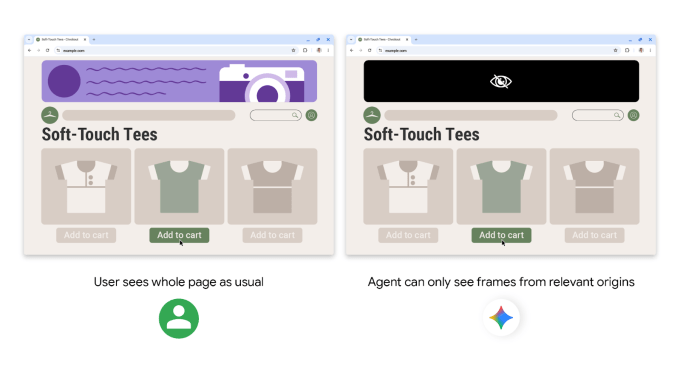
What’s more, to prevent agents from accessing disallowed or untrustworthy sites, Google is using Agent Origin Sets, which restrict the model to access read-only origins and read-writeable origins. Read-only origin is data that Gemini is permitted to consume content from. For instance, on a shopping site, the listings are relevant to the task, but banner ads aren’t. Similarly, Google said the agent is only allowed to click or type on certain iframes of a page.
“This delineation enforces that only data from a limited set of origins is available to the agent, and this data can only be passed on to the writable origins. This bounds the threat vector of cross-origin data leaks. This also gives the browser the ability to enforce some of that separation, such as by not even sending to the model data that is outside the readable set,” the company said in a blog post.
Google is also keeping a check on page navigation by investigating URLs through another observer model. This can prevent navigation to harmful model-generated URLs, the company said.
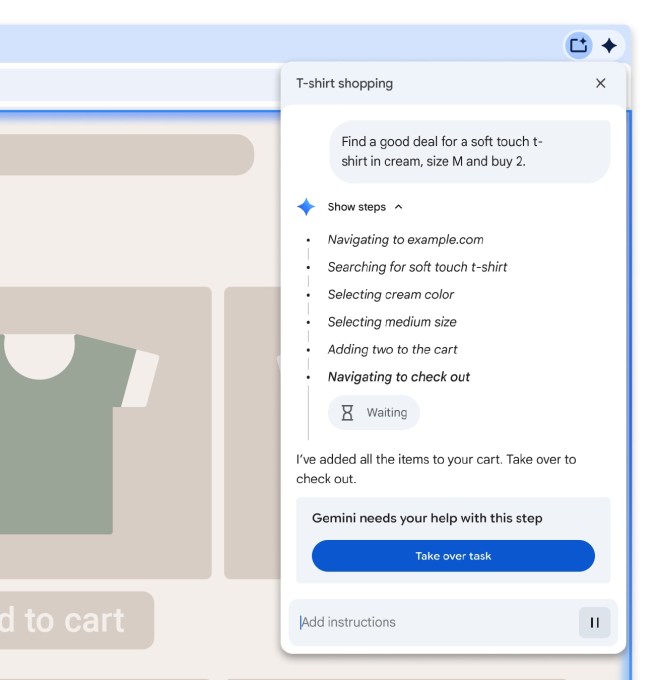
The search giant said that it is also handing over the reins to users for sensitive tasks. For instance, when an agent tries to navigate to a sensitive site with information like banking or your medical data, it first asks the user. For sites that require sign-in, it’ll ask the user for permission to let Chrome use the password manager. Google said that the agent’s model doesn’t have exposure to password data. The company added that it will ask users before taking actions like making a purchase or sending a message.
Techcrunch event
San Francisco
|
October 13-15, 2026
Google said that, in addition to this, it also has a prompt-injection classifier to prevent unwanted actions and is also testing agentic capabilities against attacks created by researchers.
AI browser makers are also paying attention to security. Earlier this month, Perplexity released a new open-source content detection model to prevent prompt injection attacks against agents.
Keep reading the article on Tech Crunch
You can buy your Instacart groceries without leaving ChatGPT
OpenAI and Instacart are launching a grocery shopping experience inside of ChatGPT, allowing customers to brainstorm meal ideas, make a grocery list, and check out, all without leaving the chat interface.
This builds upon an existing partnership between OpenAI and Instacart; more than two years ago, Instacart launched an in-app AI search tool powered by ChatGPT, which helps shoppers ask questions about what to make for dinner or how to accommodate dietary restrictions.
The relationship between OpenAI and Instacart seems to have only deepened after former Instacart CEO Fidji Simo — who was already an OpenAI board member — joined the company as the CEO of Applications in May.
Agentic commerce — the use of AI tools to do shopping research and make purchases on a user’s behalf — is a current priority for OpenAI. Its most recent dev day focused on its plan to build apps into ChatGPT. In an early preview for developers, ChatGPT launched integrations with apps like Booking.com, Canva, Coursera, Expedia, Figma, Spotify, and Zillow; since then, OpenAI has announced further partnerships with Target, Intuit, and others.
Leading up to this year’s holiday shopping season, both OpenAI and Perplexity announced in-app features that help users make decisions about what products to buy — so, you could ask ChatGPT to help you find the best deal on a gaming laptop that matches your specific criteria. Adobe predicted that AI-assisted online shopping will grow by 520% this holiday season.
Despite ChatGPT’s immense popularity, OpenAI is not making a profit, and it may not for another several years — if it ever does. Its products are so resource-intensive that even subscription costs don’t account for how much compute power the company uses to make its product work. These agentic commerce tools could give OpenAI another way of making money, since it’ll take an undisclosed “small fee” when it helps merchants make a sale. But it would take a whole lot of ChatGPT-based shopping for these fees to make a dent in OpenAI’s debt.
Techcrunch event
San Francisco
|
October 13-15, 2026
Keep reading the article on Tech Crunch
TikTok adds a space for organizing content with others, teases ‘Shared Feeds’
TikTok is launching “Shared Collections,” a new way for users to share and organize TikTok content in one place with friends or family. The company also teased the upcoming launch of “Shared Feeds,” which will let users watch TikTok content together through a shared interest-based feed.
TikTok rolled out individual Collections earlier this year to let users save content in custom folders. With Shared Collections, users can now do things like create a space to share cookie-swap plans and holiday-dinner ideas with their family. Or, they can create Shared Collections to organize decor inspo or secret Santa ideas.
“Whether it’s content from their favorite creators, inspiration for a home design project, or a new skill they’re learning together, Shared Collection makes it easy for people to stay organized as they discover and save on TikTok,” the company explained in a blog post.

You can only create a Shared Collection with someone if you’re both following each other. Collections can stay just between friends and family, or they can be made public.
Shared Collections are available globally to accounts over age 16.
As for Shared Feeds, which are launching in the coming months, TikTok sees them as a way for users to discover content together. Users can generate Shared Feeds in one-on-one direct messages.
Shared Feeds will surface new content tailored to both users’ tastes, such as sports, winter activities, and their favorite creators. The feeds are generated based on users’ TikTok activity, such as what they like, watch, and comment on.
Techcrunch event
San Francisco
|
October 13-15, 2026
It’s worth noting that the feeds aren’t continuous, as users will find a selection of 15 videos in their Shared Feed each day.
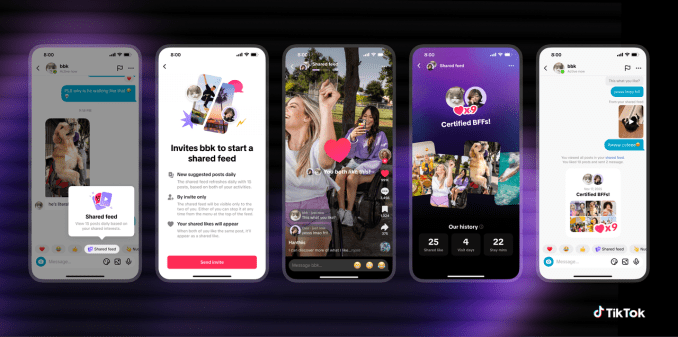
The feature is similar to Instagram Reels’ Blend feature that lets you create a custom, personalized reels feed for you and your friends.
Users will be able to create a Shared Feed by sending an invite to another user. Once the invitation is accepted, they can create a feed and chat about it in DMs. After both people have watched all the videos, they can view metrics, including which videos they both liked, in their “Shared Likes” history.
TikTok also announced that it’s launching greeting cards that users can send each other. Users will be able to select a greeting card inside their chats, write a message, and send it. The receiver will get a festive animation alongside the message.
Keep reading the article on Tech Crunch
Petco’s security lapse affected customers’ SSNs, drivers’ licenses and more
Last week, pet products and services giant Petco confirmed that it experienced a data breach involving customers’ personal information, without specifying what type of data was affected.
On Friday, in a legally required filing with Texas’ attorney general’s office, Petco reported that the affected data included: names, Social Security numbers, driver’s license numbers, financial information such as account numbers, credit or debit card numbers, and dates of birth.
Petco filed similar legally required notices in California, Massachusetts, and Montana. In the latter two states, Petco reported one and three affected residents respectively.
The company did not disclose the exact number of victims in California, where companies are required to disclose breaches involving at least 500 state residents, which suggests there are more victims than that number in the state.
Petco spokesperson Ventura Olvera did not respond to a series of questions sent on Monday, which included how many customers in total were affected by this incident; whether Petco has any technical means, including logs, to determine whether any cybercriminals had access and stole the customers’ exposed data; what and when was the specific issue identified; and what was the application involved in the incident.
For context, in 2022, Petco said it served more than 24 million customers.
On Friday, Petco spokesperson Ventura Olvera said in a statement to TechCrunch that the company had “provided further information to individuals whose information was involved.”
Techcrunch event
San Francisco
|
October 13-15, 2026
California’s attorney general published a sample letter that Petco is sending to its customers. The message said Petco discovered an issue with “a setting within one of our software applications that inadvertently allowed certain files to be accessible online,” that the company “immediately took steps to correct the issue and to remove the files from further online access,” and that it “corrected” the setting and implemented unspecified “additional security measures.”
The company is offering free credit and identity theft monitoring services to victims in California, California, Massachusetts, Montana. Under California law, for example, companies must provide these services if a data breach victim’s driver’s license number or Social Security number are compromised. It’s unclear if Petco is also offering these services to victims in Texas.
Keep reading the article on Tech Crunch
Heat pump startup Quilt raises $20M Series B to expand sales

Quilt, the Redwood City-based, California startup that’s created sleek, customizable heat pumps, has raised $20 million in a Series B round that closed recently. The company previously raised a $33 million Series A, which it announced in April 2024.
The new round was led by Energy Impact Partner and Galvanize with participation from Alumni Ventures, Gradient Ventures, Incite Ventures, and Lowercarbon Capital. Veery Maxwell at Galvanize will be joining the board, as will former Nest CFO Tom vonReichbauer. (The latter should come as no surprise given that many Quilters used to work at Nest.)
The new funding will go toward expanding the company’s footprint. Quilt has installed nearly 1,000 units in 16 U.S. states and five Canadian provinces, co-founder and CEO Paul Lambert said in a note posted on the company’s website.
Quilt has been a rare startup challenging entrenched incumbents in the heat pump market. To unseat them, the company has taken a software- and design-first approach. One example is an over-the-air update the company pushed to heat pumps that were already installed; the new software and firmware improved the performance of existing units by more than 20%.
Keep reading the article on Tech Crunch
‘ONE RULE’: Trump says he’ll sign an executive order blocking state AI laws despite bipartisan pushback

President Donald Trump said on Monday he plans to ink an executive order this week that would limit states from enacting their own regulation of AI technology.
“I will be doing a ONE RULE Executive Order this week,” Trump posted on social media. “You can’t expect a company to get 50 Approvals every time they want to do something.”
“There must be only One Rulebook if we are going to continue to lead in AI,” Trump said. “We are beating ALL COUNTRIES at this point in the race, but that won’t last long if we are going to have 50 States, many of them bad actors, involved in RULES and the APPROVAL PROCESS…AI WILL BE DESTROYED IN ITS INFANCY!”
Trump’s statement comes days after an effort to preempt states from regulating AI was quashed in the Senate, as Congress couldn’t agree to insert the deeply unpopular proposal into a must-pass defense budget bill.
The fast pace of AI development and the lack of general consumer protections from the federal government has led many states to enact their own rules around the technology. California, for example, has the AI safety and transparency bill SB 53, while Tennessee’s ELVIS Act protects musicians and performers from unauthorized AI-generated deepfakes of their voices and likenesses.
Silicon Valley figures, including OpenAI President Greg Brockman and VC-turned-White House ‘AI czar’ David Sacks, have argued that such laws by states would create an unworkable patchwork of laws that would stifle innovation and threaten the U.S.’s lead against China in the race to develop AI technology.
Silicon Valley has a mighty lobbying arm that has blocked meaningful technology regulation for years, and proponents of states’ regulatory rights say there’s no reason to believe state AI laws could “destroy AI progress,” as VCs and tech companies claim.
Techcrunch event
San Francisco
|
October 13-15, 2026
Trump’s executive order, a draft of which was leaked a couple of weeks ago, would create an “AI Litigation Task Force” to challenge state AI laws in court, direct agencies to evaluate state laws deemed “onerous,” and push the Federal Communications Commission and Federal Trade Commission toward national standards that override state rules.
The Order would also give Sacks direct influence over AI policy, superseding the usual role of the White House Office of Science and Technology Policy, currently headed by Michael Kratsios.
Attempts to block states’ power to regulate AI have been deeply unpopular on both sides of Congress. Earlier this year, Senator Ted Cruz (R-TX) introduced a proposal that would place a 10-year moratorium on AI legislation into the federal budget bill, but it was rejected 99-1, in a rare moment of bipartisan agreement that tech companies shouldn’t operate without oversight.
And when Trump’s draft was leaked last month, several Republican politicians spoke out.
Rep. Marjorie Taylor Greene (R-GA) posted on X: “States must retain the right to regulate and make laws on AI and anything else for the benefit of their state. Federalism must be preserved.”
Gov. Ron DeSantis (R-FL) posted late last week: “I oppose stripping Florida of our ability to legislate in the best interest of the people. A ten year AI moratorium bans state regulation of AI, which would prevent FL from enacting important protections for individuals, children and families.”
DeSantis has also called data centers as drains on power and water resources, as well as potential job killers.
“The rise of AI is the most significant economic and cultural shift occurring at the moment; denying the people the ability to channel these technologies in a productive way via self-government constitutes federal government overreach and lets technology companies run wild,” he said in a November X post.
Late last week, Sen. Marco Rubio (R-FL) warned Trump against the EO, advising him to “leave AI to the states” to preserve federalism and allow local protections.
The desire to protect people from potential harms of AI technology is not unfounded. There have been several deaths by suicide following prolonged conversations with AI chatbots, and psychologists have recorded an uptick in cases of a condition they’re calling “AI psychosis.”
A bipartisan coalition of over 35 state attorneys general warned Congress last month that overriding state AI laws could have “disastrous consequences,” and more than 200 state lawmakers have issued an open letter opposing federal preemption, citing setbacks to progress on AI safety.
Keep reading the article on Tech Crunch
Paramount goes to war with Netflix for Warner Bros. Discovery with hostile $108.4B bid
Paramount Skydance on Monday launched a hostile, $108.4 billion bid to buy Warner Bros. Discovery (WBD), days after Warner agreed to be acquired by Netflix for $82.7 billion.
Paramount is going straight to WBD’s shareholders with an all-cash offer of $30 per share, and it noted that its offer provides shareholders $18 billion more cash than the Netflix deal, which offered $23.25 in cash and $4.50 in Netflix shares for a total of $27.75 per share.
Paramount is bidding for all of WBD, while Netflix’s deal with the company only includes its Hollywood studios and streaming business.
CNBC reported on Monday that these were the very terms from Paramount that WBD’s board rejected a week ago.
“We believe the WBD Board of Directors is pursuing an inferior proposal which exposes shareholders to a mix of cash and stock, an uncertain future trading value of the Global Networks linear cable business and a challenging regulatory approval process,” Paramount CEO David Ellison said in a statement.
Paramount’s offer is backstopped with equity financing from the Ellison family and the private-equity firm RedBird Capital, in addition to $54 billion of debt commitments from Bank of America, Citi, and Apollo.
Netflix came out on top on Friday after winning a bidding war against Paramount and Comcast, but Paramount’s hostile bid is sure to drag on the battle for one of Hollywood’s most iconic studios, a fight which has already stretched out for months.
Techcrunch event
San Francisco
|
October 13-15, 2026
Netflix’s proposed deal has already raised antitrust questions, as it would combine two of the most popular streaming platforms into one. Additionally, President Donald Trump has said the deal “could be a problem” because of the size of the combined companies’ market share.
A deal between WBD and Paramount would also likely raise similar concerns.
Netflix agreed to pay WBD $5.8 billion if the deal doesn’t go through. WBD would have to pay Netflix $2.8 billion if the deal collapses.
Netflix did not immediately respond to a request for comment.
Keep reading the article on Tech Crunch
IBM to acquire Confluent for $11B as it seeks to bolster its data offerings

IBM is buying data infrastructure company Confluent for $11 billion in cash in a bid to bolster its data and automation products as ever more companies move their tech operations to the cloud and deploy AI technology.
The tech giant said it would offer $31 for each Confluent share, which is about 50% more than what the smaller company’s shares closed at on Friday, before news of the deal.
Confluent offers a platform that helps enterprises manage streams of data in real time, a use case that’s exploded in demand as ever more companies develop and deploy AI products, which require significant back-and-forth processing of data for inferencing.
IBM said Confluent will complement its existing data and automation products, as well as improve upon its existing offerings across AI, automation, data, and consulting. The company expects the deal to add to EBITDA and free cash flow in the two years after the deal is closed.
This is the latest in a string of deals IBM has struck in recent months as it seeks to capitalize on the AI boom, though at $11 billion, Confluent would be the tech giant’s largest buy in years, following its acquisition of HashiCorp in 2024.
IBM in October signed a deal with AI lab Anthropic to deploy the Claude large language model into some of its products; it has partnered with AMD to develop a new computing architecture that combines quantum systems with AI-specialized chips; and it acquired data analysis startup Seek AI in June.
Techcrunch event
San Francisco
|
October 13-15, 2026
Keep reading the article on Tech Crunch
Adobe launches content creation hub in Premiere mobile for YouTube Shorts creators
Adobe is partnering with YouTube to launch a dedicated content creation space in Premiere for iOS for YouTube Shorts creators, the company announced on Monday. The new space gives creators access to exclusive templates, transitions, and effects, along with the ability to instantly publish Shorts to their YouTube channels directly from their phones.
The company says the space is designed to give creators everything they need to produce viral videos, grow their audience, and tap into trends, whether it’s creating day-in-the-life vlogs, travel videos, or behind-the-scenes clips.
By partnering with Adobe, YouTube is giving creators on its platform an exclusive space to create content, encouraging them to use its partners’ space instead of competitors’ tools, like Meta’s Edits or CapCut, which is owned by TikTok parent ByteDance.
“Although content edited in Premiere mobile can be shared to other social platforms, what’s unique about this partnership is that creators getting inspiration from their YouTube Shorts feed, can launch a template that caught their eye, directly into Premiere mobile and start customizing it for their own channel,” said Meagan Keane, Director, Product Marketing, Digital Video and Audio at Adobe, in an email to TechCrunch. “This content creation space within the Premiere mobile app is designed and optimized for YouTube Shorts.”
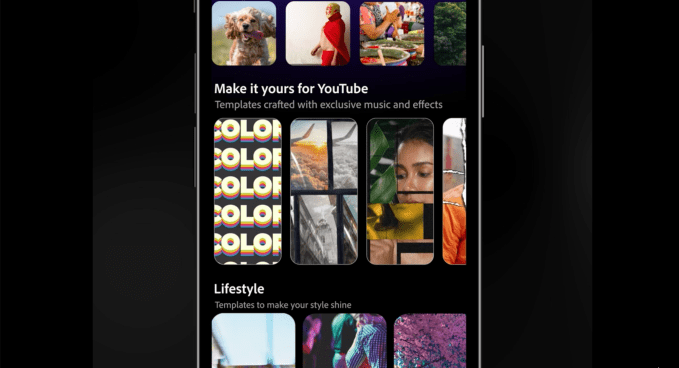
The Create for YouTube Shorts content creation space in Premiere mobile features Shorts templates from top creators with built-in text, effects, and transition presets. Creators can add their own media and customize the templates to their style. They also have the option to create and submit their own original templates.
To get started, creators need a free Premiere mobile login to access the space and a YouTube profile to publish directly to their Shorts feed. Creators can download Adobe Premiere from the App Store and tap the “Create for YouTube” option to access the creation space.
From there, they can upload clips from their iPhone camera roll, cloud storage, or Adobe Creative Cloud. They can then cut and trim clips, layer in video and audio tracks, adjust color and brightness, and add text overlays and captions.
Techcrunch event
San Francisco
|
October 13-15, 2026
After following export prompts, creators can upload the finished product to YouTube.
“New tools and capabilities in the app, like templates, effects, transitions, and this new content creation space for YouTube Short creation, will be powerful for all creators, from longtime creators to those just getting started,” Keane said. “It brings creators polished video editing with studio-quality audio, AI sound effects, precision multi-track editing, Firefly AI content generation, and more to make producing and sharing their content easier and faster. This ultimately helps us further our goal of empowering creativity for all. Every day, we’re focused on doing our part to make this the best time ever to be a creator.”
Keep reading the article on Tech Crunch
Hinge’s new AI feature helps daters move beyond boring small talk
Many daters on Hinge are getting annoyed with matches who just like their profiles but never bother to start a conversation. It often leads to this awkward silence, putting all the pressure on one person to make the first move. Instead of coming up with something interesting to say, some just fall back on the same old lines or stick to boring small talk, like asking, “How are you?”
To address this issue, Hinge unveiled “Convo Starters,” a feature powered by AI that provides personalized tips for initiating conversations.
The feature aims to inspire daters and boost their confidence when sending initial messages. When users like a profile, they’ll now see three tailored tips beneath each photo and prompt. The AI evaluates a user’s profile and generates recommendations based on the individual photos or prompts. For example, if a potential match is pictured playing chess, Hinge might suggest beginning the conversation around board games.

Convo Starters was developed in response to user feedback, Hinge says. The company’s research indicated that 72% of Hinge daters are more inclined to consider someone when a like is accompanied by a message. Data from Hinge reveals that those who include a comment with their likes are twice as likely to arrange a date.
This new feature follows the launch of its AI-driven Prompt Feedback feature, which assesses user prompts and offers tailored advice aimed at improving them by urging users to elaborate and share engaging details about their lives.
However, as Hinge incorporates AI features into its app, many users, especially Gen Z, are uncomfortable with the thought of using AI in their online dating experiences. A Bloomberg Intelligence survey found that Gen Z feels more uneasy about using AI for tasks such as drafting profile prompts and responding to messages than older generations do.
Hinge’s parent company, Match Group, is dedicating around $20 million to $30 million towards AI efforts.
Techcrunch event
San Francisco
|
October 13-15, 2026
Keep reading the article on Tech Crunch
OpenAI boasts enterprise win days after internal ‘code red’ on Google threat
OpenAI released new data Monday showing enterprise usage of its AI tools has surged dramatically over the past year, with ChatGPT message volume growing 8x since November 2024 and workers reporting they’re saving up to an hour daily. The findings arrive a week after CEO Sam Altman sent an internal “code red” memo about the competitive threat of Google.
The timing underscores OpenAI’s push to reframe its position as the enterprise AI leader, even as it faces mounting pressures. While close to 36% of U.S. businesses are ChatGPT Enterprise customers compared to 14.3% for Anthropic, per Ramp AI Index, the majority of OpenAI’s revenue still comes from consumer subscriptions — a base that’s being threatened by Google’s Gemini. OpenAI also must compete against rival AI firm Anthropic — whose revenue comes mainly from B2B sales – and, increasingly, open-weight model providers for enterprise customers.
The AI giant has committed $1.4 trillion to infrastructure commitments over the next few years, making enterprise growth essential to its business model.
“If you think about it from an economic growth perspective, consumers really matter,” Ronnie Chatterji, OpenAI’s chief economist, said during a briefing. “But when you look at historically transformative technologies like the steam engine, it’s when firms adopt and scale these technologies that you really see the biggest economic benefits.”
OpenAI’s new findings suggest that adoption among larger enterprises is not only growing but becoming more integrated into workflows. Employees aren’t only sending more messages — organizations using OpenAI’s API (its developer interface) are consuming 320 times more “reasoning tokens” than they were a year ago, suggesting companies are using AI for more complex problem-solving. That, or they are experimenting heavily with the new tech and burning through tokens, without necessarily getting long-term value.
That increase in reasoning tokens, which correlates with increased energy usage, could be expensive for companies and therefore not sustainable in the long term. TechCrunch has asked OpenAI about enterprise budget allocation for AI and the sustainability of this growth rate.
Beyond raw usage metrics, OpenAI is also seeing changes in how companies deploy its tools. Use of custom GPTs — which companies use to codify institutional knowledge into assistants or automate workflows — jumped 19x this year, now accounting for 20% of enterprise messages, the report found. OpenAI pointed to digital bank customer BBVA, which it says regularly uses over 4,000 custom GPTs.
Techcrunch event
San Francisco
|
October 13-15, 2026
“It shows you how much people are really able to take this powerful technology and start to customize it to the things that are useful to them,” said Brad Lightcap, OpenAI’s chief operating officer, during the briefing.
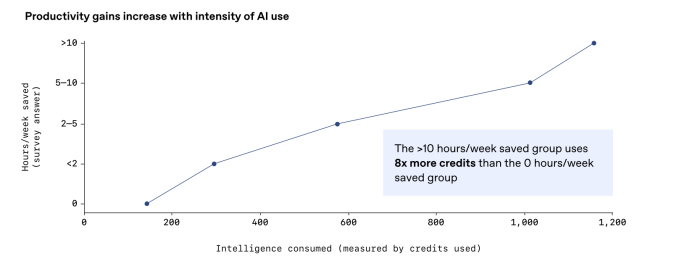
These integrations have led to meaningful time savings, according to OpenAI. Participants reported saving 40 to 60 minutes per day with OpenAI’s enterprise products — though that may not include time spent learning the systems, prompting, or correcting AI output.
The report found that enterprise workers are also increasingly leveraging AI tools to expand their own capabilities. Three quarters of those surveyed say AI enables them to do things, including technical tasks, they couldn’t do before. OpenAI reported a 36% increase in coding-related messages outside of engineering, IT, and research teams.
While OpenAI drove home the idea that its technology is democratizing access to skills, it’s important to note that more vibe coding could lead to more security vulnerabilities and other flaws. When asked about this, Lightcap pointed to OpenAI’s recent release of its agentic security researcher Aardvark, which is in private beta, as a potential way to detect bugs, vulnerabilities, and exploits.
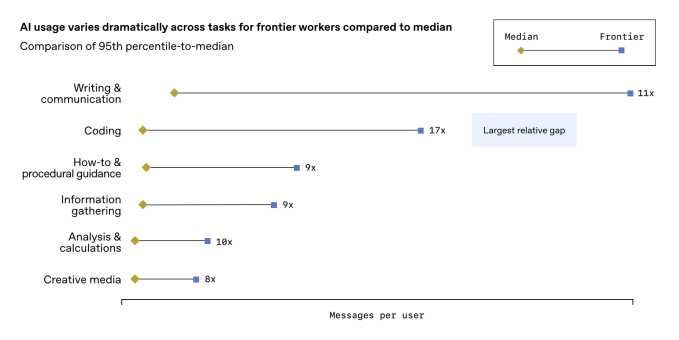
OpenAI’s report also found that even the most active ChatGPT Enterprise users aren’t using the most advanced tools available to them, like data analysis, reasoning, or search. During the briefing, Lightcap mused that this was because fully adopting AI systems requires a mindset shift and deeper integration with enterprise data and processes. Adoption of advanced features will take time, he said, as companies retool workflows to better understand what’s possible.
Lightcap and Chatterji also stressed a report finding that showed a “growing divide in AI adoption,” with some “frontier” workers using more tools more often to save more time than the “laggards.”
“There are firms that still very much see these systems as a piece of software, something I can buy and give to my teams and that’s kind of the end of it,” Lightcap said. “And then there are companies that are really starting to embrace it, almost more like an operating system. It’s basically a re-platforming of a lot of the company’s operations.”
OpenAI’s leadership — which certainly feels the pressure of the firm’s $1.4 trillion in infrastructure commitments — framed this as an opportunity for laggards to catch up. For workers training AI systems to replicate their work, “catching up” might feel more like a countdown.
Keep reading the article on Tech Crunch
Netflix co-CEO reportedly discussed Warner Bros. deal with Trump

Will Netflix’s $82.7 billion deal to acquire Warner Bros. get approval from federal regulators?
While Paramount was assumed to be the frontrunner to acquire the storied movie studio thanks to CEO David Ellison’s connections to the Trump administration, new reporting in Bloomberg and The Hollywood Reporter suggests that Netflix co-CEO Ted Sarandos met with President Donald Trump to discuss a potential deal in November.
Trump reportedly told Sarandos that Warner Bros. should sell to the highest bidder, and the Netflix executive seems to have left the meeting convinced that the president would not immediately oppose the acquisition.
Bloomberg also reports that Warner Bros. CEO David Zaslav was reluctant to sell the company and surprised when Paramount began to explore an acquisition — if nothing else, he’d expected Ellison to wait until the studio completed a planned split of its movie and streaming businesses from its cable networks.
Ultimately, Warner Bros. said it would consider other bids, leading to a competitive process that Netflix won — although Paramount could still keep its hat in the ring with a hostile bid.
Keep reading the article on Tech Crunch
X deactivates European Commission’s ad account after the company was fined €120M

X’s Head of Product Nikita Bier fired back at the European Commission this weekend after the EC fined the social media company €120 million (around $140 million).
In its first fine under the European Union’s Digital Services Act, the commission called X’s blue checkmark system “deceptive” and said the paid verification system makes users vulnerable to impersonation and scams. The commission also said X’s advertising repository failed to meet the DSA’s requirements for transparency and accessibility.
The commission said that X must respond within 60 days to its concerns about blue checkmarks, and within 90 days to the ad transparency violations, or it could face additional penalties.
After the fine was announced, X owner Elon Musk described it as “bullshit” and also posted, “How long before the EU is gone? AbolishTheEU”.
Now it seems X has penalized the commission’s account on the platform — not, the company says, because of the fine, but rather the commission’s use of X’s advertising system.
Quoting the commission’s post announcing the fine, X’s Bier accused the EC of logging into a “dormant ad account to take advantage of an exploit in our Ad Composer — to post a link that deceives users into thinking it’s a video and to artificially increase its reach.”
“As you may be aware, X believes everyone should have an equal voice on our platform,” Bier wrote. “However, it seems you believe that the rules should not apply to your account.”
Techcrunch event
San Francisco
|
October 13-15, 2026
As a result, he said the commission’s ad account had been “terminated.” Bier subsequently said the exploit “has never been abused like this” and has since been patched.
TechCrunch has reached out to a European Commission spokesperson for comment.
While the commission may have lost the ability to buy ads on X, its post announcing the fine remains up, and its account still has a grey checkmark indicating that it belongs to a government organization.
Keep reading the article on Tech Crunch
The accelerator is on the floor for autonomous vehicles
Welcome back to TechCrunch Mobility — your central hub for news and insights on the future of transportation. To get this in your inbox, sign up here for free — just click TechCrunch Mobility!
Another week, another round of announcements about robotaxis either launching or planning to in cities.
Let’s take stock. Waymo started testing its autonomous vehicles (with a safety monitor) in Philadelphia and will start manual driving to collect data in Baltimore, St. Louis, and Pittsburgh; Uber and Avride launched a robotaxi service in Dallas that will initially include a human safety operator behind the wheel; and the California Department of Motor Vehicles released revised rules that would allow companies to test and eventually deploy self-driving trucks on public highways in the state.
Autonomous vehicle tech is scaling and the pace is quickening. But should it?
As autonomous vehicle tech percolates into the cityscape, so has the criticism and challenges. A couple of recent incidents illustrate this point.
The National Highway Traffic Safety Administration has asked Waymo for more information about its self-driving system and operations following reports from the Austin School District that its robotaxis illegally passed school buses 19 times this year. The agency already opened an investigation into Waymo’s performance around school buses.
Then there is KitKat, the bodega cat that died after a Waymo robotaxi ran him over on October 27. The company was already facing criticism over the event. And now it might escalate thanks to new video. The NYT tracked down surveillance video that shows a woman crouching beside the Waymo trying to lure KitKat to safety before the vehicle suddenly pulled away.
Techcrunch event
San Francisco
|
October 13-15, 2026
A little bird

A lot of changes have been happening at Lucid Motors recently, according to some little birds.
As many of you already know, the company has lost a number of top executives, including former CEO and CTO Peter Rawlinson and most recently, chief designer Eric Bach. Lucid, which is in the middle of ramping up production of its Gravity SUV, has patched some of these vacancies with a mix of internal promotions and outside hires.
And the changes keep coming. A few little birdies told us this week that a handful or more of top managers on its software and electrical teams were let go, including two senior directors who started with Lucid around a decade ago.
Got a tip for us? Email Kirsten Korosec at kirsten.korosec@techcrunch.com or my Signal at kkorosec.07, or email Sean O’Kane at sean.okane@techcrunch.com.
Deals!

Electric aircraft maker Beta Technologies, which went public last month, is carving out a nice little supplier business for itself. Which is fitting since the Vermont-based company is aiming to be an OEM to the aviation sector.
The company locked in a deal to supply air taxi company Eve Air Mobility with its electric pusher motors. Beta says the agreement is a potential 10-year opportunity valued at $1 billion.
Of course, “potential” is an important hedge. That $1 billion is not guaranteed, even if shareholders translated it as such (stocks popped 8% following the news). Still, Beta is finding a near-term revenue path as it continues to work toward the commercial certification of its electric aircraft with the Federal Aviation Administration.
The company also reported its third-quarter earnings this week. Beta saw its revenue more than double to $8.9 million from the same quarter last year. Its net losses have also grown. Beta reported net losses of $452 million in the third quarter, a more than fivefold increase from the same year-ago period.
Other deals that got my attention …
Autolane, a Palo Alto-based startup developing the “air traffic control” for autonomous vehicles, raised $7.4 million in a round led by VC firms Draper Associates and Hyperplane.
Element Fleet Management, an automotive fleet manager, acquired San Francisco-based connected vehicle payments company Car IQ. The terms weren’t disclosed, but sources with information on the deal told TechCrunch the acquisition price was $80 million. History lesson: back in 2024, Canada-based Element Fleet Management acquired fleet optimization software startup Autofleet for $110 million.
ExploMar, a China-based developer of electric propulsion systems for boats, raised $10 million in a Series A round. The investment was jointly led by private equity funds and a listed company in China (not disclosed), with existing shareholder DCM Ventures continuing to participate.
Heven AeroTech, a startup developing hydrogen-powered drones, raised $100 million in a Series B round led by American quantum computing company IonQ. The company’s post-money valuation is now more than $1 billion. Texas Venture Partners also participated.
Wayve, the buzzy U.K. self-driving startup backed by Microsoft, Nvidia, and SoftBank Group, acquired German startup Quality Match, which analyzes data used to train AI models for automated driving. Terms weren’t disclosed.
Notable reads and other tidbits

Amazon is considering ending its long-standing contract with the United States Postal Service and building out its own competing nationwide delivery network.
Tesla owners can text and drive with the latest version of the company’s Full Self-Driving (Supervised) driver-assistance software, despite the fact that it’s illegal to do so in most states.
Grand Theft Auto Online has added robotaxis from a fictional-yet-familiar company dubbed “KnoWay,” whose sole purpose appears to be wreaking havoc.
Nvidia announced Alpamayo-R1, an open reasoning vision language model for autonomous driving research.
TechCrunch’s Europe-based reporter Anna Heim gives an inside look at a drone delivery partnership in Finland.
The Trump administration said it will lower fuel economy standards for cars and light trucks sold in the United States, arguing it will make vehicles more affordable. There’s a trade-off, though. Consumers could end up paying more for gas.
The reduction essentially brings vehicles below what they’re achieving already. The proposal would roll fleet-wide fuel economy to 34.5 miles per gallon for 2031 model-year cars. The previous fuel economy standard, set under the Biden administration, mandated fuel economy of 50.4 mpg by 2031. In 2024, automakers had to average 30.1 mpg across their fleets, which they beat, delivering 35.4 mpg, according to CAFE calculations.
One more thing …
Back before Thanksgiving, we did a poll in the Mobility newsletter asking, “When do you expect robotaxis to reach a tipping point of mass adoption that will affect how people move from Point A to Point B?” Most readers picked “before the end of the decade,” which received 47.2% of the vote, followed by the “2030s.” Based on your votes, there appears to be low confidence that 2026 will be the year of the tipping point.
Sign up for the Mobility newsletter to participate in our polls!
Keep reading the article on Tech Crunch
Coinbase starts onboarding users again in India, plans for fiat on-ramp next year

After a pause of more than two years, crypto exchange Coinbase has opened its app for registration in India. At the moment, users are able to make crypto-to-crypto trades — but speaking at India Blockchain Week (IBW), Coinbase’s APAC director John O’Loghlen said the company will open up a fiat on-ramp in 2026, allowing users in India to load money and buy crypto.
Coinbase opened up its services in India in 2022, and within days had to shut down support for the Unified Payments Interface (UPI) payment network. This move came after UPI operator National Payments Corporation (NPCI) refused to acknowledge Coinbase’s presence in the country. Later in 2023, Coinbase ceased all operations for Indian users and asked them to offload their accounts.
“We had millions of customers in India, historically, and we took a very clear stance to off-board those customers entirely from overseas entities, where they were domiciled and regulated. Because we wanted to kind of burn the boats [sic], have a clean slate here. As a commercial business person wanting to make money and active users, that’s like the worst thing you can do, and so you know it wasn’t without some hesitation,” O’Loghlen said.
The company started engaging with the Financial Intelligence Unit (FIU), a government agency that oversees transactions and fraud, and eventually registered with them this year. In October, it started to onboard users through early access, and now the app is open to all users.
Many Internet companies have set up their base in India hoping to tap into the world’s second-largest online user base. While social platforms and AI companies like OpenAI have found rapid growth in the market, it has been hard for crypto companies to follow the same path because of strict regulations and taxation around cryptocurrencies.
India levies a 30% tax on crypto income without any loss offset and also charges 1% deduction on each transaction, which could discourage users from trading frequently. O’Loghlen said that the company hopes that the government will relax the taxation to make it less burdensome for people to hold digital assets.
Despite these challenges, Coinbase seems to be hopeful about India. The company’s venture arm pumped in more money in local exchange CoinDCX at a $2.45 billion post-money valuation. It also plans to bolster its 500 plus team in the country by hiring for multiple roles focusing on both local and global markets.
Techcrunch event
San Francisco
|
October 13-15, 2026
“I think we want to be known as that trusted exchange, ensure that your funds are safe with us,” O’Loghlen said. “We’re not going to get out to the masses if you can’t have a really nice UI, a trusted experience that allows you to on board in a matter of minutes in the same way that you do with you know Zepto or Flipkart or any other super app in India.”
Keep reading the article on Tech Crunch
OpenAI says it’s turned off app suggestions that look like ads

While OpenAI continues to insist that there are currently no ads — or tests for advertising — live in ChatGPT, the company’s chief research officer Mark Chen also acknowledged that the company “fell short” with recent promotional messages and is working to improve the experience.
Chen and other OpenAI executives were responding to posts from ChatGPT’s paying subscribers who complained about seeing promotional messages for companies like Peloton and Target.
In response, the company said it was only testing ways to show apps built on the ChatGPT app platform that it announced in October, with “no financial component” to those suggestions. (One of the users who’d complained initially about the ads responded skeptically, writing, “Bruhhh… Don’t insult your paying users.”)
Similarly, ChatGPT head Nick Turley posted Friday that he was “seeing lots of confusion about ads rumors in ChatGPT.”
“There are no live tests for ads – any screenshots you’ve seen are either not real or not ads,” Turley wrote. “If we do pursue ads, we’ll take a thoughtful approach. People trust ChatGPT and anything we do will be designed to respect that.”
Earlier that same day, however, Chen responded in a more apologetic tone, acknowledging that the controversy isn’t just a matter of user confusion.
“I agree that anything that feels like an ad needs to be handled with care, and we fell short,” he wrote. “We’ve turned off this kind of suggestion while we improve the model’s precision. We’re also looking at better controls so you can dial this down or off if you don’t find it helpful.”
Techcrunch event
San Francisco
|
October 13-15, 2026
Earlier this year, former Instacart and Facebook executive Fidji Sumo joined OpenAI as CEO of Applications and was widely expected to build up the company’s advertising business. However, the Wall Street Journal reported this week that a recent memo from OpenAI CEO Sam Altman declared a “code red,” prioritizing work to improve the quality of ChatGPT and pushing back other products including advertising.
Keep reading the article on Tech Crunch
Pat Gelsinger wants to save Moore’s Law, with a little help from the Feds
A year after being pushed out of Intel, Pat Gelsinger is still waking up at 4 a.m., still in the thick of the semiconductor wars — just on a different battlefield. Now a general partner at venture firm Playground Global, he’s working with 10 startups. But one portfolio company has captured an outsized share of his attention: xLight, a semiconductor startup that last Monday announced it has struck a preliminary deal for up to $150 million from the U.S. Commerce Department, with the government set to become a meaningful shareholder.
It’s a nice feather in the cap of Gelsinger, who spent 35 years across two stints at Intel before the board showed him the door late last year owing to a lack of confidence in his turnaround plans. But the xLight deal is also shining a spotlight on a trend that’s making people in Silicon Valley quietly uncomfortable: the Trump administration taking equity stakes in strategically important companies.
“What the hell happened to free enterprise?” California Governor Gavin Newsom asked at a speaking event this week, capturing the unease that’s rippling through an industry that has long prided itself on its free-market principles.
Speaking at one of TechCrunch’s StrictlyVC events at Playground Global, Gelsinger — who is xLight’s executive chairman — seemed unbothered by the philosophical debate. He’s more focused on his bet that xLight can solve what he sees as the semiconductor industry’s biggest bottleneck: lithography, the process of etching microscopic patterns onto silicon wafers. The startup is developing massive “free electron lasers” powered by particle accelerators that could revolutionize chip manufacturing. If the technology works at scale, that is.
“You know, I have this long-term mission to continue to see Moore’s law in the semiconductor industry,” Gelsinger said, referencing the decades-old principle that computing power should double every two years. “We think this is the technology that will wake up Moore’s law.”
The xLight deal is the first Chips and Science Act award under Trump’s second term, using funding earmarked for early-stage companies with promising technologies. Notably, the deal is currently at the letter of intent stage, meaning it’s not finalized and details could still change. When pressed on whether the funding could end up being double the announced amount — or potentially not materialize at all — Gelsinger was candid.
“We’ve agreed in principle on the terms, but like any of these contracts, there’s still work to get done,” he said.
Techcrunch event
San Francisco
|
October 13-15, 2026
The technology xLight is pursuing is pretty serious in both scale and ambition. The company plans to build machines roughly 100 meters by 50 meters — about the size of a football field — that will sit outside semiconductor fabrication plants. These free electron lasers would generate extreme ultraviolet light at wavelengths as precise as 2 nanometers, far more powerful than the 13.5 nanometer wavelengths currently used by ASML, the Dutch giant that utterly dominates the EUV lithography market.
“About half of the capital goes into lithography,” Gelsinger explained of the entire semiconductor industry. “In the middle of a lithography machine is light. . . [and] this ability to keep innovating for shorter wavelength, higher power light is the essence of being able to continue to innovate for more advanced semiconductors.
Leading xLight is Nicholas Kelez, whose background is unusual for the semiconductor world. Before founding xLight, Kelez led quantum computer development efforts at PsiQuantum (a Playground Global portfolio company) and spent two decades building large-scale X-ray science facilities at national labs including SLAC and Lawrence Berkeley, where he was Chief Engineer for the Linac Coherent Light Source.
So why is this viable now when ASML abandoned a similar approach almost a decade ago? “The difference was the technology wasn’t as mature,” explained Kelez, who was speaking at the event alongside Gelsinger. Back then, only a handful of extreme ultraviolet lithography (EUV) machines existed, and the industry had already sunk tens of billions into the incumbent technology. “It just wasn’t the time to take on something completely new and orthogonal.”
Now, with EUV ubiquitous in leading-edge semiconductor manufacturing and existing light source technology hitting its limits, the timing looks better. The key innovation, according to Kelez, is treating light like a utility rather than building it into each machine. “We go away from building an integrated light source with the tool, which is what [ASML does] now and that fundamentally constrains you to make it smaller and less powerful,” he said. And instead, “We treat light the same way you treat electrical power or HVAC. We build outside the fab at utility scale and then distribute in.”
The company is aiming to produce its first silicon wafers by 2028 and have its first commercial system online by 2029.
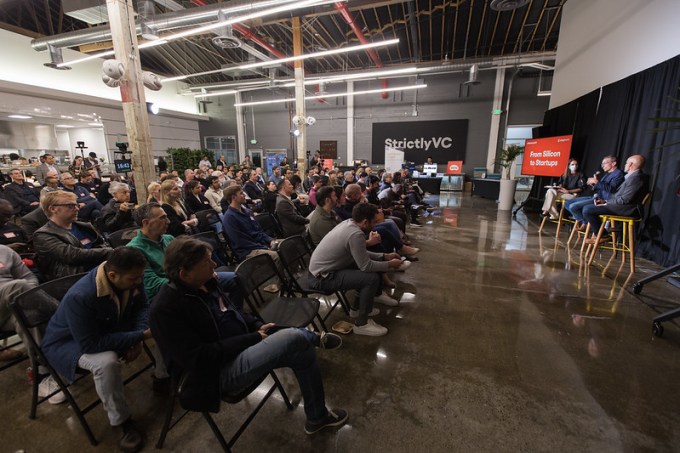
There are, naturally, hurdles, though right now, competing with ASML directly does not appear to be one of them. “We’re working very closely with them to basically design how we integrate with an ASML scanner,” Kelez said. “So we’re working with both them, as well as their providers, [like] Zeiss, who does their optics.”
When asked whether Intel or other major chipmakers have committed to purchasing xLight’s technology, Gelsinger said they have not. “Nobody has committed yet, but the work is going on with everybody on the list that you would expect, and we’re having intense conversations with all of them.”
Meanwhile, the competitive landscape is heating up. In October, Substrate — a semiconductor manufacturing startup backed by Peter Thiel — announced it raised $100 million to develop U.S. chip fabs, including an EUV tool that sounds awfully similar to xLight’s approach. Gelsinger doesn’t see them as direct competition though. “If Substrate is successful, they could be a customer for us,” he said, offering that Substrate is focused on building a full-stack lithography scanner that would ultimately need a free electron laser, which is exactly what xLight is developing.
Gelsinger’s relationship with the Trump administration adds another layer to the story. He brought up xLight to Commerce Secretary Howard Lutnick back in February, before Playground funded the startup and before Lutnick was confirmed. At that point, Kelez says, he’d already spent more than a year pitching xLight to the government as a way to bring chip manufacturing back to the U.S., but the new arrangement has drawn criticism from some who view the administration’s approach as overreach.
Gelsinger is unapologetic, framing it as necessary for national competitiveness. “I measure it by the results,” he said. “Does it drive the results that we want and that we need to reinvigorate our industrial policies? Many of our competitive countries don’t have such debates. They’re moving forward with the policies that are necessary to accomplish their competitive outcomes.”
He pointed to energy policy as another example. “How many nuclear reactors are being built in the US today? Zero. How many being built in China today? 39. Energy policy in a digital AI economy equals the economic capacity of the nation.”
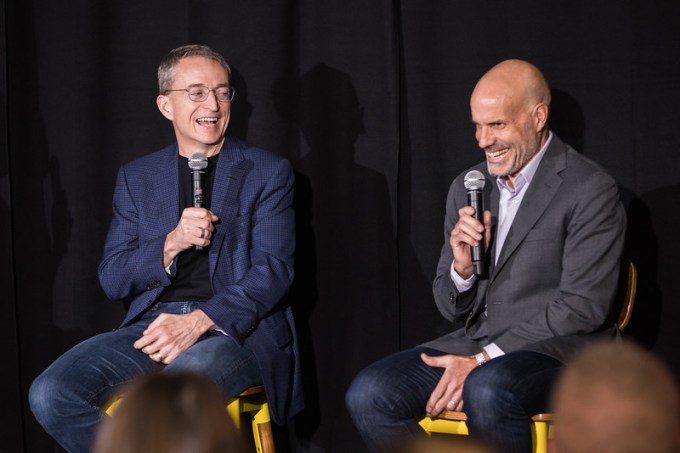
For xLight, the government stake comes with minimal strings attached. The Commerce Department won’t have veto rights or a board seat, says Kelez (pictured above). “No information rights, nothing,” Gelsinger adds. “It’s a minority investment, in a non-governing way, but it also says we need this company to succeed for national interest.”
xLight has raised $40 million from investors including Playground Global and is planning another fundraising round next month, in January. Unlike fusion or quantum computing startups that need billions, Kelez said xLight’s path is more manageable. “This is not fusion or quantum,” he said. “We don’t need billions.”
The company also signed a letter of intent with New York to build its first machine at the New York CREATE site near Albany, though that agreement also needs finalization.
For Gelsinger, xLight is clearly more than just another portfolio company. It’s a chance to cement his relevance in the semiconductor industry that he helped build, even if his methods put him at odds with Silicon Valley’s traditional ethos.
Asked about navigating his principles in the current political environment, Gelsinger retreated to a more technocratic view of corporate leadership — one where the money is from the U.S. government, administrations are temporary, and CEOs must remain above the fray.
“CEOs and companies should neither be Republican or Democrat,” he said. “Your job is to accomplish the business objective, serve your investors, serve your shareholders. That is your objective. And as a result, you need to be able to figure out what policies are beneficial on the R side or what policies are beneficial in the D side, and be able to navigate through them.”
He added separately of that $150 million from the Trump administration, “Taxpayers will do well.”
When asked if working across 10 startups is enough for someone who used to run Intel, Gelsinger was emphatic. “Absolutely. The idea that I can now influence across such a wide range of technologies — I’m a deep tech guy at the core of who I am. My mind is so stretched here, and I’m just grateful that the Playground team would have me to join them and let me make them smarter and be a rookie venture capitalist.”
He paused, then added with a grin: “And I gave my wife back her weekends.”
It’s a nice thought, though anyone who knows Gelsinger’s reputation as a workaholic might wonder how long that arrangement will last.
Keep reading the article on Tech Crunch
Meta reportedly delays mixed reality glasses until 2027
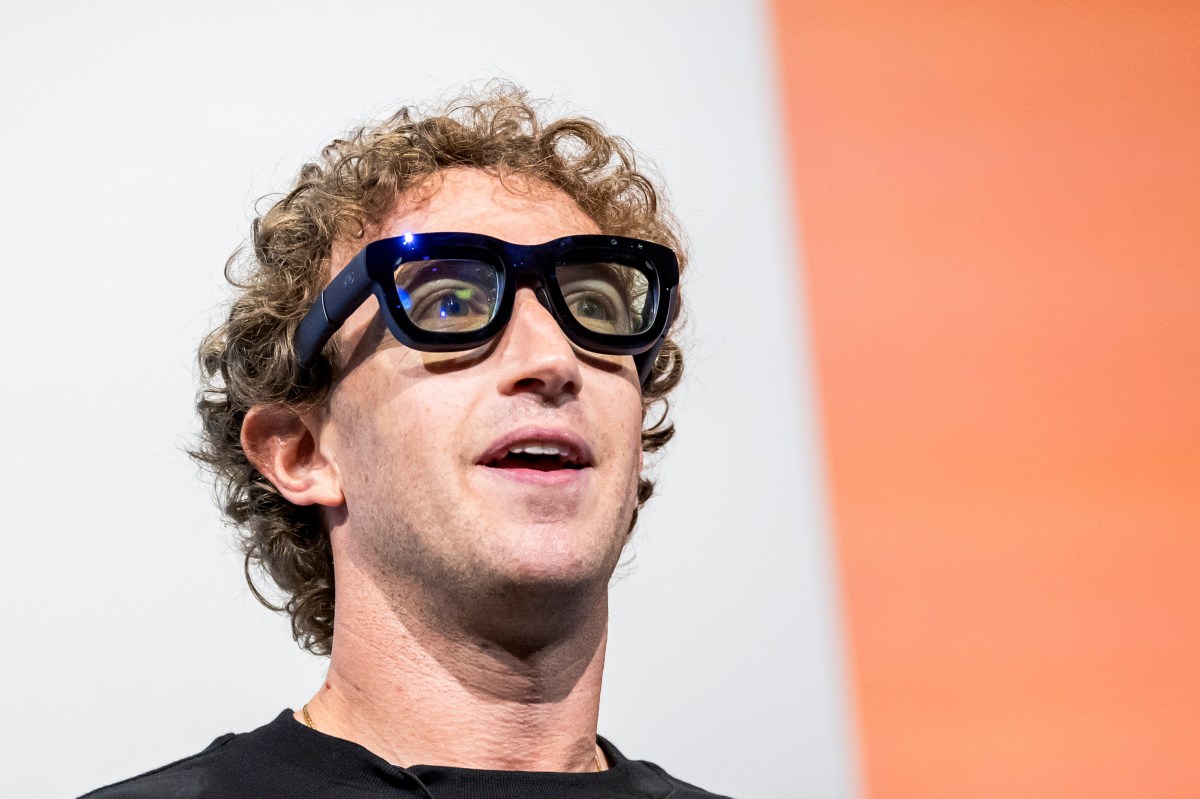
Meta is developing new mixed reality glasses under the codename Phoenix, according to Business Insider — but their release date has been pushed back from the second half of 2026 to the first half of 2027.
The Facebook parent company already sells VR headsets and Ray-Ban smart glasses, but these glasses sound a bit different; their format factor would reportedly be similar to the Apple Vision Pro, with a puck-like power source.
BI says it’s seen memos from Meta executives announcing the delay, apparently after meetings in which CEO Mark Zuckerberg told them to take more time to make the business sustainable and deliver higher quality experiences.
The company’s metaverse leaders Gabriel Aul and Ryan Cairns reportedly wrote that the delay is “going to give us a lot more breathing room to get the details right.”
Bloomberg reported earlier this week that Meta plans to slash its metaverse budget by up to 30%.
Keep reading the article on Tech Crunch
Is it time to ‘refound’ your startup?

Sometimes, founding a startup just once isn’t enough.
At least, that seems to be the case with companies like Airtable, Handshake, and Opendoor, which all announced in recent months that they are “refounding.” As reported in The New York Times these announcements are usually tied to new business models or the launch of new AI products.
For example, Airtable said in June that “instead of just adding more A.I. capabilities to our existing platform, we treated this as a refounding moment for the company.
The startup’s co-founder and CEO Howie Liu told the NYT that this is not a pivot because it’s not about changing direction after getting something wrong. Liu said the company considered calling it a relaunch or transformation, but ultimately chose “the language of founding because the stakes feel the same.”
Similarly, Handshake’s chief marketing officer Katherine Kelly said the company is trying to bring startup culture “back into an existing business.” That can also mean harder work — Kelly said handshake told employees they have to be back in the office five days a week, “operating with a pace and number of hours that is meaningful and will help us hit goals.”
Keep reading the article on Tech Crunch
How would the Netflix-Warner Bros. deal reshape Hollywood?
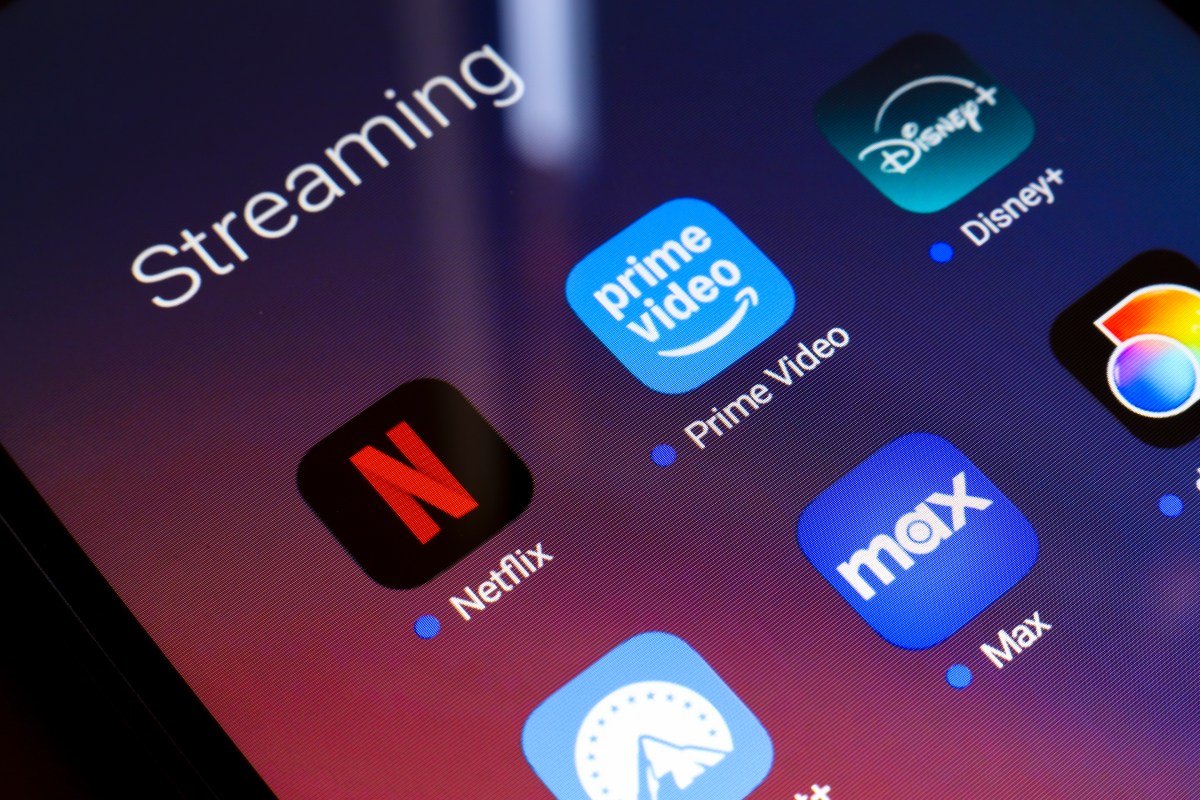
It’s only been a day since Netflix announced an $82.7 billion deal to acquire Warner Bros., and the acquisition has already been described as sending Hollywood into “full-blown panic mode,” “possibly a death blow to theatrical filmmaking,” and maybe even “the end of Hollywood” itself.
Some of the firmest opposition has come from the Writers Guild of America, which issued a statement declaring, “This merger must be blocked.”
“The world’s largest streaming company swallowing one of its biggest competitors is what antitrust laws were designed to prevent,” the WGA said. “The outcome would eliminate jobs, push down wages, worsen conditions for all entertainment workers, raise prices for consumers, and reduce the volume and diversity of content for all viewers.”
While statements from other Hollywood unions were not quite as unequivocal, they still suggested that there are “many serious questions” about the acquisition’s “impact on the future of the entertainment industry” (as the actors union SAG-AFTRA put it).
The deal came after a competitive process in which Paramount and Comcast also bids. Paramount was trying to acquire the entire company, while Netflix will only buy acquire the film and television studios, as well as the streaming business, after Warner Bros. moves forward with a plan to spin off its TV networks division.
Initially, Paramount was seen as the frontrunner, with its ties to the Trump administration (the studio is now run by David Ellison, son of Oracle co-founder and Trump ally Larry Ellison) easing the way for regulatory approval. But even before the Netflix deal was announced, Paramount’s lawyers sent an angry letter complaining about “a tilted and unfair process,” and Netflix soon emerged publicly as the winner.
This deal, which is expected to close in the third quarter of 2026, would presumably face significant regulatory scrutiny, and not just from Trump appointees. Senator Elizabeth Warren — a Democrat from Massachusetts and longtime critic of Big Tech — put out a statement of her own describing the deal as “an anti-monopoly nightmare.”
Techcrunch event
San Francisco
|
October 13-15, 2026
“A Netflix-Warner Bros. [merger] would create one massive media giant with control of close to half of the streaming market — threatening to force Americans into higher subscription prices and fewer choices over what and how they watch, while putting American workers at risk,” Warren said.
She also argued that antitrust enforcement — including the review process for this deal — must be conducted “fairly and transparently” rather than used to “invite influence-peddling and bribery.”
If the government ultimately blocks the acquisition, Netflix would be required to pay a $5.8 billion breakup fee. It’s not clear whether Warner Bros. would then continue operating as an independent company or would reconsider the previous acquisition offers.
Netflix held an analyst call to discuss the deal on Friday morning, and while many of the questions were focused on the financial impact on both companies, executives also attempted to address larger concerns.
For example, co-CEO Ted Sarandos said he’s “highly confident in the regulatory process.”
“This deal is pro-consumer, pro-innovation, pro-worker, it’s pro-creator, it’s pro-growth,” he added. “And our plans here are to work really closely with all the appropriate governments and regulators, but really confident that we’re going to get all the necessary approvals that we need.”
Sarandos also said that Netflix intends to keep HBO “operating largely as it is.” And although it’s not something Netflix has done in the past, Warner Bros. would also continue producing TV shows for other networks and streaming services, he said: “We want to keep that successful business operating.”
As for how HBO and HBO Max would be packaged with or folded into the Netflix app, co-CEO Greg Peters said it’s too early to get into specifics, but he said, “Needless to say, we think the HBO brand is very powerful for consumers. We think that the offering could constitute and would constitute a part of our plans and how we structure those for consumers.”
Beyond general concerns around consolidation, perhaps the biggest question is to what extent Netflix will support theatrical releases for the combined entity’s films — especially after Warner Bros. had a record-setting run of box office success this year, while Netflix’s theatrical releases only last for a couple weeks and skip major theatrical chains because of the limited exclusive window. (This was reportedly the deciding factor wjhen “Stranger Things” creators the Duffer Brothers signed an exclusive deal with Paramount.)
For his part, Sarandos said he “wouldn’t look at this as a change in approach for Netflix movies or for Warner movies for that matter,” and he noted that Netflix has released 30 movies in theaters this year (though again, usually on fewer screens and for a limited period of time).
Similarly, “everything that is planned on going to the theater through Warner Bros. will continue to go to the theaters through Warner Bros,” he said. But in the long term, he suggested that “the windows will evolve” so that movies come to streaming more quickly.
“My pushback has been mostly in the fact of the long exclusive windows, which we don’t really think of that consumer friendly,” he said.
Keep reading the article on Tech Crunch