
Sheena Leven says she learned two important lessons when building her first company, CodeSee. The first lesson was knowing the difference between what businesses need versus what sounds visionary; the second was that the fundamentals always apply, even with new technologies such as AI.
“Security, compliance, reliability, quality, those things don’t just go away for enterprise applications,” she said.
After CodeSee was acquired in 2024, Leven decided that she wanted to build a product that would let business owners, even those without technical backgrounds, build AI applications. She teamed up with AI researcher Sean Robinson, and last October, the two launched Empromptu, an AI service that businesses can use to build AI applications.
Empromptu claims all a user has to do is tell the platform’s AI chatbot what they want — like a new classification app or a generative recommendation app — and the tool will go ahead and build it. It also provides LLM tools to help users if they want to fine-tune any results, and also lets companies add AI features to their own existing code bases.
Leven doesn’t consider it a vibe-coding platform, though she does look to compete with companies like Replit and Lovable.
“Vibe coding is excellent for quick experiments, but Empromptu is what turns those experiments into real software,” she said. Empromptu, she continued, “turns ideas into production features with built-in evaluation, governance, and self-improvement,” she said. “You ship to real customers, with real data and complete control. If vibe coding is the brainstorm, Empromptu is the build.”
On Tuesday, the company said it had raised $2 million in a pre-seed funding round led by Precursor Ventures. Zeal Capital, Alumni Ventures, Founders Edge and South Loop also participated.
Techcrunch event
San Francisco
|
October 13-15, 2026
Leven said the fresh capital will be used for hiring staff and developing new proprietary technology.
The company is hoping to target businesses launching in regulated industries or “deeply complex” areas that involve capturing data and creating applications — software that services hotels, for example.
Overall, Leven hopes that founders feel their businesses can be transformed without having to learn the technical skills to take advantage of the AI revolution.
“It’s just like any other skill,” Leven said. “And the beauty of this skill is that AI can help you learn it along the way.”
This piece was updated to clarify what Empromptu does.
Keep reading the article on Tech Crunch
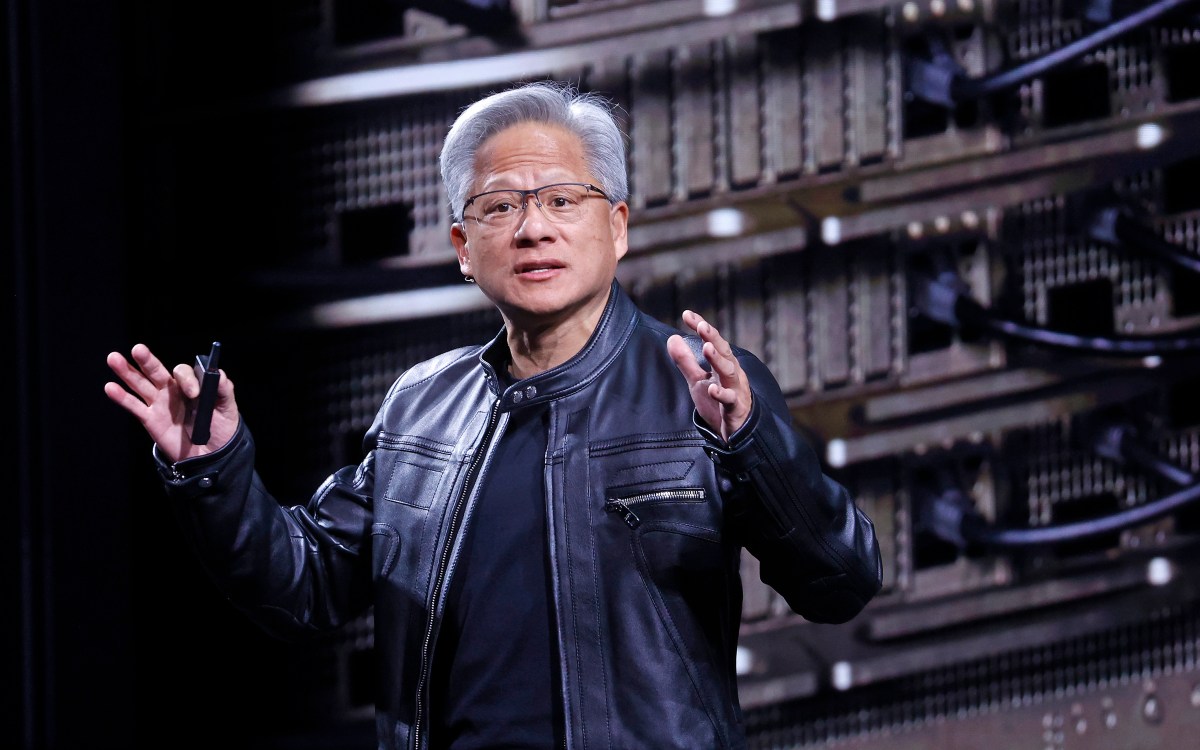
Advanced Nvidia AI chips can head back to China after all.
The Department of Commerce will allow Nvidia to ship H200 chips to China, as originally reported by Semafor, to approved customers in the country. The U.S. will take a 25% cut of these sales, CNBC reported.
H200 chips are much more advanced than the H20 chips Nvidia developed specifically for the Chinese market, but the company would only be able to send H200s that are roughly 18 months old, Semafor reported.
“We applaud President Trump’s decision to allow America’s chip industry to compete to support high paying jobs and manufacturing in America. Offering H200 to approved commercial customers, vetted by the Department of Commerce, strikes a thoughtful balance that is great for America,” an Nvidia spokesperson told TechCrunch.
The news report comes a week after U.S. Commerce Secretary Howard Lutnick said the decision on exporting these H200 chips to China was in President Donald Trump’s hands.
The decision to send these chips to China conflicts with Congressional concerns about national security.
Pete Ricketts, a Republican senator from Nebraska, and Chris Coons, a Democratic senator from Delaware, introduced a bill on December 4 that would block the export of advanced AI chips to China for more than two years.
Techcrunch event
San Francisco
|
October 13-15, 2026
The Secure and Feasible Exports Act (SAFE) Chips Act would require the Department of Commerce to deny any export license on advanced AI chips to China for 30 months. It’s unclear when legislators will vote on the proposed bill especially now that the Trump administration has given the green light to sell the H200 chips.
While Congress has long been clear about sending advanced AI chips to China — on both sides of the aisle — President Trump has waffled on whether or not to allow the exports.
The Trump administration hit chip companies like Nvidia with licensing requirements to send their chips to China in April before it formally rescinded a Biden administration diffusion rule that would have regulated AI chip exports in May. Over the summer, the U.S. government signaled that companies would be able to start sending chips to China as long as the government got a 15% cut of all revenue, as chips became a bargaining tool in trade talks with China.
However, by that point, the market for U.S.-developed chips in China was strained.
In September, China’s internet regulator, the Cyberspace Administration of China, banned domestic companies from buying Nvidia’s chips, leaving companies in the country to rely on less advanced domestic chips from Alibaba and Huawei.
On Monday, Trump said that Chinese president Xi Jinping “responded positively” to the latest H200 news in a Truth Social post.
This story was updated on December 8 when the proposed decision was confirmed.
Keep reading the article on Tech Crunch
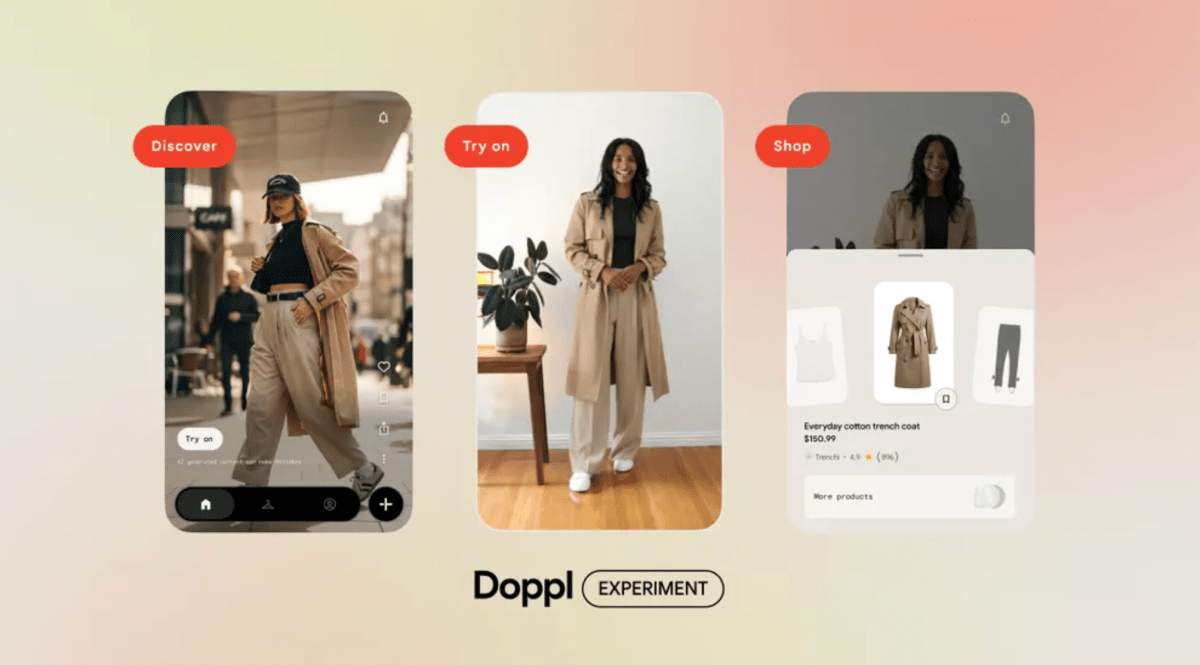
Google announced on Monday that it’s introducing a shoppable discovery feed in Doppl, its experimental app that uses AI to visualize how different outfits might look on you.
The tech giant says the idea behind the new feed is to display recommendations so users can discover and virtually try on new items. Nearly everything in the feed is shoppable, with direct links to merchants.
The discovery feed features AI-generated videos of real products and suggests outfits based on your personalized style. Google determines your style by analyzing the preferences you share with Doppl and the items you interact with.
The move comes as short-form video feeds, particularly on TikTok and Instagram, have conditioned users to scroll visual feeds and buy what they see. However, unlike on TikTok and Instagram, where real influencers showcase products, Google’s new feed only consists of AI-generated content.
While some may not be fond of an AI-generated feed, Google likely sees it as a way to surface products in a format that people are already used to. Plus, it makes sense for the company to try a new e-commerce strategy, especially as it continues to lose ground to companies like Amazon and social media platforms.
It’s worth noting that AI-generated videos aren’t new to Doppl. While the app creates images of a virtual version of yourself wearing different outfits, it can turn these static images and convert them into AI-generated videos. The purpose of this is to give you a better sense of how the outfit would look on you in real life.
The new discovery feed is rolling out to Doppl on iOS and Android in the U.S. for users 18 and above.
Techcrunch event
San Francisco
|
October 13-15, 2026
Although a feed consisting solely of AI-generated content would have seemed strange a year ago, the idea is now gaining traction. For example, OpenAI in September launched Sora, a social media platform of just AI videos. Meta also has a short-form video feed of AI-generated videos called “Vibes” in the Meta AI app.
Keep reading the article on Tech Crunch
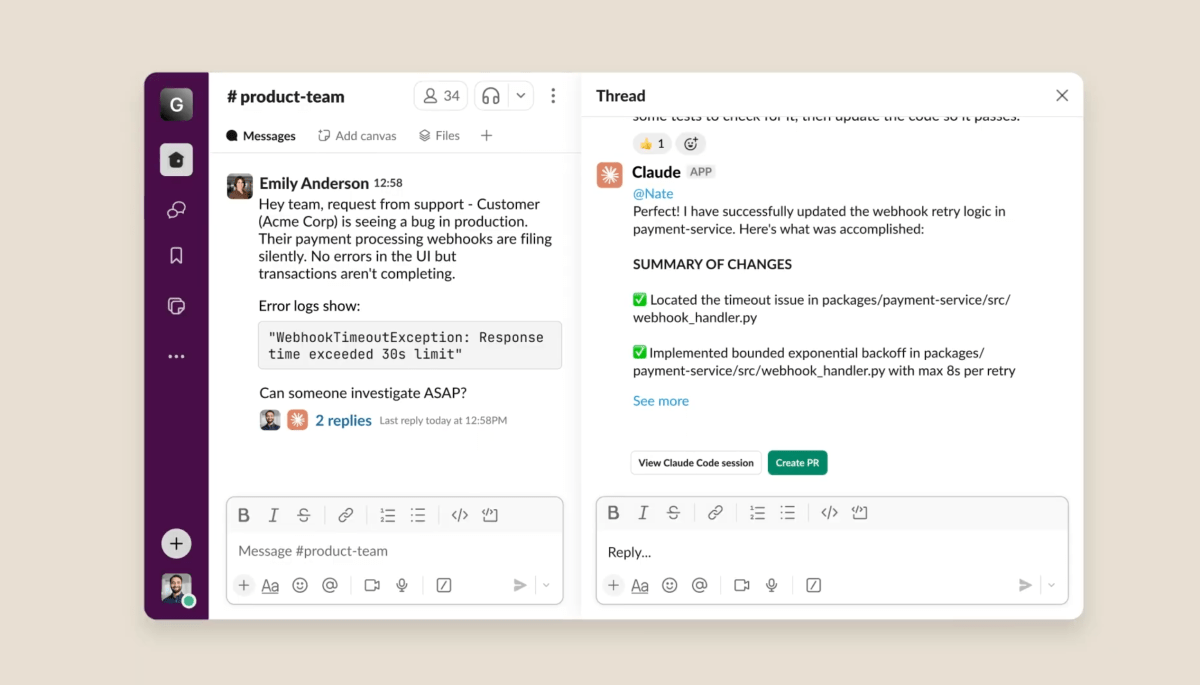
Anthropic is launching Claude Code in Slack, allowing developers to delegate coding tasks directly from chat threads. The beta feature, available Monday as a research preview, builds on Anthropic’s existing Slack integration by adding full workflow automation. The rollout signals that the next frontier in coding assistants isn’t the model; it’s the workflow.
Previously, developers could only get lightweight coding help via Claude in Slack — like writing snippets, debugging, and explanations. Now they can tag @Claude to spin up a complete coding session using Slack context like bug reports or feature requests. Claude analyzes recent messages to determine the right repository, posts progress updates in threads, and shares links to review work and open pull requests.
The move reflects a broader industry shift: AI coding assistants are migrating from IDEs (integrated development environment, where software development happens) into collaboration tools where teams already work.
Cursor offers Slack integration for drafting and debugging code in threads, while GitHub Copilot recently added features to generate pull requests from chat. OpenAI’s Codex is accessible via custom Slack bots.
For Slack, positioning itself as an “agentic hub” where AI meets workplace context creates a strategic advantage: Whichever AI tool dominates Slack — the center of engineering communication — could shape how software teams work.
By letting developers move seamlessly from conversation to code without switching apps, Claude Code and similar tools represent a shift toward AI-embedded collaboration that could fundamentally change developer workflows.
While Anthropic has not yet confirmed when it would make a broader rollout available, the timing is strategic. The AI coding market is getting more competitive, and differentiation is starting to depend more on integration depth and distribution than model capability alone.
Techcrunch event
San Francisco
|
October 13-15, 2026
That said, the integration raises questions about code security and IP protection, as it adds another platform through which sensitive repository access must be managed and audited — while also introducing new dependencies where outages or rate limits in either Slack or Claude’s API could disrupt development workflows that teams previously controlled locally.
TechCrunch has reached out to Anthropic and Slack for more information.
Keep reading the article on Tech Crunch
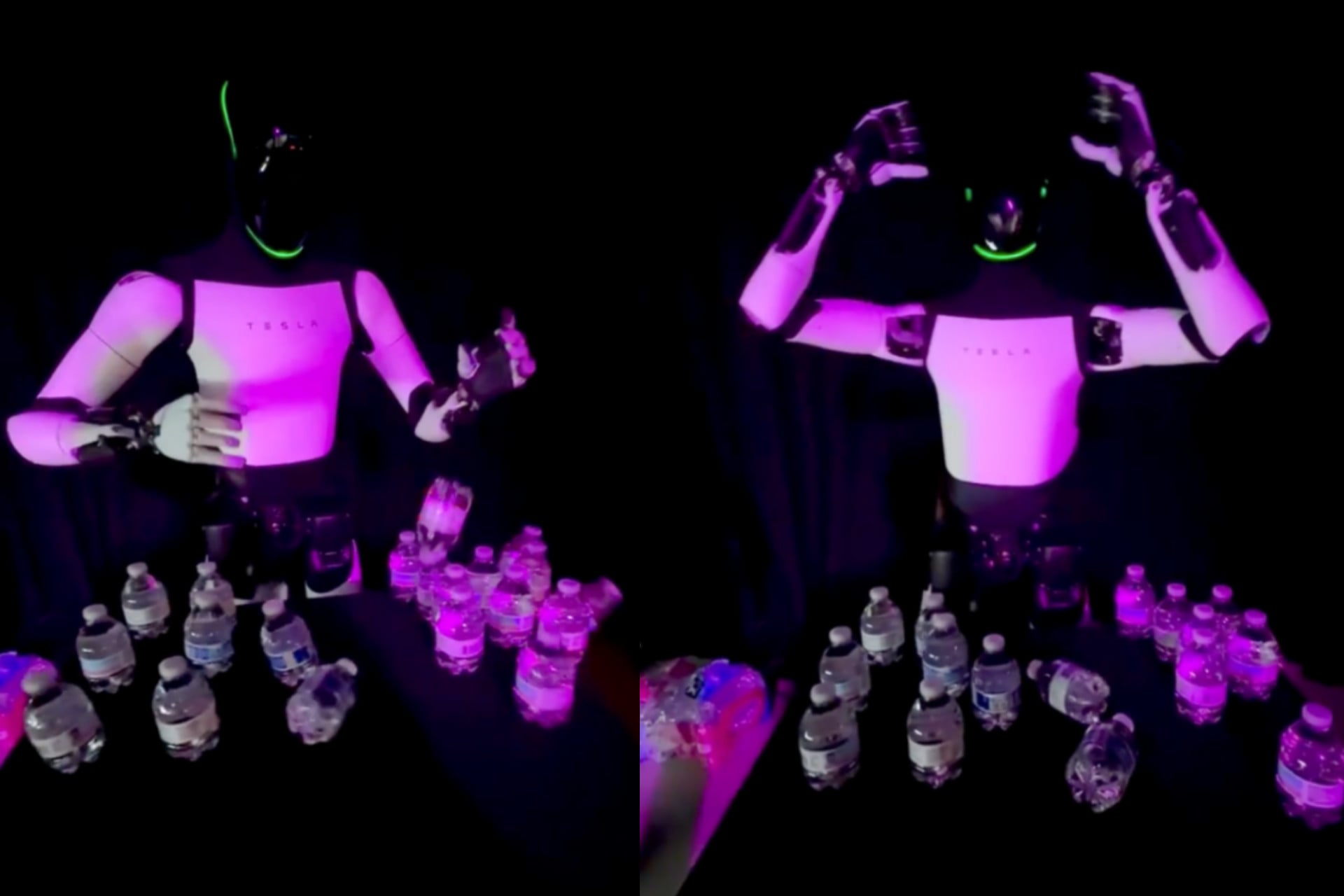
Musk says he’s going to make 1 million robots per year by 2030.
An increasing number of browsers are experimenting with agentic features that will take actions on your behalf, such as booking tickets or shopping for different items. However, these agentic capabilities also come with security risks that could lead to loss of data or money.
Google detailed its approach to handling user security on Chrome using observer models and consent for user action. The company previewed agentic capabilities on Chrome in September and said these features will roll out in the coming months.
The company said it is using the help of a few models to keep agentic actions in check. Google said it built a User Alignment Critic using Gemini to scrutinize the action items built by the planner model for a particular task. If the critic model thinks that the planned tasks don’t serve the user’s goal, it asks the planner model to rethink the strategy. Google noted that the critic model only sees the metadata of the proposed action and not the actual web content.
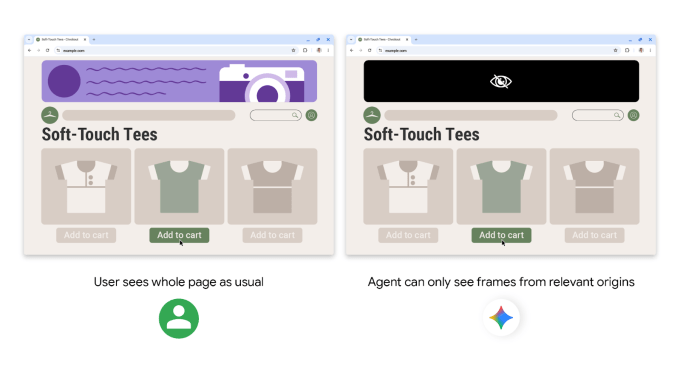
What’s more, to prevent agents from accessing disallowed or untrustworthy sites, Google is using Agent Origin Sets, which restrict the model to access read-only origins and read-writeable origins. Read-only origin is data that Gemini is permitted to consume content from. For instance, on a shopping site, the listings are relevant to the task, but banner ads aren’t. Similarly, Google said the agent is only allowed to click or type on certain iframes of a page.
“This delineation enforces that only data from a limited set of origins is available to the agent, and this data can only be passed on to the writable origins. This bounds the threat vector of cross-origin data leaks. This also gives the browser the ability to enforce some of that separation, such as by not even sending to the model data that is outside the readable set,” the company said in a blog post.
Google is also keeping a check on page navigation by investigating URLs through another observer model. This can prevent navigation to harmful model-generated URLs, the company said.
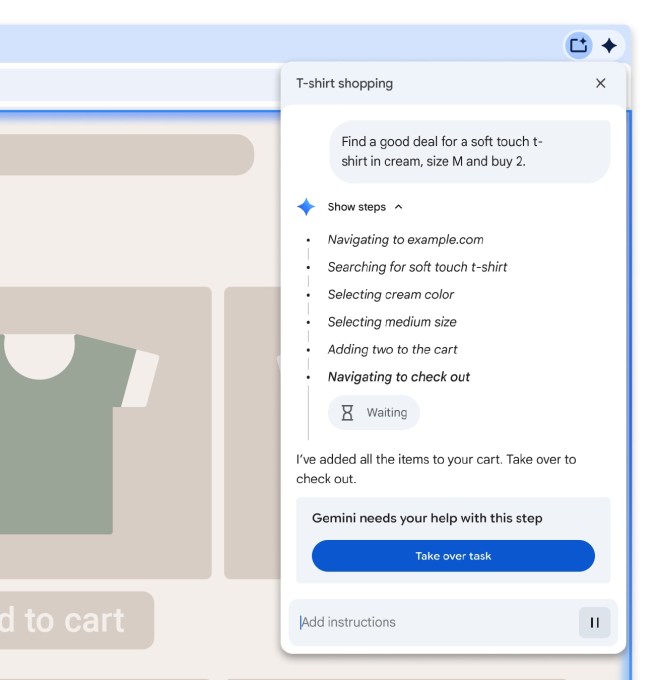
The search giant said that it is also handing over the reins to users for sensitive tasks. For instance, when an agent tries to navigate to a sensitive site with information like banking or your medical data, it first asks the user. For sites that require sign-in, it’ll ask the user for permission to let Chrome use the password manager. Google said that the agent’s model doesn’t have exposure to password data. The company added that it will ask users before taking actions like making a purchase or sending a message.
Techcrunch event
San Francisco
|
October 13-15, 2026
Google said that, in addition to this, it also has a prompt-injection classifier to prevent unwanted actions and is also testing agentic capabilities against attacks created by researchers.
AI browser makers are also paying attention to security. Earlier this month, Perplexity released a new open-source content detection model to prevent prompt injection attacks against agents.
Keep reading the article on Tech Crunch