An increasing number of browsers are experimenting with agentic features that will take actions on your behalf, such as booking tickets or shopping for different items. However, these agentic capabilities also come with security risks that could lead to loss of data or money.
Google detailed its approach to handling user security on Chrome using observer models and consent for user action. The company previewed agentic capabilities on Chrome in September and said these features will roll out in the coming months.
The company said it is using the help of a few models to keep agentic actions in check. Google said it built a User Alignment Critic using Gemini to scrutinize the action items built by the planner model for a particular task. If the critic model thinks that the planned tasks don’t serve the user’s goal, it asks the planner model to rethink the strategy. Google noted that the critic model only sees the metadata of the proposed action and not the actual web content.
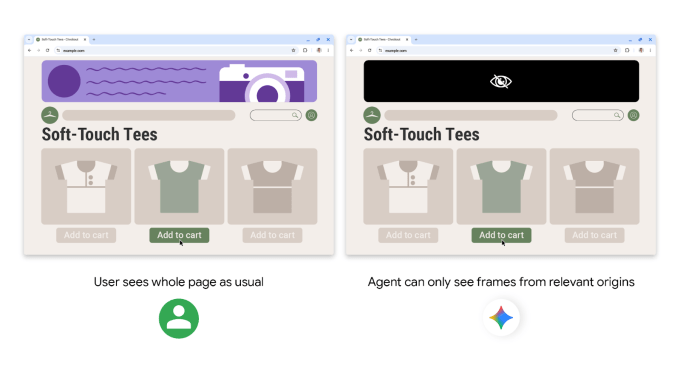
What’s more, to prevent agents from accessing disallowed or untrustworthy sites, Google is using Agent Origin Sets, which restrict the model to access read-only origins and read-writeable origins. Read-only origin is data that Gemini is permitted to consume content from. For instance, on a shopping site, the listings are relevant to the task, but banner ads aren’t. Similarly, Google said the agent is only allowed to click or type on certain iframes of a page.
“This delineation enforces that only data from a limited set of origins is available to the agent, and this data can only be passed on to the writable origins. This bounds the threat vector of cross-origin data leaks. This also gives the browser the ability to enforce some of that separation, such as by not even sending to the model data that is outside the readable set,” the company said in a blog post.
Google is also keeping a check on page navigation by investigating URLs through another observer model. This can prevent navigation to harmful model-generated URLs, the company said.
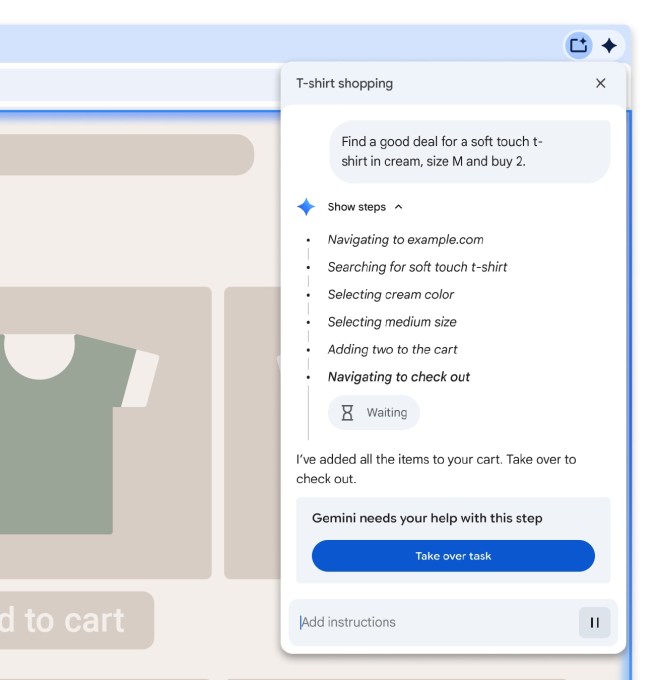
The search giant said that it is also handing over the reins to users for sensitive tasks. For instance, when an agent tries to navigate to a sensitive site with information like banking or your medical data, it first asks the user. For sites that require sign-in, it’ll ask the user for permission to let Chrome use the password manager. Google said that the agent’s model doesn’t have exposure to password data. The company added that it will ask users before taking actions like making a purchase or sending a message.
Techcrunch event
San Francisco
|
October 13-15, 2026
Google said that, in addition to this, it also has a prompt-injection classifier to prevent unwanted actions and is also testing agentic capabilities against attacks created by researchers.
AI browser makers are also paying attention to security. Earlier this month, Perplexity released a new open-source content detection model to prevent prompt injection attacks against agents.
Keep reading the article on Tech Crunch

Loading the player…
AWS announced a wave of new AI agent tools at re:Invent 2025, but can Amazon actually catch up to the AI leaders? While the cloud giant is betting big on enterprise AI with its third-gen chip and database discounts that got developers cheering, it’s still fighting to prove it can compete beyond infrastructure.
This week on Equity, Kirsten Korosec, Anthony Ha, and Sean O’Kane dig into the ROI on AI agents, plus the collision course between Hollywood and generative AI, and why everyone wants their own version of Spotify Wrapped.
Subscribe to Equity on Apple Podcasts, Overcast, Spotify and all the casts. You also can follow Equity on X and Threads, at @EquityPod.
Keep reading the article on Tech Crunch
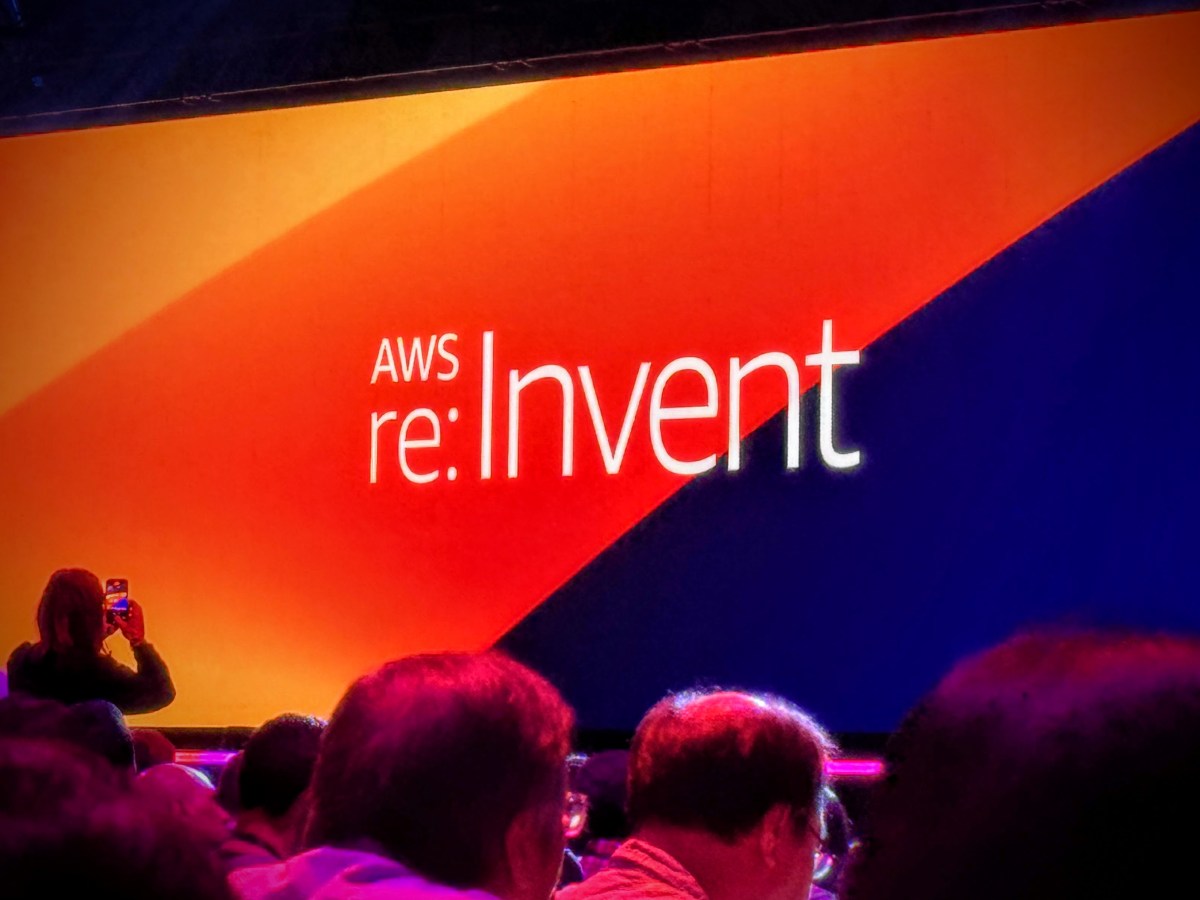
If Amazon Web Services’ annual re:Invent tech conference proves anything, it’s that the cloud infrastructure player is going all in on AI.
AWS announced made dozens of announcements from new AI agents and updated large language models, to products with LLM and agent-building capabilities. AI for enterprise was everywhere. But are its customers just as eager?
AWS CEO Matt Garman acknowledged during his keynote that enterprises haven’t seen a return on AI investment yet. He thinks that’s about to change — and fast.
“I believe that the advent of AI agents has brought us to an inflection point in AI’s trajectory,” Garman said. “It’s turning from a technical wonder into something that delivers us real value. This change is going to have as much impact on your business as the internet or the cloud.”
While analysts told TechCrunch they were impressed by some of AWS’ tech announcements this week, they aren’t sure it’s enough to move the needle on enterprise AI adoption or change AWS’ position in the AI race.
AWS is one of the market leaders when it comes to cloud infrastructure; the same can’t be said for its enterprise AI offerings.
Anthropic, OpenAI, and Google hold a commanding lead when it comes to enterprise market share for actual AI models. AWS does have the advantage of having everything in house, including infrastructure and its own AI training chips.
Techcrunch event
San Francisco
|
October 13-15, 2026
Naveen Chhabra, a principal analyst at Forrester, told TechCrunch over email that while AWS announced a lot of cool new technology, it doesn’t change the fact that many enterprises aren’t ready to adopt AI.
“AWS AI announcements show that AWS is thinking ahead and maybe far too ahead,” Chhabra wrote. “Most enterprises are still piloting AI projects and are rarely at the levels of maturity AWS expects them to be to take advantage of the offerings that come out of these announcements.”
A widely cited MIT study from August found that 95% of enterprises aren’t seeing a return on investment from AI.
Ethan Feller, an equity strategist at Zacks Investment Research, told TechCrunch in a phone interview that the new Nova AI models, agents, and model-building capabilities weren’t what stood out to him as interesting from this week — despite these being the products AWS hyped the most. Instead, it was the infrastructure announcements.
“The AWS AI factory is really compelling,” Feller said about a new initiative that allows customers to run AWS AI in their own data centers. “AWS is a huge player in where the models are being run and is dominant in the cloud industry. I think that is where Amazon’s expertise really lies. It’s a good thing to double down on where they have expertise.”
Feller likes that AWS is looking to make a vertical AI play, but he thinks it may make more sense to do so through partnerships with other AI players like Anthropic and Nvidia as opposed to using all of their own AI technology.
Despite all of this, AWS is still well positioned to carve out market share in the AI sector, while continuing to grow its core businesses.
AWS’ position as an industry-leading cloud provider means it has a solid business foundation despite what happens in the AI market because it provides the rails for the industry’s technology — regardless of what the AI trend of the moment is.
If the AI industry ends up being the bubble some say it is, AWS, which recorded $11.4 billion in operating income in the third quarter, will likely be less affected by a negative change in AI market conditions than its peers.
This gives AWS room to experiment and iterate on what its place in the AI market could look like down the road. That’s why even if enterprises aren’t ready for the tech they release today, AWS should keep working to improve it.
Follow along with all of TechCrunch’s coverage of the annual enterprise tech event here, and see all the announcements you may have missed thus far here.
Keep reading the article on Tech Crunch