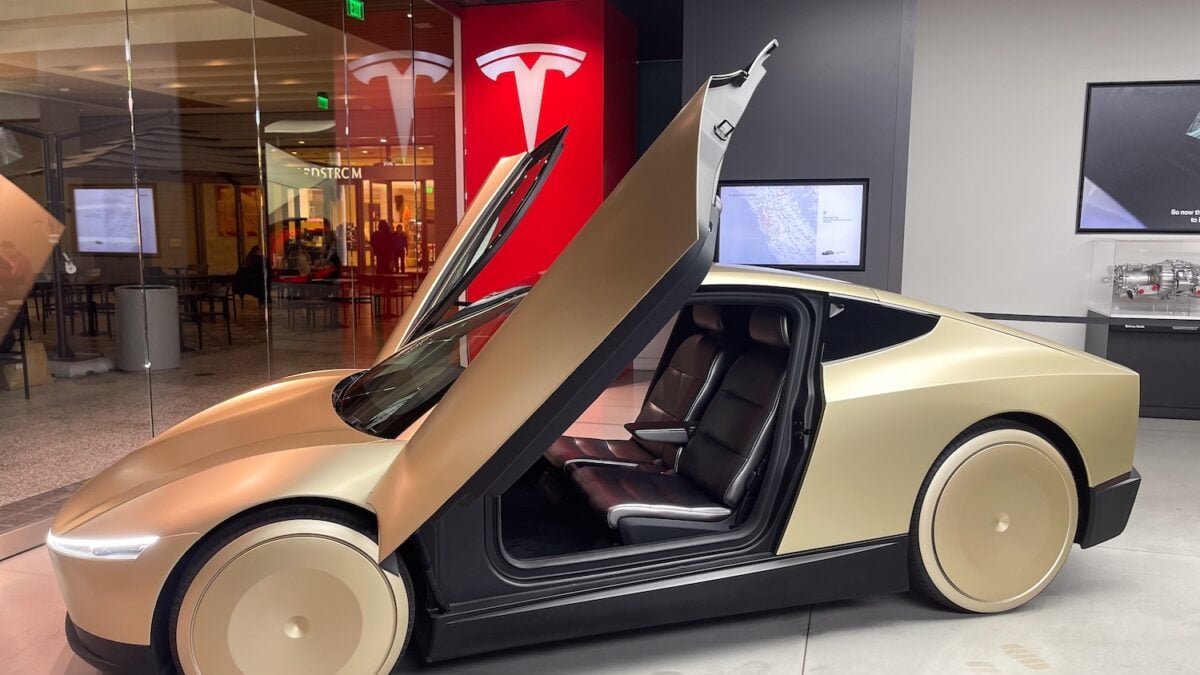
Tesla’s purpose-built robotaxi finally appears to have a launch date.
Elon Musk’s EV company posted a teaser on X over the weekend for an “Exclusive Access” Cybercab event taking place Sept. 3 in Austin.
The Musk-focused news site Teslarati also posted an invitation to what Tesla is calling the “Cybercab Launch Event.” The invite says guests will get the opportunity to “experience the future of full autonomy.” Electrek reports that the event is invite-only but will be livestreamed. The outlet also reports that Cybercab rides will soon become available through Tesla’s existing Robotaxi app in Austin.
The event comes as Tesla has been laying the groundwork to expand its year-old Robotaxi service. In February, the company posted a photo of what it said was the first production Cybercab to roll off the line at its Gigafactory in Texas.
The Cybercab is a two-seat, “purpose-built fully autonomous vehicle.” Since it is meant to be fully driverless, it has no steering wheel or pedals.
Amazon-owned Zoox also operates a purpose-built robotaxi that has no driving controls.
The lack of traditional controls makes the Cybercab an unusually light EV. Recent regulatory filings with the U.S. Environmental Protection Agency (EPA), first reported by Car and Driver, revealed that the Cybercab has a curb weight of just 3,113 pounds. For context, that makes it roughly 700 pounds lighter than the lightest Model 3. The filings also show that it runs on a single front-mounted 219-horsepower permanent magnet motor and a 48 kWh battery pack for an unadjusted 418-mile range.
The Verge reports that, after EPA testing adjustments, the Cybercab’s real-world range will likely be closer to 290 to 300 miles. The outlet also reports that its 165 watt-hours-per-mile(Wh/mi) rating would make it one of the most efficient EVs ever certified.
When Tesla first launched its Robotaxi service in Austin in June 2025, Musk told investors the company planned to quickly expand into California, Nevada, Arizona, and Florida. “We’ll probably have autonomous ride-hailing in about half the population of the US by the end of the year,” Musk said in a July earnings call last year. More than a year later, Tesla says Robotaxi rides are currently available in Texas and Florida.
Additionally, Electrek estimates that Tesla only has somewhere between 20 and 30 unsupervised vehicles operating at any given time.
For comparison, Waymo operates at 3,000 autonomous vehicles across more than 11 cities and completes more than 500,000 paid rides a week.
Still, there are signs Tesla is preparing to expand its operations.
Last week, the Nevada Transportation Authority approved permits allowing Tesla, Waymo and Uber partner Aviari to operate commercial robotaxi services in Clark County, where Las Vegas is located.
Tesla’s permit allows it to deploy up to 5,000 fully autonomous vehicles during its first 12 months.
On top of that, Bloomberg reported in June that Tesla filed plans with the city of Austin to expand an existing service center with a “robocar” wash and charging stations. The company has also submitted plans for a Cybercab car wash in Las Vegas.
Tesla did not immediately respond to a request for comment.
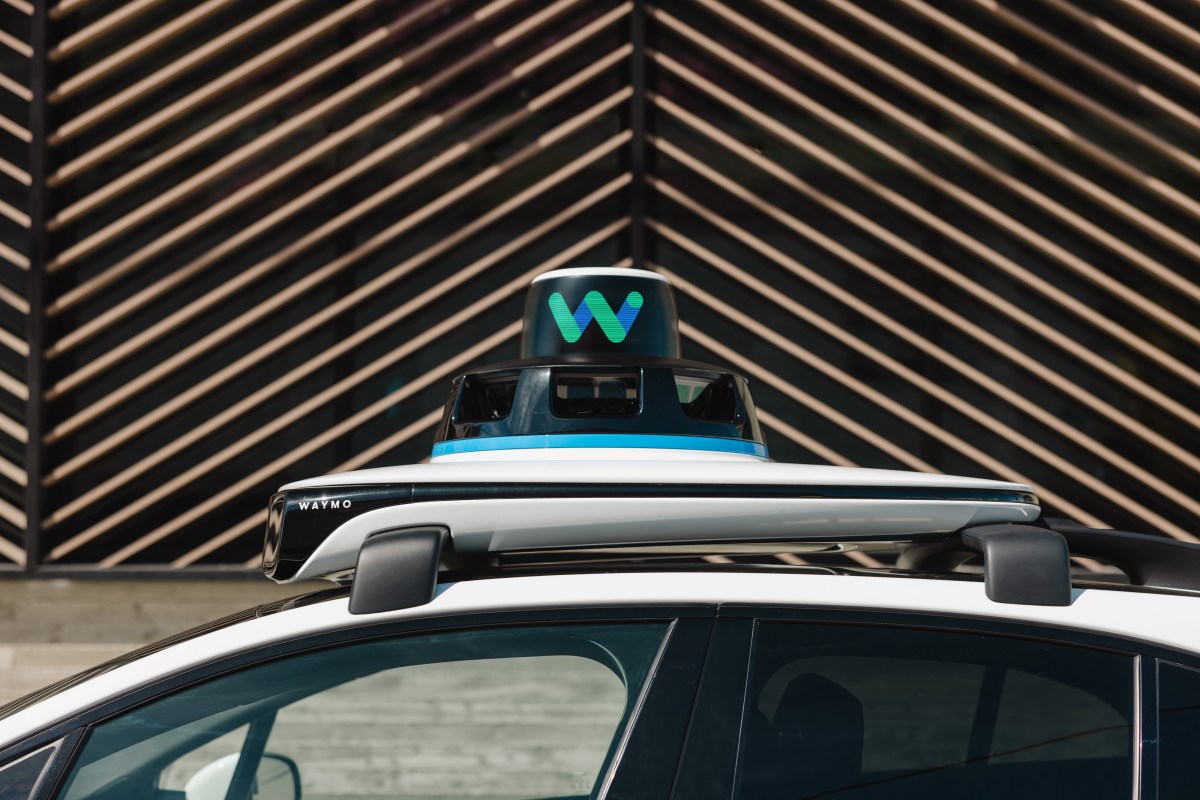
Six months ago, Waymo disclosed it was providing 250,000 robotaxi rides a week across its service areas, an ever-growing list that includes Atlanta, Austin, Los Angeles, Phoenix, and the San Francisco Bay Area.
The Alphabet-owned self-driving company has been coy ever since, simply stating it is providing many hundreds of thousands of weekly rides. Now, we have a firmer grasp on those weekly ride numbers, thanks to a leaked letter from Tiger Global Management to it investors that was first reported by CNBC.
The letter was an appeal for investment into Tiger Global’s next venture capital fund and called out the gains, so far, of its current fund. Those gains rested largely on its investments in hot companies like OpenAI, Databricks, and Waymo. In the letter, Tiger disclosed that Waymo is now providing 450,000 robotaxi rides per week — nearly double the amount it disclosed this spring.
That number will rise as the company continues its aggressive rollout strategy, too. Waymo, which provides commercial robotaxi service in five cities, has announced plans to launch in 12 additional cities in 2026, including Dallas, Denver, Houston, Nashville, and San Diego.
A Waymo spokesperson declined to comment.
Keep reading the article on Tech Crunch
The former chief engineer of Lucid Motors, Eric Bach, has sued the company for wrongful termination, discrimination, and retaliation, and claims one of the automaker’s top HR executives referred to him as a “German Nazi.”
The federal lawsuit, filed Monday in the Northern District of California, claims Bach was stripped of his responsibilities overseeing the powertrain division in early 2025 as a result of an HR investigation into the company’s workplace culture. Bach claims to have been targeted because of his German heritage.
Bach first learned about the disparaging comment in mid-2025 — months after the investigation into workplace culture was launched and after losing some responsibilities at the company, according to the complaint. He encouraged a co-worker to report the incident.
TechCrunch has reached out to Lucid and will update the article if the company comments on the lawsuit.
Bach claims Lucid Motors “confirmed” the HR executive made the remark. Bach logged an internal complaint against another Lucid vice president for similarly racist behavior.
He claims Lucid Motors retaliated by trying to force him to resign in October 2025. Lucid fired Bach on November 5, 2025, according to the lawsuit. Lucid Motors’ press release from that day only said he had “departed.”
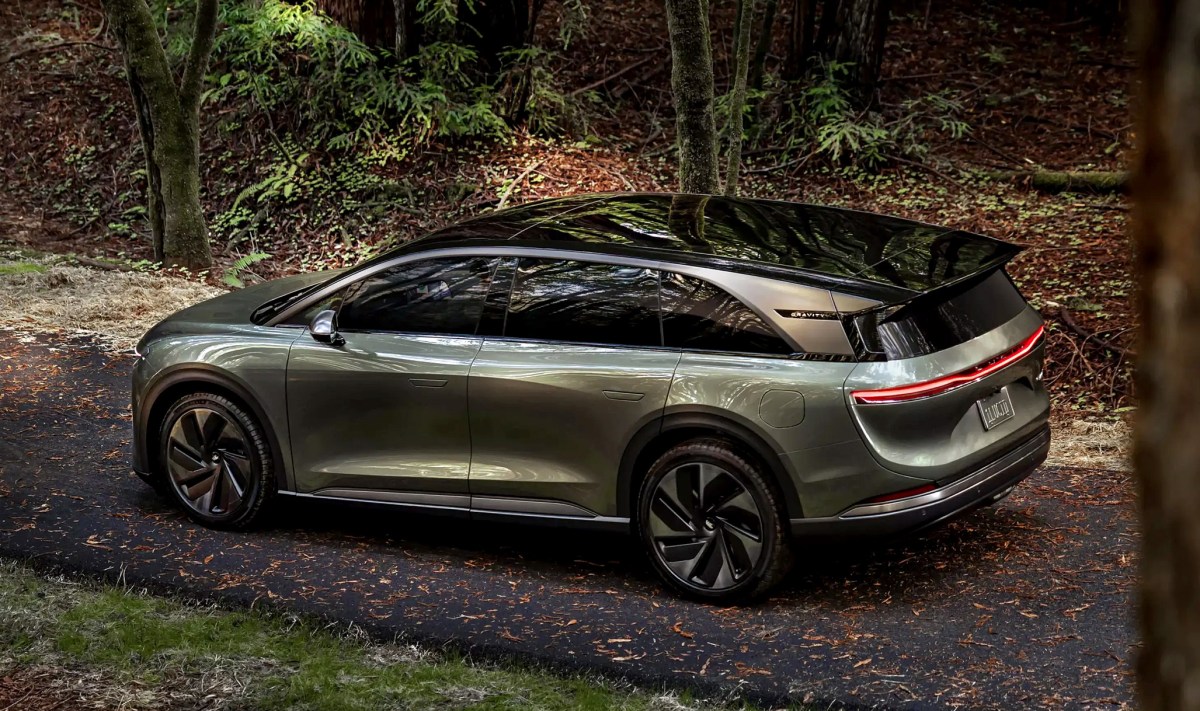
The lawsuit comes during a tricky moment for Lucid Motors. The company is burning through cash as it works to ramp up production of its second vehicle, the Gravity SUV. It is developing more affordable mass-market vehicles on a midsized platform slated to debut sometime in late 2026.
Techcrunch event
San Francisco
|
October 13-15, 2026
Lucid has also been churning through executives. The company’s VP of engineering left on the same day Bach claims to have been fired, as TechCrunch previously reported. Former CEO and CTO Peter Rawlinson suddenly resigned in February, and the company has still not named a permanent replacement. Lucid’s head of investor relations, Senior Vice President of Operations, Managing Director for Europe, and the Vice Presidents of Software Quality and Marketing all left within the last year, too.
Bach, in the complaint, claims to have been ascendant before the internal investigation. An engineer who spent a decade with the company, Bach says he oversaw “all hardware engineering,” “product management and corporate planning.”
Bach states that Lucid’s chairman Turqi Alnowaiser “praised Bach’s loyalty and dedication to the Company and expressed a desire to continue working with Bach.” He also claims board member Andrew Liveris “signaled that Bach would become Chief Technology Officer (the position ‘is yours to lose’) and that Bach could one day become Chief Executive Officer,” according to the complaint.
The workplace culture investigation launched in late 2024, which Bach claims was “tainted by HR’s racist beliefs,” “initially resulted in Bach losing significant responsibilities.” The HR department told Bach at the time that he contributed to a poor culture at the company, according to the complaint. In addition to losing oversight of the powertrain team, Bach claims to have been excluded from board meetings.
Keep reading the article on Tech Crunch
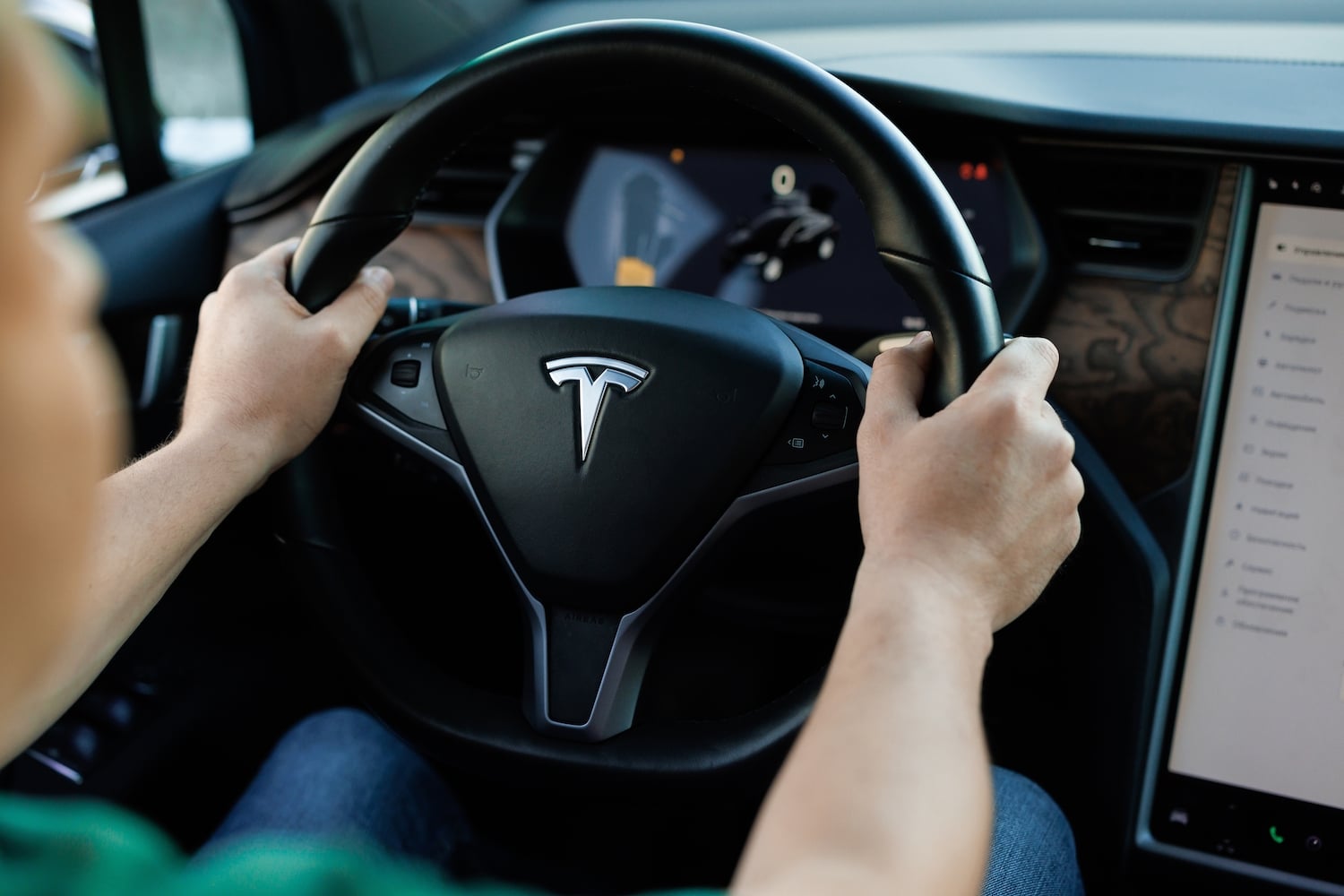
Tesla announced several new features for its cars in its 2025 Holiday Update today.
Welcome back to TechCrunch Mobility — your central hub for news and insights on the future of transportation. To get this in your inbox, sign up here for free — just click TechCrunch Mobility!
Another week, another round of announcements about robotaxis either launching or planning to in cities.
Let’s take stock. Waymo started testing its autonomous vehicles (with a safety monitor) in Philadelphia and will start manual driving to collect data in Baltimore, St. Louis, and Pittsburgh; Uber and Avride launched a robotaxi service in Dallas that will initially include a human safety operator behind the wheel; and the California Department of Motor Vehicles released revised rules that would allow companies to test and eventually deploy self-driving trucks on public highways in the state.
Autonomous vehicle tech is scaling and the pace is quickening. But should it?
As autonomous vehicle tech percolates into the cityscape, so has the criticism and challenges. A couple of recent incidents illustrate this point.
The National Highway Traffic Safety Administration has asked Waymo for more information about its self-driving system and operations following reports from the Austin School District that its robotaxis illegally passed school buses 19 times this year. The agency already opened an investigation into Waymo’s performance around school buses.
Then there is KitKat, the bodega cat that died after a Waymo robotaxi ran him over on October 27. The company was already facing criticism over the event. And now it might escalate thanks to new video. The NYT tracked down surveillance video that shows a woman crouching beside the Waymo trying to lure KitKat to safety before the vehicle suddenly pulled away.
Techcrunch event
San Francisco
|
October 13-15, 2026

A lot of changes have been happening at Lucid Motors recently, according to some little birds.
As many of you already know, the company has lost a number of top executives, including former CEO and CTO Peter Rawlinson and most recently, chief designer Eric Bach. Lucid, which is in the middle of ramping up production of its Gravity SUV, has patched some of these vacancies with a mix of internal promotions and outside hires.
And the changes keep coming. A few little birdies told us this week that a handful or more of top managers on its software and electrical teams were let go, including two senior directors who started with Lucid around a decade ago.
Got a tip for us? Email Kirsten Korosec at kirsten.korosec@techcrunch.com or my Signal at kkorosec.07, or email Sean O’Kane at sean.okane@techcrunch.com.

Electric aircraft maker Beta Technologies, which went public last month, is carving out a nice little supplier business for itself. Which is fitting since the Vermont-based company is aiming to be an OEM to the aviation sector.
The company locked in a deal to supply air taxi company Eve Air Mobility with its electric pusher motors. Beta says the agreement is a potential 10-year opportunity valued at $1 billion.
Of course, “potential” is an important hedge. That $1 billion is not guaranteed, even if shareholders translated it as such (stocks popped 8% following the news). Still, Beta is finding a near-term revenue path as it continues to work toward the commercial certification of its electric aircraft with the Federal Aviation Administration.
The company also reported its third-quarter earnings this week. Beta saw its revenue more than double to $8.9 million from the same quarter last year. Its net losses have also grown. Beta reported net losses of $452 million in the third quarter, a more than fivefold increase from the same year-ago period.
Other deals that got my attention …
Autolane, a Palo Alto-based startup developing the “air traffic control” for autonomous vehicles, raised $7.4 million in a round led by VC firms Draper Associates and Hyperplane.
Element Fleet Management, an automotive fleet manager, acquired San Francisco-based connected vehicle payments company Car IQ. The terms weren’t disclosed, but sources with information on the deal told TechCrunch the acquisition price was $80 million. History lesson: back in 2024, Canada-based Element Fleet Management acquired fleet optimization software startup Autofleet for $110 million.
ExploMar, a China-based developer of electric propulsion systems for boats, raised $10 million in a Series A round. The investment was jointly led by private equity funds and a listed company in China (not disclosed), with existing shareholder DCM Ventures continuing to participate.
Heven AeroTech, a startup developing hydrogen-powered drones, raised $100 million in a Series B round led by American quantum computing company IonQ. The company’s post-money valuation is now more than $1 billion. Texas Venture Partners also participated.
Wayve, the buzzy U.K. self-driving startup backed by Microsoft, Nvidia, and SoftBank Group, acquired German startup Quality Match, which analyzes data used to train AI models for automated driving. Terms weren’t disclosed.

Amazon is considering ending its long-standing contract with the United States Postal Service and building out its own competing nationwide delivery network.
Tesla owners can text and drive with the latest version of the company’s Full Self-Driving (Supervised) driver-assistance software, despite the fact that it’s illegal to do so in most states.
Grand Theft Auto Online has added robotaxis from a fictional-yet-familiar company dubbed “KnoWay,” whose sole purpose appears to be wreaking havoc.
Nvidia announced Alpamayo-R1, an open reasoning vision language model for autonomous driving research.
TechCrunch’s Europe-based reporter Anna Heim gives an inside look at a drone delivery partnership in Finland.
The Trump administration said it will lower fuel economy standards for cars and light trucks sold in the United States, arguing it will make vehicles more affordable. There’s a trade-off, though. Consumers could end up paying more for gas.
The reduction essentially brings vehicles below what they’re achieving already. The proposal would roll fleet-wide fuel economy to 34.5 miles per gallon for 2031 model-year cars. The previous fuel economy standard, set under the Biden administration, mandated fuel economy of 50.4 mpg by 2031. In 2024, automakers had to average 30.1 mpg across their fleets, which they beat, delivering 35.4 mpg, according to CAFE calculations.
Back before Thanksgiving, we did a poll in the Mobility newsletter asking, “When do you expect robotaxis to reach a tipping point of mass adoption that will affect how people move from Point A to Point B?” Most readers picked “before the end of the decade,” which received 47.2% of the vote, followed by the “2030s.” Based on your votes, there appears to be low confidence that 2026 will be the year of the tipping point.
Sign up for the Mobility newsletter to participate in our polls!
Keep reading the article on Tech Crunch

Waymo plans to voluntarily issue a software recall with federal safety regulators related to how its robotaxis operate around school buses, the Alphabet-owned company told TechCrunch.
The voluntary software recall will be filed early next week, according to the company. Waymo said as soon as the issue was identified it updated its software on November 17. The company contends this update has meaningfully improved performance to a level better than human drivers in this important area.
Software recalls have become more common in the age of modern passenger vehicles — and now robotaxis — in which operations are handled by software. These updates, or fixes, are often made prior to the official recall but still carry weight when filed with the federal government.
Waymo’s decision follows increased scrutiny by the National Highway Traffic Safety Administration (NHTSA) and criticism by officials in Atlanta and Austin over how its robotaxis perform around school buses.
NHTSA’s Office of Defects Investigation (ODI) opened its initial investigation into Waymo in October after seeing footage of its autonomous vehicle maneuvering around a stopped school bus — with its stop sign extended and lights flashing — that was unloading kids in Atlanta. In that incident, a Waymo robotaxi crossed perpendicularly in front of the school bus from its right side. The autonomous vehicle then turned left around the front of the bus before traveling down the street.
Other similar incidents popped up in Austin, where the company also operates a robotaxi service with partner Uber. Austin School District officials contend, in a letter available on NHTSA’s website, that at least five of these occurred after Waymo said it updated its software.
The agency sent a letter December 3 to Waymo asking for more information about its self-driving system and operations following reports from the Austin School District that its robotaxis illegally passed school buses 19 times this year. Regulators requested detailed information about its fifth-generation self-driving system and operations.
Techcrunch event
San Francisco
|
October 13-15, 2026
“While we are incredibly proud of our strong safety record showing Waymo experiences twelve times fewer injury crashes involving pedestrians than human drivers, holding the highest safety standards means recognizing when our behavior should be better,” Waymo Chief Safety Officer Mauricio Peña said in an emailed statement. “As a result, we have made the decision to file a voluntary software recall with NHTSA related to appropriately slowing and stopping in these scenarios. We will continue analyzing our vehicles’ performance and making necessary fixes as part of our commitment to continuous improvement.”
No injuries occurred related to the vehicle behavior addressed by this recall, according to the company, which has emphasized that safety is its top priority and it will continue to work with NHTSA.
The company says it will continue to investigate, track, and implement more updates as needed.
Waymo made a voluntary software recall earlier this year as well as two in 2024, including one that was issued after a Waymo vehicle in Phoenix, driving without a human safety operator, collided with a telephone pole in an alley during a low-speed pullover maneuver.
Keep reading the article on Tech Crunch