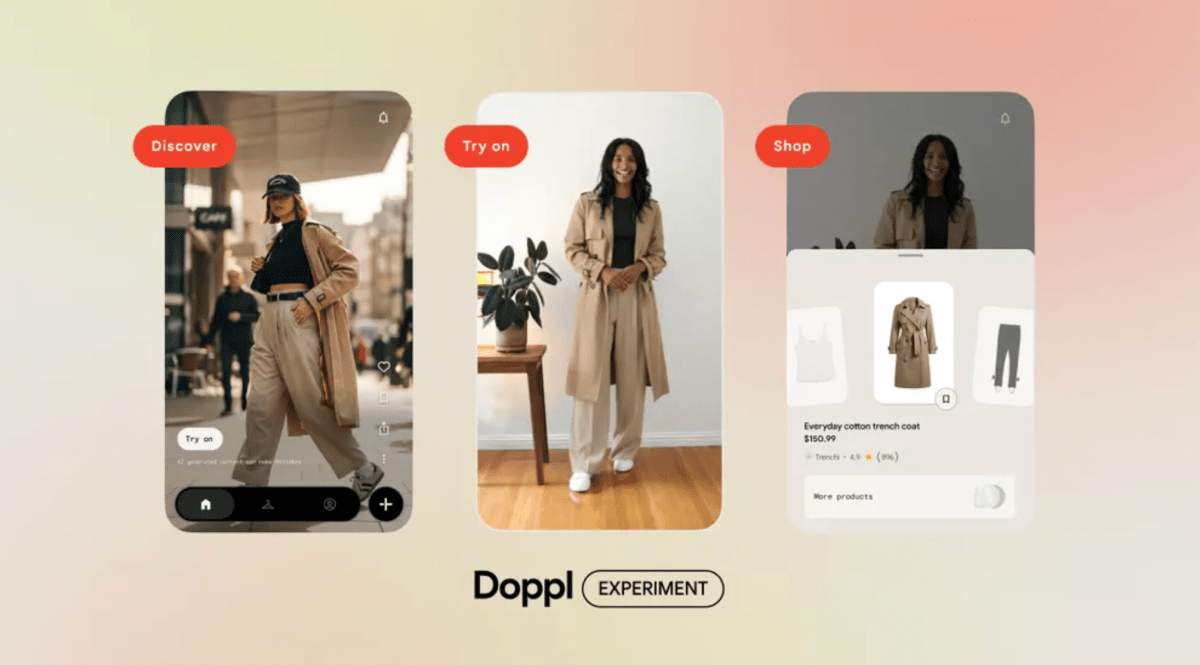
Google announced on Monday that it’s introducing a shoppable discovery feed in Doppl, its experimental app that uses AI to visualize how different outfits might look on you.
The tech giant says the idea behind the new feed is to display recommendations so users can discover and virtually try on new items. Nearly everything in the feed is shoppable, with direct links to merchants.
The discovery feed features AI-generated videos of real products and suggests outfits based on your personalized style. Google determines your style by analyzing the preferences you share with Doppl and the items you interact with.
The move comes as short-form video feeds, particularly on TikTok and Instagram, have conditioned users to scroll visual feeds and buy what they see. However, unlike on TikTok and Instagram, where real influencers showcase products, Google’s new feed only consists of AI-generated content.
While some may not be fond of an AI-generated feed, Google likely sees it as a way to surface products in a format that people are already used to. Plus, it makes sense for the company to try a new e-commerce strategy, especially as it continues to lose ground to companies like Amazon and social media platforms.
It’s worth noting that AI-generated videos aren’t new to Doppl. While the app creates images of a virtual version of yourself wearing different outfits, it can turn these static images and convert them into AI-generated videos. The purpose of this is to give you a better sense of how the outfit would look on you in real life.
The new discovery feed is rolling out to Doppl on iOS and Android in the U.S. for users 18 and above.
Techcrunch event
San Francisco
|
October 13-15, 2026
Although a feed consisting solely of AI-generated content would have seemed strange a year ago, the idea is now gaining traction. For example, OpenAI in September launched Sora, a social media platform of just AI videos. Meta also has a short-form video feed of AI-generated videos called “Vibes” in the Meta AI app.
Keep reading the article on Tech Crunch
An increasing number of browsers are experimenting with agentic features that will take actions on your behalf, such as booking tickets or shopping for different items. However, these agentic capabilities also come with security risks that could lead to loss of data or money.
Google detailed its approach to handling user security on Chrome using observer models and consent for user action. The company previewed agentic capabilities on Chrome in September and said these features will roll out in the coming months.
The company said it is using the help of a few models to keep agentic actions in check. Google said it built a User Alignment Critic using Gemini to scrutinize the action items built by the planner model for a particular task. If the critic model thinks that the planned tasks don’t serve the user’s goal, it asks the planner model to rethink the strategy. Google noted that the critic model only sees the metadata of the proposed action and not the actual web content.
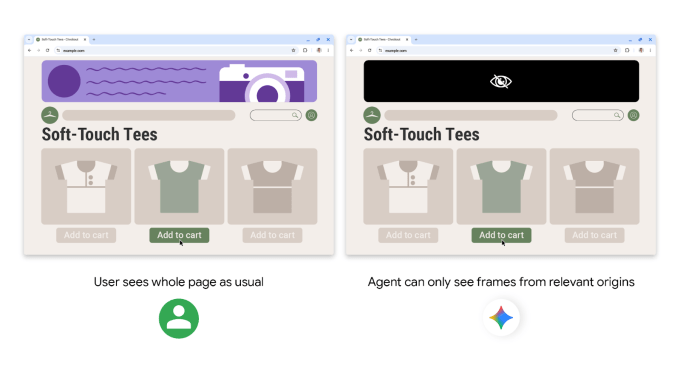
What’s more, to prevent agents from accessing disallowed or untrustworthy sites, Google is using Agent Origin Sets, which restrict the model to access read-only origins and read-writeable origins. Read-only origin is data that Gemini is permitted to consume content from. For instance, on a shopping site, the listings are relevant to the task, but banner ads aren’t. Similarly, Google said the agent is only allowed to click or type on certain iframes of a page.
“This delineation enforces that only data from a limited set of origins is available to the agent, and this data can only be passed on to the writable origins. This bounds the threat vector of cross-origin data leaks. This also gives the browser the ability to enforce some of that separation, such as by not even sending to the model data that is outside the readable set,” the company said in a blog post.
Google is also keeping a check on page navigation by investigating URLs through another observer model. This can prevent navigation to harmful model-generated URLs, the company said.
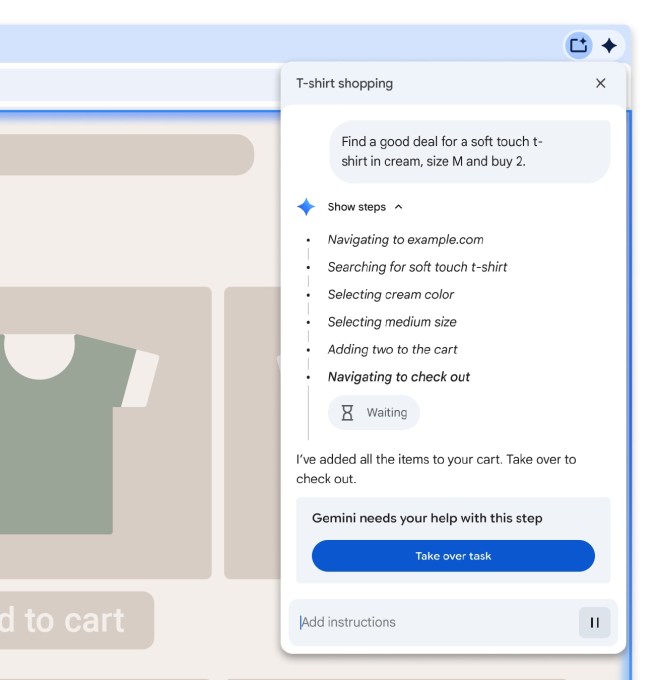
The search giant said that it is also handing over the reins to users for sensitive tasks. For instance, when an agent tries to navigate to a sensitive site with information like banking or your medical data, it first asks the user. For sites that require sign-in, it’ll ask the user for permission to let Chrome use the password manager. Google said that the agent’s model doesn’t have exposure to password data. The company added that it will ask users before taking actions like making a purchase or sending a message.
Techcrunch event
San Francisco
|
October 13-15, 2026
Google said that, in addition to this, it also has a prompt-injection classifier to prevent unwanted actions and is also testing agentic capabilities against attacks created by researchers.
AI browser makers are also paying attention to security. Earlier this month, Perplexity released a new open-source content detection model to prevent prompt injection attacks against agents.
Keep reading the article on Tech Crunch
TikTok is launching “Shared Collections,” a new way for users to share and organize TikTok content in one place with friends or family. The company also teased the upcoming launch of “Shared Feeds,” which will let users watch TikTok content together through a shared interest-based feed.
TikTok rolled out individual Collections earlier this year to let users save content in custom folders. With Shared Collections, users can now do things like create a space to share cookie-swap plans and holiday-dinner ideas with their family. Or, they can create Shared Collections to organize decor inspo or secret Santa ideas.
“Whether it’s content from their favorite creators, inspiration for a home design project, or a new skill they’re learning together, Shared Collection makes it easy for people to stay organized as they discover and save on TikTok,” the company explained in a blog post.
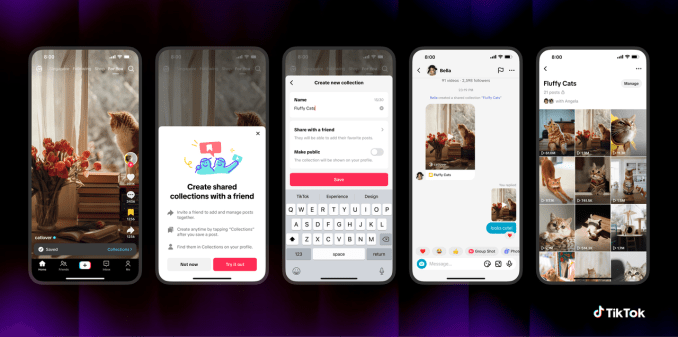
You can only create a Shared Collection with someone if you’re both following each other. Collections can stay just between friends and family, or they can be made public.
Shared Collections are available globally to accounts over age 16.
As for Shared Feeds, which are launching in the coming months, TikTok sees them as a way for users to discover content together. Users can generate Shared Feeds in one-on-one direct messages.
Shared Feeds will surface new content tailored to both users’ tastes, such as sports, winter activities, and their favorite creators. The feeds are generated based on users’ TikTok activity, such as what they like, watch, and comment on.
Techcrunch event
San Francisco
|
October 13-15, 2026
It’s worth noting that the feeds aren’t continuous, as users will find a selection of 15 videos in their Shared Feed each day.
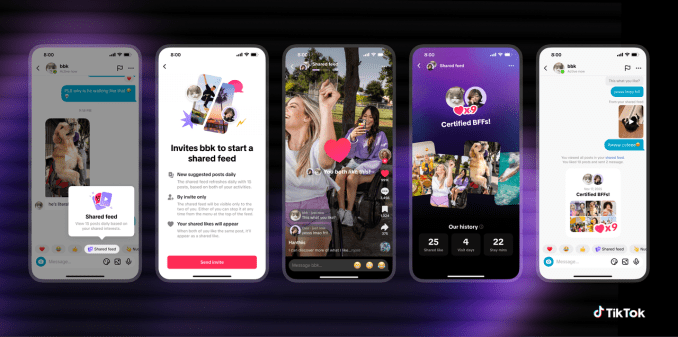
The feature is similar to Instagram Reels’ Blend feature that lets you create a custom, personalized reels feed for you and your friends.
Users will be able to create a Shared Feed by sending an invite to another user. Once the invitation is accepted, they can create a feed and chat about it in DMs. After both people have watched all the videos, they can view metrics, including which videos they both liked, in their “Shared Likes” history.
TikTok also announced that it’s launching greeting cards that users can send each other. Users will be able to select a greeting card inside their chats, write a message, and send it. The receiver will get a festive animation alongside the message.
Keep reading the article on Tech Crunch
Adobe is partnering with YouTube to launch a dedicated content creation space in Premiere for iOS for YouTube Shorts creators, the company announced on Monday. The new space gives creators access to exclusive templates, transitions, and effects, along with the ability to instantly publish Shorts to their YouTube channels directly from their phones.
The company says the space is designed to give creators everything they need to produce viral videos, grow their audience, and tap into trends, whether it’s creating day-in-the-life vlogs, travel videos, or behind-the-scenes clips.
By partnering with Adobe, YouTube is giving creators on its platform an exclusive space to create content, encouraging them to use its partners’ space instead of competitors’ tools, like Meta’s Edits or CapCut, which is owned by TikTok parent ByteDance.
“Although content edited in Premiere mobile can be shared to other social platforms, what’s unique about this partnership is that creators getting inspiration from their YouTube Shorts feed, can launch a template that caught their eye, directly into Premiere mobile and start customizing it for their own channel,” said Meagan Keane, Director, Product Marketing, Digital Video and Audio at Adobe, in an email to TechCrunch. “This content creation space within the Premiere mobile app is designed and optimized for YouTube Shorts.”
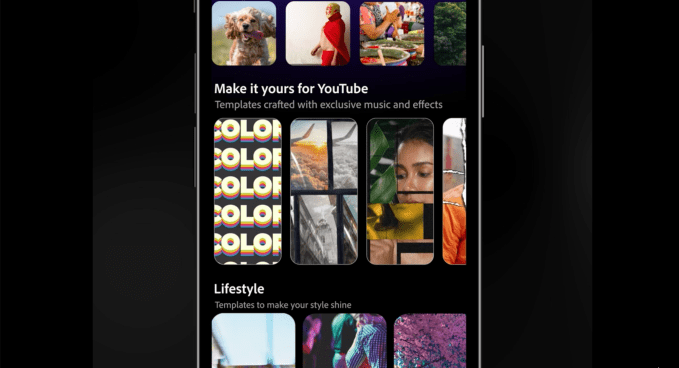
The Create for YouTube Shorts content creation space in Premiere mobile features Shorts templates from top creators with built-in text, effects, and transition presets. Creators can add their own media and customize the templates to their style. They also have the option to create and submit their own original templates.
To get started, creators need a free Premiere mobile login to access the space and a YouTube profile to publish directly to their Shorts feed. Creators can download Adobe Premiere from the App Store and tap the “Create for YouTube” option to access the creation space.
From there, they can upload clips from their iPhone camera roll, cloud storage, or Adobe Creative Cloud. They can then cut and trim clips, layer in video and audio tracks, adjust color and brightness, and add text overlays and captions.
Techcrunch event
San Francisco
|
October 13-15, 2026
After following export prompts, creators can upload the finished product to YouTube.
“New tools and capabilities in the app, like templates, effects, transitions, and this new content creation space for YouTube Short creation, will be powerful for all creators, from longtime creators to those just getting started,” Keane said. “It brings creators polished video editing with studio-quality audio, AI sound effects, precision multi-track editing, Firefly AI content generation, and more to make producing and sharing their content easier and faster. This ultimately helps us further our goal of empowering creativity for all. Every day, we’re focused on doing our part to make this the best time ever to be a creator.”
Keep reading the article on Tech Crunch
Many daters on Hinge are getting annoyed with matches who just like their profiles but never bother to start a conversation. It often leads to this awkward silence, putting all the pressure on one person to make the first move. Instead of coming up with something interesting to say, some just fall back on the same old lines or stick to boring small talk, like asking, “How are you?”
To address this issue, Hinge unveiled “Convo Starters,” a feature powered by AI that provides personalized tips for initiating conversations.
The feature aims to inspire daters and boost their confidence when sending initial messages. When users like a profile, they’ll now see three tailored tips beneath each photo and prompt. The AI evaluates a user’s profile and generates recommendations based on the individual photos or prompts. For example, if a potential match is pictured playing chess, Hinge might suggest beginning the conversation around board games.
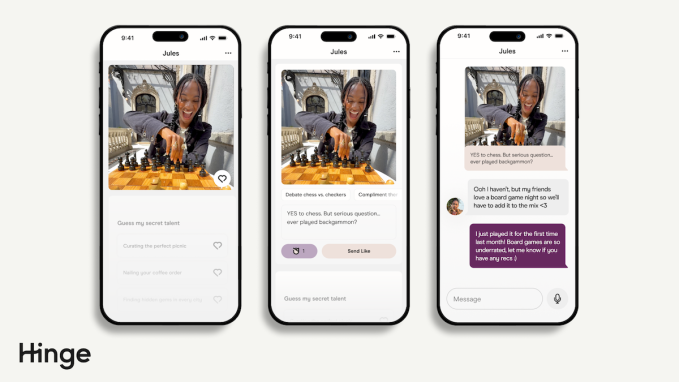
Convo Starters was developed in response to user feedback, Hinge says. The company’s research indicated that 72% of Hinge daters are more inclined to consider someone when a like is accompanied by a message. Data from Hinge reveals that those who include a comment with their likes are twice as likely to arrange a date.
This new feature follows the launch of its AI-driven Prompt Feedback feature, which assesses user prompts and offers tailored advice aimed at improving them by urging users to elaborate and share engaging details about their lives.
However, as Hinge incorporates AI features into its app, many users, especially Gen Z, are uncomfortable with the thought of using AI in their online dating experiences. A Bloomberg Intelligence survey found that Gen Z feels more uneasy about using AI for tasks such as drafting profile prompts and responding to messages than older generations do.
Hinge’s parent company, Match Group, is dedicating around $20 million to $30 million towards AI efforts.
Techcrunch event
San Francisco
|
October 13-15, 2026
Keep reading the article on Tech Crunch
Spotify’s annual Wrapped feature just dropped, giving listeners a fun, personalized summary of their listening habits. It has gained immense popularity over the years, and as a result, many companies have seized the opportunity to create similar year-in-review experiences, offering users a recap of their habits, preferences, or interactions from the past year.
Here are some platforms and websites that mimic the Spotify Wrapped concept.
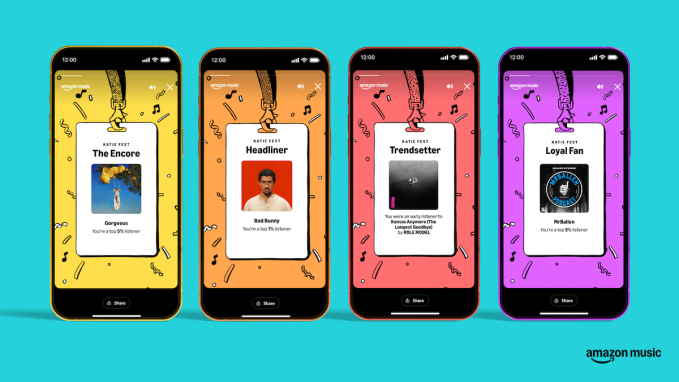
Amazon Music has a new Spotify Wrapped knockoff this year called “2025 Delivered,” which offers a summary of users’ listening stats, such as top artists, songs, and even podcasts. Notably, the platform also takes advantage of Amazon’s virtual assistant, Alexa, by giving users a special message from their favorite artist. The feature can be found on the app by tapping on the Library tab.
This year’s update features new badges for listeners to showcase. For instance, the “Trendsetter” badge is given to those who listened to trending albums early, while the “Headliner” badge honors fans who rank among the top percentage of an artist’s listeners. There are also new shareable cards designed with a “music festival” theme, tailored specifically for each listener.
Previously, Amazon Music’s equivalent of Spotify Wrapped was “My Year in Review,” a playlist featuring 50 to 100 of the most popular tracks based on your yearly statistics. The playlist is available in the “Playlists” section or “Made For You.”
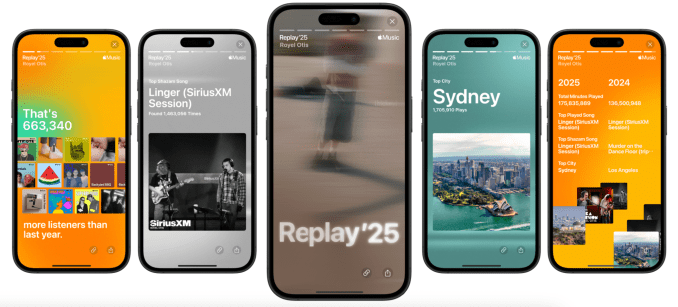
Apple’s music streaming service Apple Music first rolled out its “Replay” experience in 2019. The feature offers a summary of top songs, artists, albums, genres, playlists, and stations, including play counts, total time spent listening, and other insights. You can also share personalized listening data on social media, and a year-end highlight reel offers an audio and visual recap of the music you listened to the most throughout the year.
This year, Apple Replay 2025 features a new “Discovery” section highlighting new artists, a “Loyalty” section for artists users return to annually, and a “Comebacks” section for artists who have reentered users’ listening rotation.
Techcrunch event
San Francisco
|
October 13-15, 2026
This differs from last year’s experience, which featured “listening streaks,” which showed the days when users listened to music on the service the longest. The platform also launched a monthly version of Replay in 2024, letting users access monthly music habits.
The experience is available on both the mobile app and Apple’s Replay website.
If you’re an Apple Books user, there’s a Year in Review feature that showcases all the books and audiobooks you read this year. You can find it in the Apple Books app by selecting the green “Year in Review” icon.
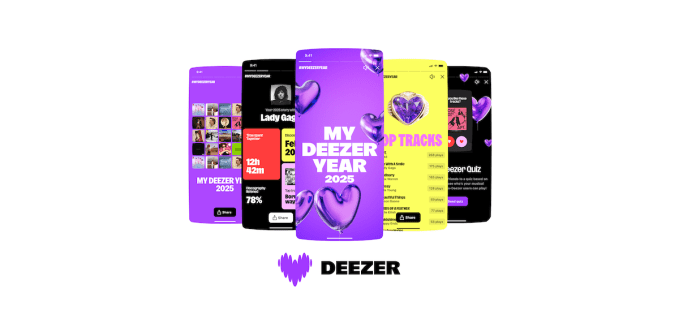
Deezer, another music streaming app, offers a yearly roundup called “My Deezer Year,” which provides a summary of your music consumption over the year, including top songs, genres, most-listened-to albums, and favorite artists.
This year’s edition features a fun new “romantic comedy” theme for the recap visuals. Plus, users can create their own quizzes to share with friends. Just pick a favorite genre, three songs, and a top artist, and see which of your friends match your choices.
Last year, there were options to be “roasted” or “hyped-up” based on your music preferences, and it included a quiz that tested how well friends and family knew your music taste.
If your choice of music streaming platform of choice is SoundCloud, you’re in luck. The app recently launched its SoundCloud 2025 recap, giving you an overview of your top five artists, albums, tracks, and moods. It also shows your total listening time and provides a playlist with your 50 most listened-to songs.
Additionally, users can also discover their “Music Doppelgänger.” SoundCloud looks at the profiles they follow and determines which user shares the highest music-taste percentage.
YouTube Music’s Recap feature offers a personalized, interactive experience, highlighting the top five artists, songs, moods, genres, albums, and playlists. It also shows your longest listening streak and the total number of minutes you listened in a year.
What’s new this year is an AI-powered “Ask Music” feature that lets users ask questions about their listening history. For example, “How did my listening change over the year?”
Access the feature by tapping on the profile avatar in the top-right corner and selecting “Your Recap.” It’s available in the Android and iOS mobile apps.
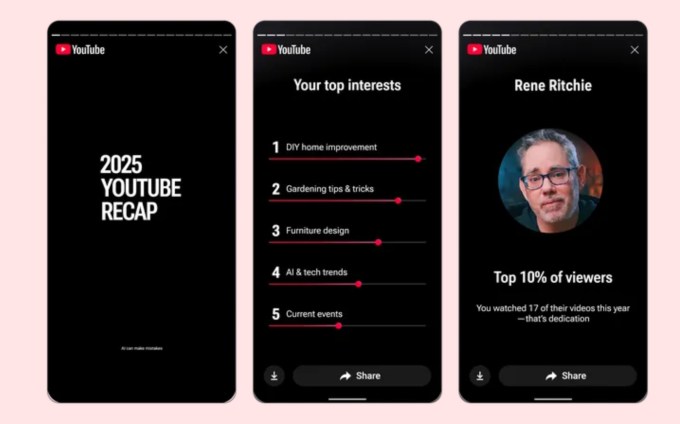
Another new addition this year is the video-sharing platform YouTube introduced its own Recap feature, allowing users to view their most-watched videos from 2025. This highlights a user’s favorite channels and interests while showcasing how their viewing habits have changed over time. Additionally, it categorizes users by personality type based on their viewing preferences.
Unlike some other music streaming services, Tidal takes a minimalist approach to its recap, focusing on key stats such as top artists, top tracks, and monthly listening. The feature also provides a shareable card highlighting your top 5 artists and songs. Additionally, you receive a custom playlist featuring your most-played songs of the year.
To access your recap, click the notifications bell in your app.
In addition to music streaming platforms, other platforms are capitalizing on Spotify’s success, including the language-learning app Duolingo. The platform’s “Year in Review” experience is a 10-page summary that reveals insights for all types of learners, including total XP earned, the longest streak, and your learning style.
To get your recap, click on the blue Duolingo mascot icon that says “2025” in the bottom left corner of the screen.
While Netflix doesn’t offer its own version of a year-end wrap-up, a video-editing company called Kapwing has developed a tool that uses Netflix viewing data to provide interesting statistics about individual subscribers. This includes insights like subscribers’ “most bingeful day” and total watch time.
To use the tool, simply import your Netflix viewing history. You’ll receive various insights, such as total minutes and days streamed, the top shows and movies watched, significant binges (like when an entire season was watched in one day), and the most-watched movie actor, among other statistics.
In 2020, TikTok launched a feature that showed how many videos you watched and the engagement on your videos. However, it’s no longer available, prompting people to create their own versions.
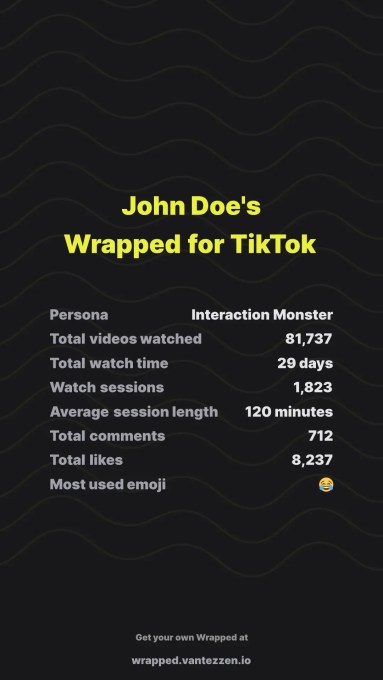
One such tool was developed by Bennett Hollstein. It functions similarly to Kapwing’s tool, enabling users to export their TikTok data. To do this, visit the TikTok Settings page, click on “Settings and privacy,” then “Account,” and select “Download your data.” For this tool, it is important to choose “JSON – Machine-readable file” as the file format before uploading this file to “Wrapped for TikTok.”
Once the file is uploaded, you will then be able to view the total number of videos watched, total watch time, and engagement persona, such as “Interaction Monster.”
Twitch also provides an annual summary for both viewers and streamers on the platform, providing insights into their most-viewed creators, overall watch time, and more. To get your recap, go to twitch.tv/annual-recap, and log in to your account. Users need to have either watched or streamed a minimum of 10 hours of content this year to be eligible.
A calendar app called Reclaim had its own Spotify Wrapped-styled year-in-review. It includes the number of external and internal meetings, the hours you spend in deep work and breaks, the number of meetings, the number of auto-scheduled meetings, your busiest month, and your work personality type.
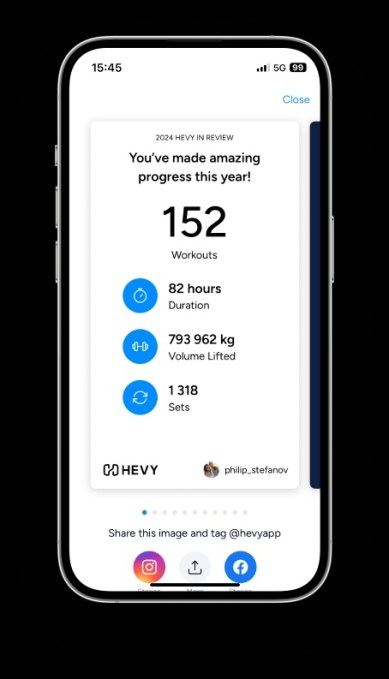
Workout app Hevy’s year-in-review showed its users the number of workouts in the year, top exercises, total duration, total volumes lifted, and number of completed sets. The interesting part about the review was that the app showed the weight users lifted as compared to things like airplanes.
Since it’s still early December, more companies may launch their own annual recaps. Many services have released year-end wrap-ups in the past, including Circleback, Goodreads, Eight Sleep, Hulu, Pandora, PlayStation, Mastodon, Reddit, Strava, Tinder, Xbox, and others. Even the grocery store Aldi has participated.
This story was updated after publication to include newly added Wrapped-like features from various platforms.
Keep reading the article on Tech Crunch