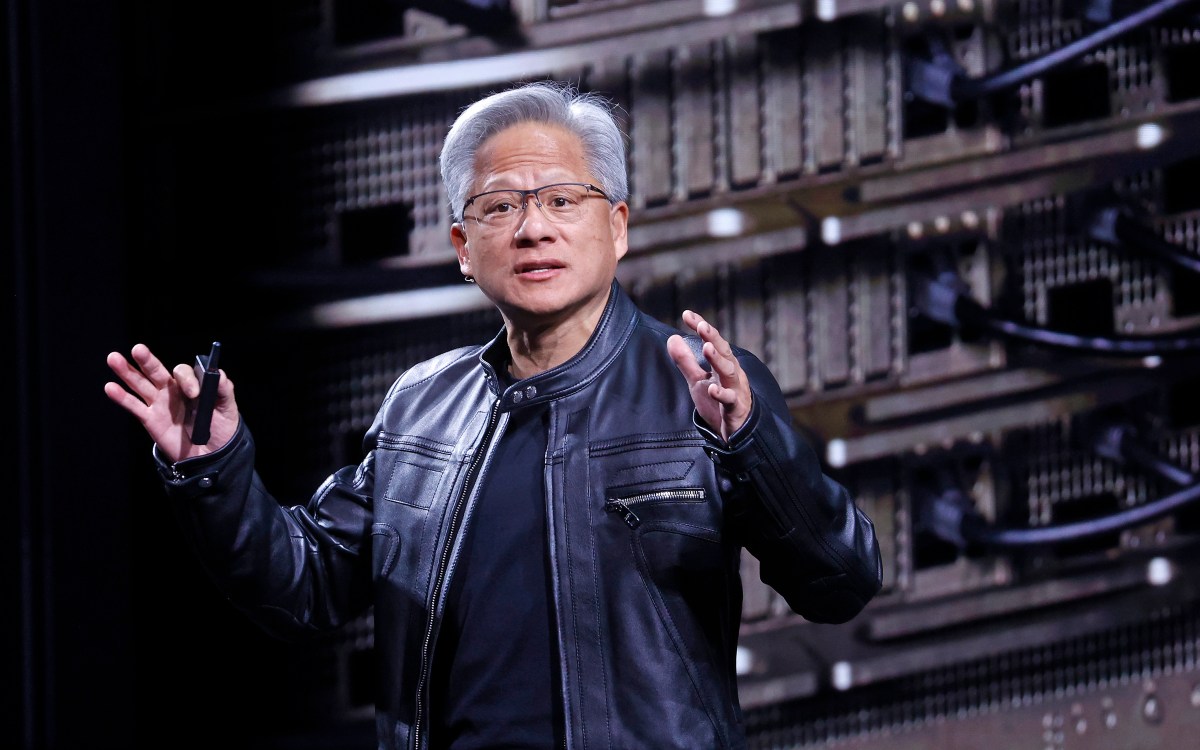
Advanced Nvidia AI chips can head back to China after all.
The Department of Commerce will allow Nvidia to ship H200 chips to China, as originally reported by Semafor, to approved customers in the country. The U.S. will take a 25% cut of these sales, CNBC reported.
H200 chips are much more advanced than the H20 chips Nvidia developed specifically for the Chinese market, but the company would only be able to send H200s that are roughly 18 months old, Semafor reported.
“We applaud President Trump’s decision to allow America’s chip industry to compete to support high paying jobs and manufacturing in America. Offering H200 to approved commercial customers, vetted by the Department of Commerce, strikes a thoughtful balance that is great for America,” an Nvidia spokesperson told TechCrunch.
The news report comes a week after U.S. Commerce Secretary Howard Lutnick said the decision on exporting these H200 chips to China was in President Donald Trump’s hands.
The decision to send these chips to China conflicts with Congressional concerns about national security.
Pete Ricketts, a Republican senator from Nebraska, and Chris Coons, a Democratic senator from Delaware, introduced a bill on December 4 that would block the export of advanced AI chips to China for more than two years.
Techcrunch event
San Francisco
|
October 13-15, 2026
The Secure and Feasible Exports Act (SAFE) Chips Act would require the Department of Commerce to deny any export license on advanced AI chips to China for 30 months. It’s unclear when legislators will vote on the proposed bill especially now that the Trump administration has given the green light to sell the H200 chips.
While Congress has long been clear about sending advanced AI chips to China — on both sides of the aisle — President Trump has waffled on whether or not to allow the exports.
The Trump administration hit chip companies like Nvidia with licensing requirements to send their chips to China in April before it formally rescinded a Biden administration diffusion rule that would have regulated AI chip exports in May. Over the summer, the U.S. government signaled that companies would be able to start sending chips to China as long as the government got a 15% cut of all revenue, as chips became a bargaining tool in trade talks with China.
However, by that point, the market for U.S.-developed chips in China was strained.
In September, China’s internet regulator, the Cyberspace Administration of China, banned domestic companies from buying Nvidia’s chips, leaving companies in the country to rely on less advanced domestic chips from Alibaba and Huawei.
On Monday, Trump said that Chinese president Xi Jinping “responded positively” to the latest H200 news in a Truth Social post.
This story was updated on December 8 when the proposed decision was confirmed.
Keep reading the article on Tech Crunch

President Donald Trump said on Monday he plans to ink an executive order this week that would limit states from enacting their own regulation of AI technology.
“I will be doing a ONE RULE Executive Order this week,” Trump posted on social media. “You can’t expect a company to get 50 Approvals every time they want to do something.”
“There must be only One Rulebook if we are going to continue to lead in AI,” Trump said. “We are beating ALL COUNTRIES at this point in the race, but that won’t last long if we are going to have 50 States, many of them bad actors, involved in RULES and the APPROVAL PROCESS…AI WILL BE DESTROYED IN ITS INFANCY!”
Trump’s statement comes days after an effort to preempt states from regulating AI was quashed in the Senate, as Congress couldn’t agree to insert the deeply unpopular proposal into a must-pass defense budget bill.
The fast pace of AI development and the lack of general consumer protections from the federal government has led many states to enact their own rules around the technology. California, for example, has the AI safety and transparency bill SB 53, while Tennessee’s ELVIS Act protects musicians and performers from unauthorized AI-generated deepfakes of their voices and likenesses.
Silicon Valley figures, including OpenAI President Greg Brockman and VC-turned-White House ‘AI czar’ David Sacks, have argued that such laws by states would create an unworkable patchwork of laws that would stifle innovation and threaten the U.S.’s lead against China in the race to develop AI technology.
Silicon Valley has a mighty lobbying arm that has blocked meaningful technology regulation for years, and proponents of states’ regulatory rights say there’s no reason to believe state AI laws could “destroy AI progress,” as VCs and tech companies claim.
Techcrunch event
San Francisco
|
October 13-15, 2026
Trump’s executive order, a draft of which was leaked a couple of weeks ago, would create an “AI Litigation Task Force” to challenge state AI laws in court, direct agencies to evaluate state laws deemed “onerous,” and push the Federal Communications Commission and Federal Trade Commission toward national standards that override state rules.
The Order would also give Sacks direct influence over AI policy, superseding the usual role of the White House Office of Science and Technology Policy, currently headed by Michael Kratsios.
Attempts to block states’ power to regulate AI have been deeply unpopular on both sides of Congress. Earlier this year, Senator Ted Cruz (R-TX) introduced a proposal that would place a 10-year moratorium on AI legislation into the federal budget bill, but it was rejected 99-1, in a rare moment of bipartisan agreement that tech companies shouldn’t operate without oversight.
And when Trump’s draft was leaked last month, several Republican politicians spoke out.
Rep. Marjorie Taylor Greene (R-GA) posted on X: “States must retain the right to regulate and make laws on AI and anything else for the benefit of their state. Federalism must be preserved.”
Gov. Ron DeSantis (R-FL) posted late last week: “I oppose stripping Florida of our ability to legislate in the best interest of the people. A ten year AI moratorium bans state regulation of AI, which would prevent FL from enacting important protections for individuals, children and families.”
DeSantis has also called data centers as drains on power and water resources, as well as potential job killers.
“The rise of AI is the most significant economic and cultural shift occurring at the moment; denying the people the ability to channel these technologies in a productive way via self-government constitutes federal government overreach and lets technology companies run wild,” he said in a November X post.
Late last week, Sen. Marco Rubio (R-FL) warned Trump against the EO, advising him to “leave AI to the states” to preserve federalism and allow local protections.
The desire to protect people from potential harms of AI technology is not unfounded. There have been several deaths by suicide following prolonged conversations with AI chatbots, and psychologists have recorded an uptick in cases of a condition they’re calling “AI psychosis.”
A bipartisan coalition of over 35 state attorneys general warned Congress last month that overriding state AI laws could have “disastrous consequences,” and more than 200 state lawmakers have issued an open letter opposing federal preemption, citing setbacks to progress on AI safety.
Keep reading the article on Tech Crunch
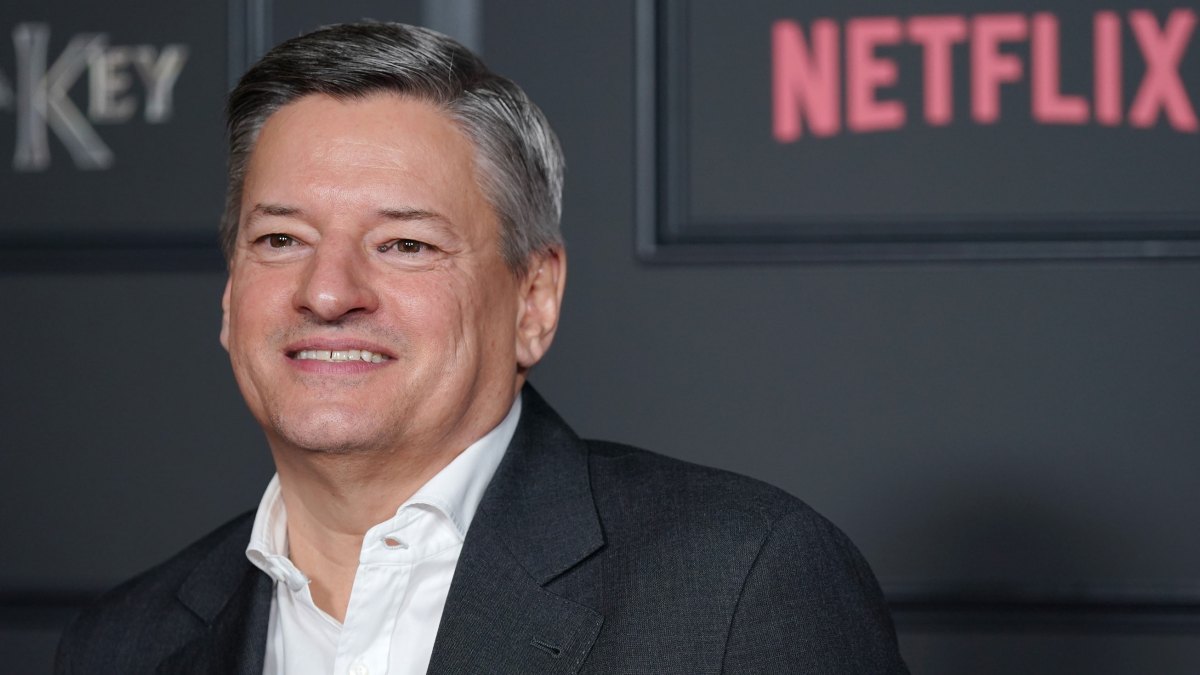
Will Netflix’s $82.7 billion deal to acquire Warner Bros. get approval from federal regulators?
While Paramount was assumed to be the frontrunner to acquire the storied movie studio thanks to CEO David Ellison’s connections to the Trump administration, new reporting in Bloomberg and The Hollywood Reporter suggests that Netflix co-CEO Ted Sarandos met with President Donald Trump to discuss a potential deal in November.
Trump reportedly told Sarandos that Warner Bros. should sell to the highest bidder, and the Netflix executive seems to have left the meeting convinced that the president would not immediately oppose the acquisition.
Bloomberg also reports that Warner Bros. CEO David Zaslav was reluctant to sell the company and surprised when Paramount began to explore an acquisition — if nothing else, he’d expected Ellison to wait until the studio completed a planned split of its movie and streaming businesses from its cable networks.
Ultimately, Warner Bros. said it would consider other bids, leading to a competitive process that Netflix won — although Paramount could still keep its hat in the ring with a hostile bid.
Keep reading the article on Tech Crunch

X’s Head of Product Nikita Bier fired back at the European Commission this weekend after the EC fined the social media company €120 million (around $140 million).
In its first fine under the European Union’s Digital Services Act, the commission called X’s blue checkmark system “deceptive” and said the paid verification system makes users vulnerable to impersonation and scams. The commission also said X’s advertising repository failed to meet the DSA’s requirements for transparency and accessibility.
The commission said that X must respond within 60 days to its concerns about blue checkmarks, and within 90 days to the ad transparency violations, or it could face additional penalties.
After the fine was announced, X owner Elon Musk described it as “bullshit” and also posted, “How long before the EU is gone? AbolishTheEU”.
Now it seems X has penalized the commission’s account on the platform — not, the company says, because of the fine, but rather the commission’s use of X’s advertising system.
Quoting the commission’s post announcing the fine, X’s Bier accused the EC of logging into a “dormant ad account to take advantage of an exploit in our Ad Composer — to post a link that deceives users into thinking it’s a video and to artificially increase its reach.”
“As you may be aware, X believes everyone should have an equal voice on our platform,” Bier wrote. “However, it seems you believe that the rules should not apply to your account.”
Techcrunch event
San Francisco
|
October 13-15, 2026
As a result, he said the commission’s ad account had been “terminated.” Bier subsequently said the exploit “has never been abused like this” and has since been patched.
TechCrunch has reached out to a European Commission spokesperson for comment.
While the commission may have lost the ability to buy ads on X, its post announcing the fine remains up, and its account still has a grey checkmark indicating that it belongs to a government organization.
Keep reading the article on Tech Crunch
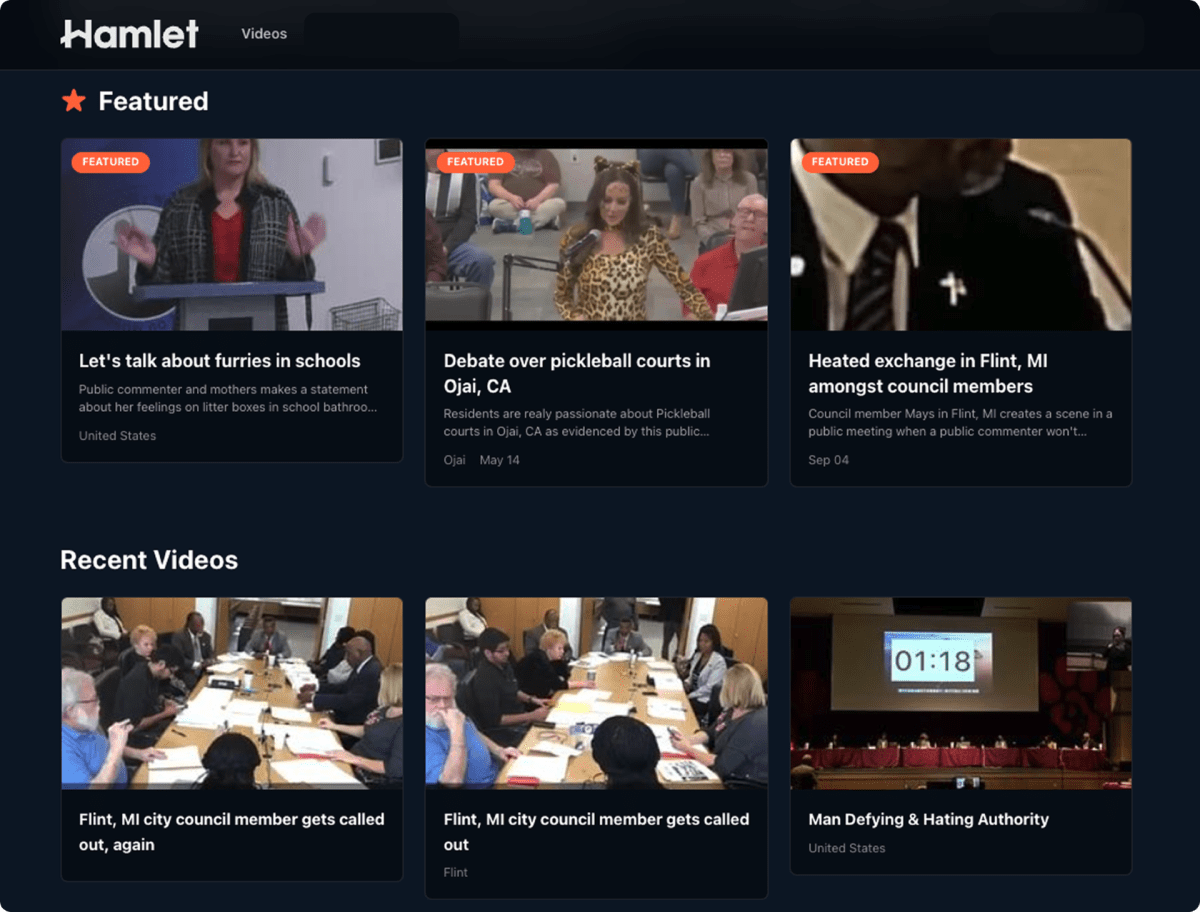
The launch of Hamlet was quite personal for Sunil Rajaraman.
Back in 2022, he ran for city council in a small California town. He lost, but the moment forever changed the way he saw the place — and local governments, for that matter.
“I was trying to become a better candidate,” he recalled to TechCrunch. “I wanted to understand how my city actually worked, what decisions had been made, why, who said what. And I couldn’t figure it out. It’s a total black box, and almost intentionally opaque.”
Since COVID, towns across the nation have started recording and posting their city meetings online. That gave Rajaraman an idea: a company that helped people understand what was happening in local governments. That same year, in 2022, he launched Hamlet to do just that.
“We use AI to process thousands of hours of city council and planning commission meeting videos and turn them into intelligence they can actually use,” he said. He said these videos are better than meeting minutes because those documents are just someone’s interpretations of what happened. “The video doesn’t lie.”
At first, he thought it would be a media company, but then real estate developers and political action committees started reaching out. Rajaraman realized that private companies have to deal with local governments, too, and they also want more insight into what is happening in those city council meetings.
For enterprise customers, the company helps track agendas and alerts them when relevant topics are addressed across target cities. It also synthesizes what happened after meetings, so they don’t have to watch hourslong videos, and it lets them search the video archive to see, for example, when and how a competitor was mentioned in a local government setting.
Techcrunch event
San Francisco
|
October 13-15, 2026
Hamlet has raised around $10 million in venture funding to date, from backers including Slow Ventures, Crosslink Capital, Banana Capital, and Kapor Capital. “We want to become the ‘Bloomberg’ of this space, so to speak,” Rajaraman said.
On Friday, Rajaraman announced he is expanding the company to launch Hamlet TV as a way to help keep regular citizens informed of what is happening inside their governments. The streaming channel is on TikTok, YouTube, AppleTV, and Instagram, and will spotlight important moments from council, commission, and school board meetings.
Rajaraman said his company has processed thousands of hours of government meetings for government customers.
“We’ve seen meetings that have lasted 15-plus hours without recess,” he said. He and his team started curating funny moments from those meetings, and they thought it was a good idea to use humor to get people more invested in the U.S. democracy. “If you show people procedural videos, they are just not going to care. But if you show them the funny stuff, they’ll watch.”
The most surprising thing he and his team have seen so far on Hamlet TV has been someone dressing up as a cockroach to address their city council about a pest problem. But it’s not the funny stuff that surprises him, he said. “It’s how consequential these meetings are and how invisible they remain.”
He cited an example from earlier this year when the Tucson city council rejected Amazon’s $3.6 billion data center. He said that the decision came after months of planning, but only a few people likely watched those videos to understand why it happened.
This isn’t Rajaraman’s first time running a business — or a media outlet. He co-founded the analytics platform Scripted and was twice the Entrepreneur in Residence at Foundation Capital. He also ran a publication called The Bold Italic and then sold it to Medium.
He knows Hamlet TV probably won’t be a moneymaker and reiterated that he’s doing this to get people more involved with the state of the country’s democracy. He also plans to give away the Hamlet tool to local journalists for free. “Data is great, but context matters so much,” he said.
Next, the Hamlet company is looking to work with government affairs, advocacy organizations, and renewable energy developers. “Democracy works better when people are watching,” he said. “We’re trying to make watching possible.”
Keep reading the article on Tech Crunch
The European Commission has imposed its first fine under Europe’s landmark Digital Services Act (DSA), and it’s against Elon Musk’s X.
The EC is taking issue with the fact that X, the social network formerly known as Twitter, has been allowing anyone to buy a “blue checkmark,” the platform’s long-standing symbol which used to indicate that a user has been verified to be who they are claiming to be.
Calling the design of the blue checkmark system “deceptive,” the European Union’s executive arm on Friday imposed a fine of €120 million (about $140 million) on X, saying the company had breached its transparency obligations under the DSA.
The Commission said other breaches of the law include a lack of transparency of X’s advertising repository and failure to provide researchers access to public data.
Before Musk bought the company, Twitter used to issue blue checks to journalists, celebrities, politicians, and public figures on the platform after it had verified their identity. Musk did away with that policy in 2023, and all the “verified” blue check today indicates is that a user subscribes to X Premium, and that they meet certain eligibility criteria, like having a profile photo, a display name, and have linked their account to a phone number.
“X’s use of the ‘blue checkmark’ for ‘verified accounts’ deceives users,” the Commission wrote in a statement. “This violates the DSA obligation for online platforms to prohibit deceptive design practices on their services. On X, anyone can pay to obtain the ‘verified’ status without the company meaningfully verifying who is behind the account, making it difficult for users to judge the authenticity of accounts and content they engage with.”
The Commission added that such a system exposes users to scams, impersonation fraud and manipulation.
Techcrunch event
San Francisco
|
October 13-15, 2026
The regulator also found that X’s advertisement repository doesn’t comply with DSA requirements for transparency and accessibility, saying the company imposes excessive delays in processing requests for access. The Commission also said the ads repository doesn’t house important information like the content or topic of ads, as well as who paid for those ads.
“This hinders researchers and the public to independently scrutinise any potential risks in online advertising,” the Commission wrote.
Access to public data is another area of concern for the EU. The DSA mandates that public platforms allow researchers access to public data to study systemic risks, and the EC’s investigation has found that X does not allow researchers to independently do that.
“Moreover, X’s processes for researchers’ access to public data impose unnecessary barriers, effectively undermining research into several systemic risks in the European Union,” the EC wrote.
The decision comes two years after the EC launched an investigation into the company on the suspected breach of rules linked to risk management, content moderation, dark patterns, advertising transparency, and data access for researchers.
“Deceiving users with blue checkmarks, obscuring information on ads, and shutting out researchers have no place online in the EU,” Henna Virkkunen, executive vice-president for Tech Sovereignty, Security and Democracy at the European Commission, said in a statement.
X now has 60 days to outline how it intends to address the complaint about the blue checkmarks, and 90 days to respond with an action plan for addressing the breaches relating to ads and public data transparency and accessibility.
Confirmed breaches of the DSA can face a range of major sanctions, including fines of up to 6% of global annual turnover.
Keep reading the article on Tech Crunch