
SoftBank Group and Nvidia are in talks to lead an investment of over $1 billion at a $14 billion valuation in Skild AI, a software company building a foundational robotics model, Reuters reported.
The nearly three-year-old startup was last valued at $4.7 billion in May when it raised $500 million in a round led by SoftBank along with the participation of LG Technology Ventures, Samsung, Nvidia, and others, according to PitchBook data. Skild didn’t immediately respond to a request for comment. SoftBank and Nvidia declined to comment.
Unlike other heavily funded startups, Skild AI is not building proprietary hardware. Instead, it’s developing a robot-agnostic foundation model that can be customized for various types of robots and use cases.
The company unveiled its general-purpose robot model Skild Brain in July with videos showing robots picking up dishes and climbing up and down the stairs. The company has secured strategic partnerships with LG CNS and Hewlett Packard Enterprise to develop its ecosystem.
Investor interest in AI robotics has been steadily growing. Physical Intelligence, another company developing “brains” for a broad range of robots, has reportedly recently raised $600 million at a $5.6 billion valuation led by CapitalG. One investor who evaluated but declined to fund Physical Intelligence told TechCrunch that its model is still in the early stages of development.
In September, Figure, a company developing a humanoid robot, raised more than $1 billion at a massive $39 billion valuation. Meanwhile, 1X, another humanoid robot developer, was in talks to secure as much as $1 billion at a $10 billion valuation, The Information reported several months ago.
Keep reading the article on Tech Crunch

Tiger Global, the investor that spurred the VC bull market of 2020-2021, is reportedly raising a fresh $2.2 billion fund.
The firm sent a letter to potential limited partners, according to a copy obtained by CNBC, seeking to raise the cash for a vehicle called Private Investment Partners 17 (PIP 17). The letter also promises a more humble approach than during the 2021 bull-market madness.
During that time, Tiger Global was moving fast and investing abundantly, a method the venture industry calls “spray and pray.”
PIP 15, raised in 2021, was a whopping $12.7 billion fund that pumped cash into startups at a blinding pace largely at peak valuations, TechCrunch reported.
In 2021 alone, the hedge fund backed 315 startups, according to PitchBook data, and spurred bidding wars among VCs to get stakes in even unproven startups that ratched up valuations.
When interest rates rose, the party was over, and startups spent years trying to live up to their 2021 valuations, many shuttering along the way.
After the venture market crash in 2022-23, prolific Tiger Global investor John Curtius left to start his own fund, and Scott Shleifer, the firm’s chief of private equity investments, transitioned to an advisory role, while Tiger’s famed founder, Chase Coleman, took on a more direct role.
Techcrunch event
San Francisco
|
October 13-15, 2026
Tiger Global went on to raise a much smaller PIP 16 fund of $2.2 billion in 2024, Bloomberg reported at the time, which is, admittedly, still an enormous fund.
Now, on the strength of PIP 16’s blockbuster AI investments, Tiger Global is raising Fund 17. PIP 16 holds stakes in OpenAI, Waymo and Databricks, all of which have had skyrocketing valuations and driven this fund’s paper gains by 33% so far, the letter said as reported by CNBC.
Still, in a nod to the need for more caution than in previous years, the letter promised a more targeted approach. It acknowledged that leaning into AI investments could be risky and require “humility” because “valuations are elevated and, in our view, sometimes unsupported by company fundamentals,” according to CNBC. (Tiger Global could not be immediately reached for comment.)
In other words, even as Tiger Global raises a fresh fund to go after more big AI opportunities, it’s implying that the AI market is in a bubble, and it doesn’t want to drive valuations to even higher, perhaps unrealistic, heights.
Keep reading the article on Tech Crunch

After a pause of more than two years, crypto exchange Coinbase has opened its app for registration in India. At the moment, users are able to make crypto-to-crypto trades — but speaking at India Blockchain Week (IBW), Coinbase’s APAC director John O’Loghlen said the company will open up a fiat on-ramp in 2026, allowing users in India to load money and buy crypto.
Coinbase opened up its services in India in 2022, and within days had to shut down support for the Unified Payments Interface (UPI) payment network. This move came after UPI operator National Payments Corporation (NPCI) refused to acknowledge Coinbase’s presence in the country. Later in 2023, Coinbase ceased all operations for Indian users and asked them to offload their accounts.
“We had millions of customers in India, historically, and we took a very clear stance to off-board those customers entirely from overseas entities, where they were domiciled and regulated. Because we wanted to kind of burn the boats [sic], have a clean slate here. As a commercial business person wanting to make money and active users, that’s like the worst thing you can do, and so you know it wasn’t without some hesitation,” O’Loghlen said.
The company started engaging with the Financial Intelligence Unit (FIU), a government agency that oversees transactions and fraud, and eventually registered with them this year. In October, it started to onboard users through early access, and now the app is open to all users.
Many Internet companies have set up their base in India hoping to tap into the world’s second-largest online user base. While social platforms and AI companies like OpenAI have found rapid growth in the market, it has been hard for crypto companies to follow the same path because of strict regulations and taxation around cryptocurrencies.
India levies a 30% tax on crypto income without any loss offset and also charges 1% deduction on each transaction, which could discourage users from trading frequently. O’Loghlen said that the company hopes that the government will relax the taxation to make it less burdensome for people to hold digital assets.
Despite these challenges, Coinbase seems to be hopeful about India. The company’s venture arm pumped in more money in local exchange CoinDCX at a $2.45 billion post-money valuation. It also plans to bolster its 500 plus team in the country by hiring for multiple roles focusing on both local and global markets.
Techcrunch event
San Francisco
|
October 13-15, 2026
“I think we want to be known as that trusted exchange, ensure that your funds are safe with us,” O’Loghlen said. “We’re not going to get out to the masses if you can’t have a really nice UI, a trusted experience that allows you to on board in a matter of minutes in the same way that you do with you know Zepto or Flipkart or any other super app in India.”
Keep reading the article on Tech Crunch
A year after being pushed out of Intel, Pat Gelsinger is still waking up at 4 a.m., still in the thick of the semiconductor wars — just on a different battlefield. Now a general partner at venture firm Playground Global, he’s working with 10 startups. But one portfolio company has captured an outsized share of his attention: xLight, a semiconductor startup that last Monday announced it has struck a preliminary deal for up to $150 million from the U.S. Commerce Department, with the government set to become a meaningful shareholder.
It’s a nice feather in the cap of Gelsinger, who spent 35 years across two stints at Intel before the board showed him the door late last year owing to a lack of confidence in his turnaround plans. But the xLight deal is also shining a spotlight on a trend that’s making people in Silicon Valley quietly uncomfortable: the Trump administration taking equity stakes in strategically important companies.
“What the hell happened to free enterprise?” California Governor Gavin Newsom asked at a speaking event this week, capturing the unease that’s rippling through an industry that has long prided itself on its free-market principles.
Speaking at one of TechCrunch’s StrictlyVC events at Playground Global, Gelsinger — who is xLight’s executive chairman — seemed unbothered by the philosophical debate. He’s more focused on his bet that xLight can solve what he sees as the semiconductor industry’s biggest bottleneck: lithography, the process of etching microscopic patterns onto silicon wafers. The startup is developing massive “free electron lasers” powered by particle accelerators that could revolutionize chip manufacturing. If the technology works at scale, that is.
“You know, I have this long-term mission to continue to see Moore’s law in the semiconductor industry,” Gelsinger said, referencing the decades-old principle that computing power should double every two years. “We think this is the technology that will wake up Moore’s law.”
The xLight deal is the first Chips and Science Act award under Trump’s second term, using funding earmarked for early-stage companies with promising technologies. Notably, the deal is currently at the letter of intent stage, meaning it’s not finalized and details could still change. When pressed on whether the funding could end up being double the announced amount — or potentially not materialize at all — Gelsinger was candid.
“We’ve agreed in principle on the terms, but like any of these contracts, there’s still work to get done,” he said.
Techcrunch event
San Francisco
|
October 13-15, 2026
The technology xLight is pursuing is pretty serious in both scale and ambition. The company plans to build machines roughly 100 meters by 50 meters — about the size of a football field — that will sit outside semiconductor fabrication plants. These free electron lasers would generate extreme ultraviolet light at wavelengths as precise as 2 nanometers, far more powerful than the 13.5 nanometer wavelengths currently used by ASML, the Dutch giant that utterly dominates the EUV lithography market.
“About half of the capital goes into lithography,” Gelsinger explained of the entire semiconductor industry. “In the middle of a lithography machine is light. . . [and] this ability to keep innovating for shorter wavelength, higher power light is the essence of being able to continue to innovate for more advanced semiconductors.
Leading xLight is Nicholas Kelez, whose background is unusual for the semiconductor world. Before founding xLight, Kelez led quantum computer development efforts at PsiQuantum (a Playground Global portfolio company) and spent two decades building large-scale X-ray science facilities at national labs including SLAC and Lawrence Berkeley, where he was Chief Engineer for the Linac Coherent Light Source.
So why is this viable now when ASML abandoned a similar approach almost a decade ago? “The difference was the technology wasn’t as mature,” explained Kelez, who was speaking at the event alongside Gelsinger. Back then, only a handful of extreme ultraviolet lithography (EUV) machines existed, and the industry had already sunk tens of billions into the incumbent technology. “It just wasn’t the time to take on something completely new and orthogonal.”
Now, with EUV ubiquitous in leading-edge semiconductor manufacturing and existing light source technology hitting its limits, the timing looks better. The key innovation, according to Kelez, is treating light like a utility rather than building it into each machine. “We go away from building an integrated light source with the tool, which is what [ASML does] now and that fundamentally constrains you to make it smaller and less powerful,” he said. And instead, “We treat light the same way you treat electrical power or HVAC. We build outside the fab at utility scale and then distribute in.”
The company is aiming to produce its first silicon wafers by 2028 and have its first commercial system online by 2029.
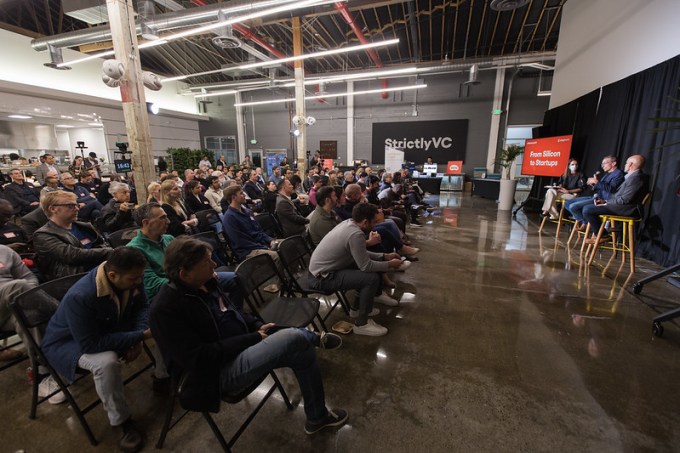
There are, naturally, hurdles, though right now, competing with ASML directly does not appear to be one of them. “We’re working very closely with them to basically design how we integrate with an ASML scanner,” Kelez said. “So we’re working with both them, as well as their providers, [like] Zeiss, who does their optics.”
When asked whether Intel or other major chipmakers have committed to purchasing xLight’s technology, Gelsinger said they have not. “Nobody has committed yet, but the work is going on with everybody on the list that you would expect, and we’re having intense conversations with all of them.”
Meanwhile, the competitive landscape is heating up. In October, Substrate — a semiconductor manufacturing startup backed by Peter Thiel — announced it raised $100 million to develop U.S. chip fabs, including an EUV tool that sounds awfully similar to xLight’s approach. Gelsinger doesn’t see them as direct competition though. “If Substrate is successful, they could be a customer for us,” he said, offering that Substrate is focused on building a full-stack lithography scanner that would ultimately need a free electron laser, which is exactly what xLight is developing.
Gelsinger’s relationship with the Trump administration adds another layer to the story. He brought up xLight to Commerce Secretary Howard Lutnick back in February, before Playground funded the startup and before Lutnick was confirmed. At that point, Kelez says, he’d already spent more than a year pitching xLight to the government as a way to bring chip manufacturing back to the U.S., but the new arrangement has drawn criticism from some who view the administration’s approach as overreach.
Gelsinger is unapologetic, framing it as necessary for national competitiveness. “I measure it by the results,” he said. “Does it drive the results that we want and that we need to reinvigorate our industrial policies? Many of our competitive countries don’t have such debates. They’re moving forward with the policies that are necessary to accomplish their competitive outcomes.”
He pointed to energy policy as another example. “How many nuclear reactors are being built in the US today? Zero. How many being built in China today? 39. Energy policy in a digital AI economy equals the economic capacity of the nation.”
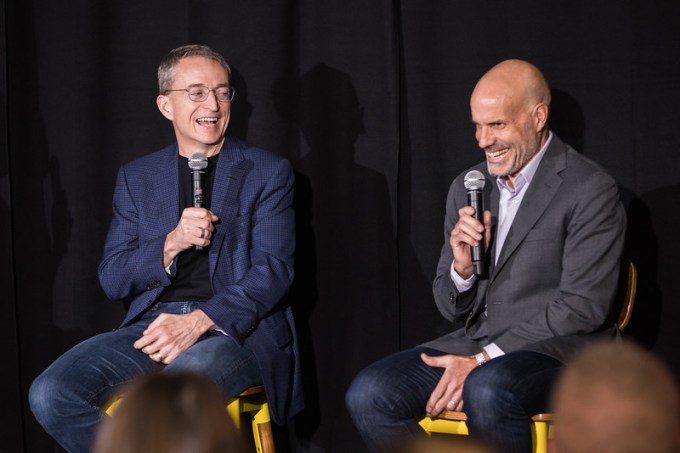
For xLight, the government stake comes with minimal strings attached. The Commerce Department won’t have veto rights or a board seat, says Kelez (pictured above). “No information rights, nothing,” Gelsinger adds. “It’s a minority investment, in a non-governing way, but it also says we need this company to succeed for national interest.”
xLight has raised $40 million from investors including Playground Global and is planning another fundraising round next month, in January. Unlike fusion or quantum computing startups that need billions, Kelez said xLight’s path is more manageable. “This is not fusion or quantum,” he said. “We don’t need billions.”
The company also signed a letter of intent with New York to build its first machine at the New York CREATE site near Albany, though that agreement also needs finalization.
For Gelsinger, xLight is clearly more than just another portfolio company. It’s a chance to cement his relevance in the semiconductor industry that he helped build, even if his methods put him at odds with Silicon Valley’s traditional ethos.
Asked about navigating his principles in the current political environment, Gelsinger retreated to a more technocratic view of corporate leadership — one where the money is from the U.S. government, administrations are temporary, and CEOs must remain above the fray.
“CEOs and companies should neither be Republican or Democrat,” he said. “Your job is to accomplish the business objective, serve your investors, serve your shareholders. That is your objective. And as a result, you need to be able to figure out what policies are beneficial on the R side or what policies are beneficial in the D side, and be able to navigate through them.”
He added separately of that $150 million from the Trump administration, “Taxpayers will do well.”
When asked if working across 10 startups is enough for someone who used to run Intel, Gelsinger was emphatic. “Absolutely. The idea that I can now influence across such a wide range of technologies — I’m a deep tech guy at the core of who I am. My mind is so stretched here, and I’m just grateful that the Playground team would have me to join them and let me make them smarter and be a rookie venture capitalist.”
He paused, then added with a grin: “And I gave my wife back her weekends.”
It’s a nice thought, though anyone who knows Gelsinger’s reputation as a workaholic might wonder how long that arrangement will last.
Keep reading the article on Tech Crunch
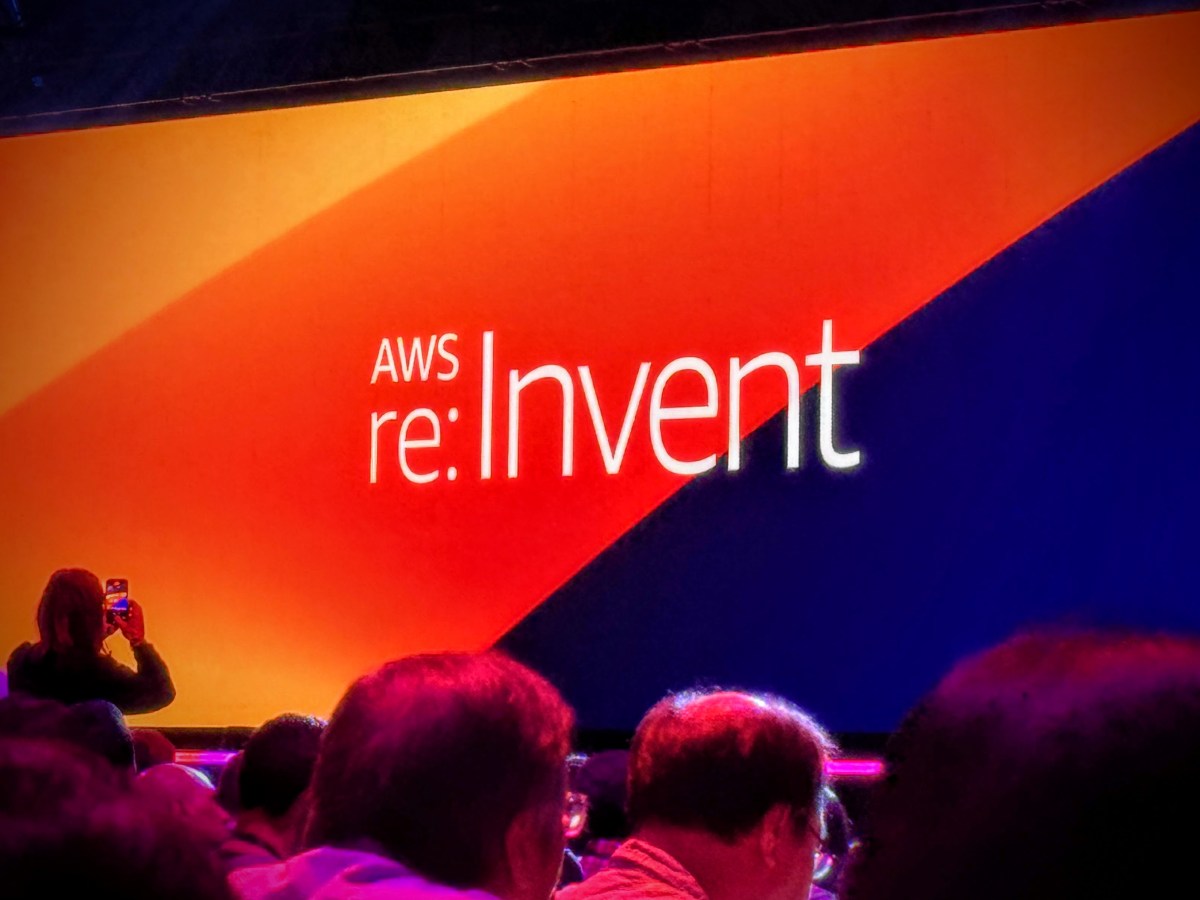
If Amazon Web Services’ annual re:Invent tech conference proves anything, it’s that the cloud infrastructure player is going all in on AI.
AWS announced made dozens of announcements from new AI agents and updated large language models, to products with LLM and agent-building capabilities. AI for enterprise was everywhere. But are its customers just as eager?
AWS CEO Matt Garman acknowledged during his keynote that enterprises haven’t seen a return on AI investment yet. He thinks that’s about to change — and fast.
“I believe that the advent of AI agents has brought us to an inflection point in AI’s trajectory,” Garman said. “It’s turning from a technical wonder into something that delivers us real value. This change is going to have as much impact on your business as the internet or the cloud.”
While analysts told TechCrunch they were impressed by some of AWS’ tech announcements this week, they aren’t sure it’s enough to move the needle on enterprise AI adoption or change AWS’ position in the AI race.
AWS is one of the market leaders when it comes to cloud infrastructure; the same can’t be said for its enterprise AI offerings.
Anthropic, OpenAI, and Google hold a commanding lead when it comes to enterprise market share for actual AI models. AWS does have the advantage of having everything in house, including infrastructure and its own AI training chips.
Techcrunch event
San Francisco
|
October 13-15, 2026
Naveen Chhabra, a principal analyst at Forrester, told TechCrunch over email that while AWS announced a lot of cool new technology, it doesn’t change the fact that many enterprises aren’t ready to adopt AI.
“AWS AI announcements show that AWS is thinking ahead and maybe far too ahead,” Chhabra wrote. “Most enterprises are still piloting AI projects and are rarely at the levels of maturity AWS expects them to be to take advantage of the offerings that come out of these announcements.”
A widely cited MIT study from August found that 95% of enterprises aren’t seeing a return on investment from AI.
Ethan Feller, an equity strategist at Zacks Investment Research, told TechCrunch in a phone interview that the new Nova AI models, agents, and model-building capabilities weren’t what stood out to him as interesting from this week — despite these being the products AWS hyped the most. Instead, it was the infrastructure announcements.
“The AWS AI factory is really compelling,” Feller said about a new initiative that allows customers to run AWS AI in their own data centers. “AWS is a huge player in where the models are being run and is dominant in the cloud industry. I think that is where Amazon’s expertise really lies. It’s a good thing to double down on where they have expertise.”
Feller likes that AWS is looking to make a vertical AI play, but he thinks it may make more sense to do so through partnerships with other AI players like Anthropic and Nvidia as opposed to using all of their own AI technology.
Despite all of this, AWS is still well positioned to carve out market share in the AI sector, while continuing to grow its core businesses.
AWS’ position as an industry-leading cloud provider means it has a solid business foundation despite what happens in the AI market because it provides the rails for the industry’s technology — regardless of what the AI trend of the moment is.
If the AI industry ends up being the bubble some say it is, AWS, which recorded $11.4 billion in operating income in the third quarter, will likely be less affected by a negative change in AI market conditions than its peers.
This gives AWS room to experiment and iterate on what its place in the AI market could look like down the road. That’s why even if enterprises aren’t ready for the tech they release today, AWS should keep working to improve it.
Follow along with all of TechCrunch’s coverage of the annual enterprise tech event here, and see all the announcements you may have missed thus far here.
Keep reading the article on Tech Crunch