Artificial intelligence labs are after computing power. Kalshi doesn’t have any to offer them but they’ve got something else that might be of some use, according to Bloomberg: a tool that plots the predicted future price of computing power. So, that’s something!
There really is some value for companies to know where the cost of compute is going—especially since currently, it’s mostly just going up. Having a sense of just how much compute is going to cost allows companies to try to lock in a price with a provider before the price spikes.
Demand for compute continues to climb faster than the ongoing data center buildout is able to keep up with. In fact, former Intel CEO Pat Gelsinger recently told CNBC that demand is “almost unlimited.” That is notably more than the amount of energy and processing power available, which actually does have an upper limit.
A recent report from Apollo Global Management described current compute capacity as “effectively sold out,” which has created a bottleneck where the price to rent GPUs keeps climbing faster than new ones are spun up and made available—an issue that is likely only going to get worse as more and more agentic AI tools become available, as recent research suggests they consume up to 136.5 times more energy per query than most generative AI models.
Kalshi’s new tool is supposed to serve as a sort of indicator for companies dealing with those realities of limited resources while trying to generate unlimited growth. Per Bloomberg, it’ll reportedly offer a forward tracking curve of compute, giving an early outlook as to where the cost of computing power is headed in the near-term.
Kalshi will reportedly analyze weekly and monthly contracts for computing power and use an algorithm to predict the future curve, spitting out a price that it expects to see paid in the future. The project reportedly aims to stretch its predictions as far out as a year into the future.
Bloomberg didn’t have details as to whether or not Kalshi will create a market around the price and let people bet on whether the real price will be higher or lower, but that feels like a pretty safe assumption given that it is kind of the prediction market’s whole deal. Plus, it wouldn’t be alone in trying to monetize the curve of compute availability. The Bloomberg report notes that a number of exchanges are looking to list compute futures contracts, which would allow people to trade on the resource like an asset. So if you’re looking for a way to short the future of AI, well, it seems it’s coming.

There’s been a big push among AI developers in recent years towards the development of more “agentic” systems—that is, algorithms that can autonomously make decisions and interact with digital tools without constant hand-holding from humans. This has been especially true within software development, the field that’s arguably become the most ripe for automation in the ongoing AI boom.
But one of the upshots of building highly agentic AI systems is that they’re prone to all kinds of unexpected behaviors—including now and then deleting copious amounts of files. Multiple people have reported this recently happening to them while using GPT-5.6, the newest model from OpenAI.
On Monday, Bruno Lemos, a Brazilian developer at software company Unlayer, claimed in a X post that the model deleted his entire production database. “This had never happened to me before, with any other model, ever.” He wrote. “[GPT-5.6 is] not safe.”
A screenshot included in the post showed a chat between Lemos and GPT-5.6, in which he asked it to confirm that it had in fact mistakenly deleted his entire production database. The model responded by saying that it “mistakenly ran destructive integration tests” which led to Lemos’ production tables being cleared. “I’m sorry—this should never have happened,” it said.
It followed closely on the heels of another X post from tech investor Matt Shumer—who’s also the author of an essay about AI that went viral earlier this year called “Something Big is Happening”—who reported something similar. According to an attached screenshot, GPT-5.6 told him it had caused “a serious local data-loss incident,” leading to the deletion of what Shumer described as “almost ALL” of his computer’s files. The screenshot showed that the model had executed a “rm -rf” command, which in Linux and Mac systems is used to permanently delete files without requesting user confirmation.
“I’ve never seen anything like this,” Shumer wrote in the thread beneath that post. “Will only be using [Anthropic’s] Fable moving forward.” He added that OpenAI cofounder and president Greg Brockman called him personally and offered to help fix the situation.
Shumer also claimed he had the AI model set to “full access mode,” which allows it to work directly within a user’s database (as opposed to operating within a constrained sandbox). It also comes with a “default mode” that requires users to frequently approve specific tasks, and a more recently introduced “auto-review mode” through which a separate AI agent checks the main coding agent’s work. Beneath his X post, many people claimed Shumer had simply been careless by trusting sensitive files in full access mode.
In the system card for GPT-5.6, published online the day before Shumer’s X post, OpenAI cautioned that when using the model for coding purposes “it is important for users to supervise the agent’s work.” The company added that the model could act in unexpected ways that are misaligned with the user’s goals, and that while these were “most often low severity (e.g. overstating confidence or overclaiming success),” they could in other cases “be meaningfully more severe (e.g. circumventing important security restrictions or deleting important data).”
Lemos, Shumer, and OpenAI did not immediately respond to Gizmodo’s request for comment.

Major publishers Hachette Book Group, Cengage Learning, and Elsevier have filed a lawsuit against Google alleging that Google used their work to train its AI chatbot Gemini. Scott Turow, the author of crime thrillers like Presumed Innocent, has also joined the suit which is seeking class action status.
The lawsuit was filed Friday in the U.S. District Court for the Southern District of New York alleging that Google “reproduced millions of copyrighted works without permission, without providing any compensation to authors or publishers, and with full knowledge that its conduct violated copyright law.”
Hachette is the third largest book publisher in the U.S. behind Penguin Random House and HarperCollins, the latter of which signed a licensing deal with Microsoft in 2024 to provide its books to be training AI models, according to Bloomberg.
Cengage Learning is a large education publisher that provides access to educational materials like textbooks and Elsevier is an academic publisher of journals like The Lancet and Cell. The plaintiffs allege Google illegally copied their books and journal articles, including from “known pirate sources,” to train its AI models.
From the lawsuit:
The result is an AI system that competes directly with Plaintiffs’ and the Class’s works in the market. Those substitutes take multiple forms, including verbatim and near-verbatim copies of portions or entire works, replacement chapters of academic textbooks, summaries and alternative versions of famous novels, and inferior knockoffs that copy creative elements of original works. Gemini even tailors outputs to mimic the expressive elements and creative choices of specific authors.
Elsevier, Cengage, Turow, and Hachette all sued Meta earlier this year over allegations that it used their work to train AI.
The new suit against Google argues that Gemini creates a product that traditional publishers can’t compete with, claiming that an AI chatbot can instantly create a 100-page murder mystery in 20 minutes “for a mere $0.39.”
“The scale and speed at which Gemini can create books and compete with human writers is unprecedented, and it can only do that because Google copied Plaintiffs’ and the Class’s works to train its AI,” the lawsuit claims.
The publishers also claim that all of Google’s copyright infringement was willful and if it wanted to properly license their content for training purposes, that was something the tech giant could’ve paid for. The lawsuit notes the incredible amount of money that Google makes each quarter ($100 billion revenue in Oct. 2025) and says that’s driven by Google’s AI business. Gemini has over 650 million monthly active users.
“While AI technology may be new, the legal principles at the center of this case are not,” the lawsuit says. “Copyright law applies to AI companies, including Google, with the same force as every other company that has complied with these laws for decades.”
“If left unaddressed, Google will continue to infringe Plaintiffs’ and the Class’s rights, cause broad and lasting damage to the literary industry and authors, and weaken the incentive to create that is at the core of the Copyright Act.”
Google didn’t respond to questions emailed Tuesday. Gizmodo will update this article if we hear back.
Online search has become a nightmare, littered with AI-generated misinformation, spammy sites that brute-force their way to the top of results, and tons of sponsored results. It’s been enough to lead people to start using ChatGPT as their de facto search engine, which can only mean one thing: time to enshittify that, too (you know, more than it already is). According to the New York Times, OpenAI struck a deal with prediction market Kalshi to show the current odds for World Cup games right in ChatGPT’s responses.
The agreement between Kalshi and OpenAI has not been announced publicly, the Times notes. Results that include Kalshi data note the source, but offer no disclosure if the data is part of a paid advertisement or sponsorship. According to OpenAI’s own documentation about advertisements in ChatGPT: “Ads can appear below the end of a response. Ads are clearly labeled as sponsored and visually separated from ChatGPT’s response.” So presumably, whatever the arrangement between the companies, OpenAI is not considering it to be Kalshi simply paying for placement.
On a help page specific to ChatGPT Search, the company offered a slight bit of additional clarity: “For queries related to the 2026 World Cup, ChatGPT may show predictive information sourced from Kalshi to provide timely context about upcoming matches. If and when this information appears, it will always be clearly labeled with ‘Source: Kalshi.’”
© Screengrab via ChatGPT
OpenAI claims the data is for “informational purposes only,” and notes that “You cannot place bets through ChatGPT,” per the company’s usage policies.
That’s a handy bit of distance that the company places between itself and Kalshi, but it’s worth noting that there is little informational purpose for Kalshi data other than betting. It is a reflection of what people are betting their money on and is meant to be used by other people to bet their own money. It may provide a snapshot of public and “expert” or insider sentiment, but even that is in what is effectively a gambling context.
Whatever OpenAI and Kalshi would like to call their arrangement, it’s another in a line of deals that Kalshi has entered into in recent months to make sure their data is everywhere. Late last year, the company that says it wants to “trade on anything” entered into deals to provide market information to CNN and CNBC, which have since integrated that information into their platforms.
Given the widespread normalization of prediction markets, it’s no wonder more people are jumping in all the time. And look, you’re welcome to do whatever you want with your money, just know that the odds are not in your favor. A recent study that analyzed bettors on Kalshi competitor Polymarket found that since 2022, about 70% of accounts have a net loss across their activity, and 77% of all winnings have been funneled to the top 1% of users on the platform.
Gizmodo reached out to both OpenAI and Kalshi for additional information about the apparent partnership, but did not receive a response at the time of publication.

In theory, you just @ it and it gets to work.
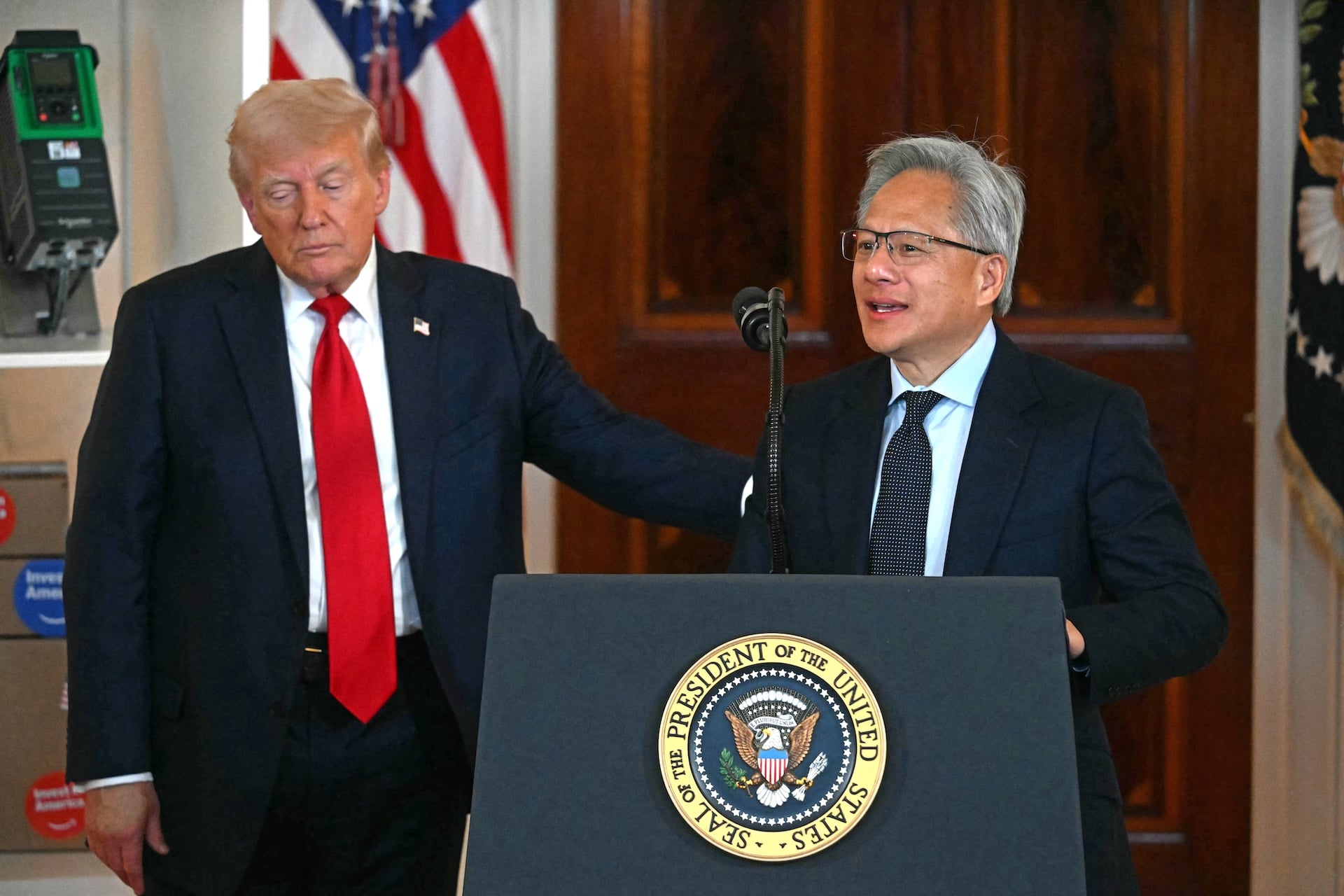
The U.S government will take a 25% cut, according to the president.