 Screenshots showing Starbucks drinks listed as “sugar-free” that actually have sugar. Red annotations made by Gizmodo. © Starbucks / Gizmodo
The death of a lab worker in Russia has authorities looking at whether plague played a role. Even if it did, though, the odds of it spreading are very low.
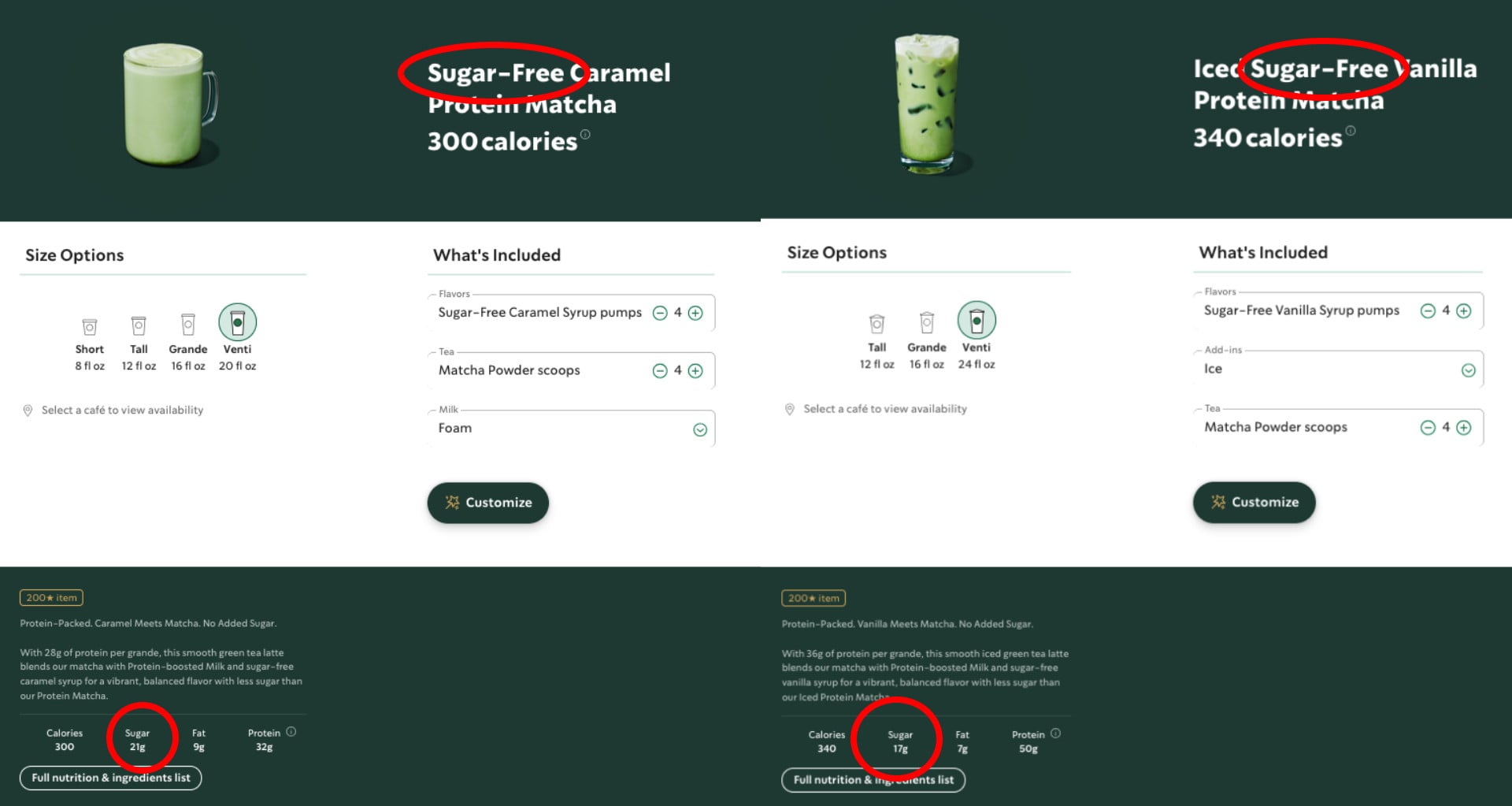
A federal lawsuit filed Friday alleges that Starbucks is misleading consumers with a line of “sugar-free” drinks that actually contain a significant amount of sugar. The company denies the allegations, but a quick visit to the Starbucks website reveals that some drinks labeled as sugar-free also have nutrition labels that explain the beverages have as much as 21 grams of sugar.
The lawsuit was filed by the law firm Hagens Berman on behalf of plaintiffs in California, Washington, and New York, according to the Associated Press. In a statement to the news wire, a co-founder of the law firm explained that it’s not just about the average person trying to avoid sugar. There can be bad health consequences for diabetics, for example.
“Consumers avoid sugar for various reasons, whether that be general health, diabetes and blood glucose levels or other factors, and for many, a staunch mislabeling like this is significant,” Steve Berman told the AP.
A search on the Starbucks website reveals drinks listed with names like “sugar-free caramel protein matcha” and “iced sugar-free vanilla protein matcha.” 20-ounce versions of the former are listed as having 21 grams of sugar, while 24-ounce versions of the latter have 17 grams of sugar, according to the site.
Screenshots showing Starbucks drinks listed as “sugar-free” that actually have sugar. Red annotations made by Gizmodo. © Starbucks / Gizmodo
Reached for comment over email, a spokesperson for Starbucks told Gizmodo the company denies the allegations that it’s deceiving customers.
“We believe these claims have no merit,” said the spokesperson. “Starbucks has consistently and clearly provided information about its protein beverages, sugar-free options, customization choices, and nutritional content across product announcements, menus, marketing materials, Starbucks.com and the Starbucks app, and we intend to vigorously defend ourselves in this matter.”
When Gizmodo asked in a follow-up how these products can be listed as “sugar-free” while also having sugar, a Starbucks spokesperson told us over the phone that the sugar listed on the website “comes from the protein boost of milk. We do not add sugar to the drinks and we use sugar free flavors.” When we asked for more clarification, since that made no sense to us, the spokesperson said, “The milk is part of the protein drink.”
At the end of our call, Gizmodo asked to verify the name of the spokesperson we were speaking with and they insisted retroactively that our conversation had been “on background,” rather than on the record, conditions Gizmodo did not agree to. The spokesperson said they would send along more information via email to help clear up our confusion. They sent a link to an announcement about the product from Sept. 2025 but it’s still very confusing.
“With no added sugar or compromise on flavor, Starbucks Protein-boosted Milk will be crafted fresh daily by Starbucks baristas, blending creamy 2% milk with unflavored protein powder,” the old product announcement reads.
Presumably, the company seems to be trying to make a distinction between “added sugar” and the sugar that is naturally present in the milk. But if that’s their argument they should probably just say that explicitly. The Starbucks spokesperson didn’t do that and we’re simply doing our best to understand what they could possibly mean.
Typically, when consumers see the words “sugar-free” on a label they expect the nutrition facts to also reflect zero grams of sugar. Many juices will add the words “no added sugar” even when there’s a considerable amount of naturally occurring sugar.
For example, Ocean Spray Zero Sugar cranberry juice has a nutrition label that clearly states there’s no added sugar but also plainly no sugar at all. The regular Ocean Spray cranberry juice states that there’s “no sugar added” but also lists 29 grams of sugar on the nutrition label.
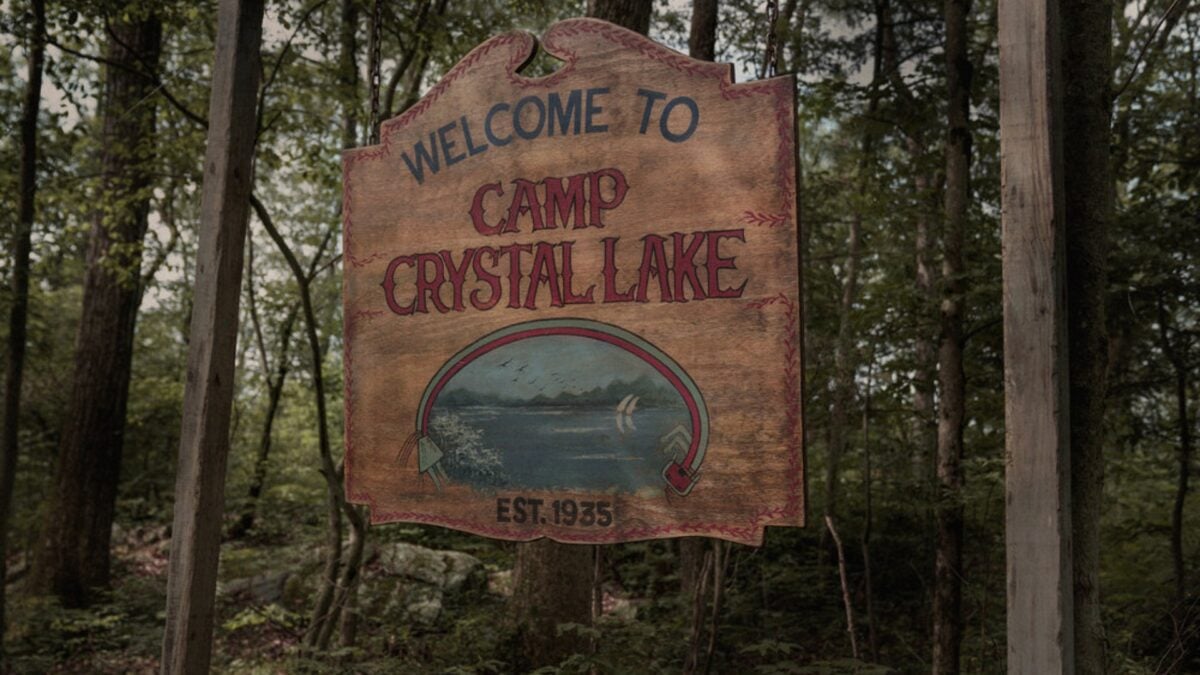
Friday the 13th fans already have an idea of what Jason Voorhees looked like as a kid. You see him lurching out of the water at the end of the first movie—and Corey Feldman’s character approximates his misshapen baldness at the climax of Friday the 13th: The Final Chapter. Of course, nobody really knows what his face looks like, since at a certain point it just started blending into his signature hockey mask. That’ll change in Crystal Lake, the prequel series arriving on Peacock next week.
However, don’t expect the streamer to drop any crystal-clear looks at Callum Vinson (Chucky, the upcoming God of War) in full make-up ahead of time. A tiny trailer glimpse aside, that will be part of the surprise when the show premieres. We do know Vinson will wear prosthetics to play young Jason, but when we first meet the character at the start of Crystal Lake—before his tragic drowning, a crucial part of Friday lore—he’s not yet feeling any murderous impulses.
“He’s just a normal boy and he just wants to fit in with everybody, but since he had this deformation in his head, he got bullied a lot,” Vinson, who is 12, told Entertainment Weekly. “When I read these scripts, I was honestly really sad. I put myself in the body of Jason to become him. And it was hard, but I really enjoyed playing this character.”
The initial four-and-a-half-hour make-up process was whittled down to 90 minutes, but it sounds like Vinson was a good sport about it. “It’s a lot, but it makes you feel so cool,” he said. “It’s like you’re putting on Iron Man’s mask; you’re putting on Spider-Man’s mask.”
Showrunner Brad Caleb Kane said “pounds and pounds” of transformative makeup went into bringing Jason to life; while he praised the work of Tom Savini, the effects master who worked on 1980’s Friday the 13th, he said Crystal Lake tried to aim for something slightly less monstrous for its version.
“Savini killed it. [He] reached right into our brains and pulled out our worst nightmares of what a deformed child might look like,” Kane told EW. “But we’re trying to do something a little bit more grounded and a little bit up-to-date.”
According to Kane, there will in fact be a mask in the show—just not a hockey mask. However, “it will not be a different mask than fans have seen.”
Crystal Lake premieres October 15 on Peacock.
Want more io9 news? Check out the best movies and TV shows to stream this month and all the upcoming sci-fi, fantasy, and horror books that should be on your radar.
Digital wall calendars can organize multiple family calendars, meal plans, chores, and to-do lists, and even double as a digital photo frame. And best of all, they’re on sale.
Want to save money without supporting Amazon? This roundup is full of deals on WIRED-approved favorites.